
 CA
 NZ
 UK
 AU
 IND

 US

 Share
 X (Formerly Twitter)
 Whatsapp
 Facebook
 LinkedIn
 Telegram
 Email This Article
 Copy Link
 Summarize with AI
 Chat GPT
 Perplexity

Key Highlights
- SpaceX reported second-quarter revenue up 92% year-over-year to $7.8 billion, driven by AI compute deals with Anthropic and Google and record Starlink subscriber growth, though the company remained unprofitable.
- AI segment revenue surged 247% year-over-year to $2.6 billion, with quarterly AI infrastructure capital expenditures reaching $15.8 billion, more than double the company's total revenue.
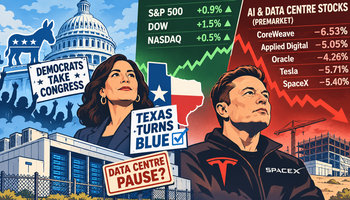
- SpaceX's market value, already down more than $1 trillion from its peak, fell further after the earnings report and ahead of a lockup expiry releasing roughly $100 billion in shares on August 6th.
- Elon Musk projected data center capacity would approach 15 gigawatts by the end of 2027 and pulled forward the company's $1 trillion revenue target to 2030 from a prior 2031 estimate.
AI Business Drives Revenue Growth, But Losses Persist
SpaceX reported second-quarter revenue growth of 92% year-over-year to $7.8 billion, up from $4.1 billion a year earlier, with its terrestrial artificial intelligence business contributing an outsize share of the increase alongside record growth in its Starlink satellite internet service. Starlink added 1.7 million net new subscribers during the quarter, with enterprise and government revenue growing 108% year-over-year. AI segment revenue surged 247% year-over-year to $2.6 billion, aided by newly ramping compute agreements with two major AI companies, one of which is valued at roughly $1.25 billion a month through 2029. The company's net loss narrowed to $541 million from $1 billion a year earlier, though it remained unprofitable for the quarter.
AI capital expenditures reached $15.8 billion for the quarter, more than double SpaceX's total quarterly revenue, as the company builds computing capacity to rent to AI firms. Spending in this area is expected to rise further, with management targeting roughly 15 gigawatts of power and cooling infrastructure online by the end of 2027, up from an earlier target of 10 gigawatts, and a stretch goal of 20 gigawatts. The company ended the quarter with $100 billion in cash, cash equivalents and marketable securities, along with a $47.5 billion revenue backlog.
Lockup Expiry Adds Pressure to Falling Share Price
SpaceX's market value, which had already declined by more than $1 trillion from its post-IPO peak, fell further following the earnings release. The decline was compounded by concerns over the expiry of a lockup period on August 6th, which allowed early backers, executives and employees to sell shares that had previously been restricted following the company's June listing, a debut that had raised more than $85 billion and briefly pushed the company's valuation above $2 trillion. The combination of heavy AI spending and the prospect of a large new supply of tradable shares weighed on investor sentiment, with the stock trading roughly 20% below its initial public offering price heading into the earnings report.
Musk Outlines Ambitious Targets as Related Stocks React
The company's chief executive projected that data center capacity, expected to reach about two gigawatts by the end of this year, would climb closer to 10 gigawatts than 5 gigawatts by the end of 2027, with power-and-cooling infrastructure reaching approximately 15 gigawatts once project delays are accounted for. He also pulled forward the company's revenue target, saying SpaceX now expects to reach $1 trillion in annual revenue by 2030, a year earlier than a previous 2031 estimate, supported partly by next-generation Starlink satellites offering more than ten times the bandwidth of the current generation. Management said the company's annualized revenue run rate target of $100 billion by December 2026 is achievable primarily through growth already contracted across its three business segments.
Nvidia shares rose after SpaceX said its data centers would rely exclusively on Nvidia's newest chip architecture and that it expects to receive a significant share of the chipmaker's 2027 production. Shares of AT&T, Verizon and T-Mobile fell after SpaceX's president said the company's new mobile satellite service, which recently received regulatory approval to use spectrum acquired from another carrier, would begin competing directly for traditional wireless customers as early as next year. SpaceX also reported progress on its Starship rocket program during the quarter, saying two recent test flights had resolved a longstanding heat shield issue and cleared the way toward more rapid vehicle reuse.


 Nov 04, 2026




 Please wait processing your request...