
 CA
 NZ
 UK
 AU
 IND

 US

 Share
 X (Formerly Twitter)
 Whatsapp
 Facebook
 LinkedIn
 Telegram
 Email This Article
 Copy Link
 Summarize with AI
 Chat GPT
 Perplexity

Key Highlights:
• SPDR S&P 500 ETF Trust traded near $766 in late August 2026, with year-to-date gains near 13% and one-year returns above 20%
• The fund's net expense ratio stands close to 0.09%, slightly above several newer S&P 500 index alternatives
• Roughly 38-40% of total Assets are concentrated in the fund's ten largest holdings
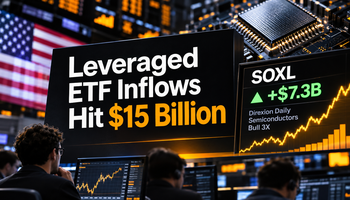
• US-listed ETFs drew more than $1 trillion in new inflows during the first half of 2026, a record pace for the industry
SPDR S&P 500 ETF Trust (NYSEARCA:SPY) tracks the S&P 500 Index, providing exposure to roughly 500 of the largest publicly traded companies in the United States across all eleven GICS sectors. Managed by State Street, the fund was the first exchange-traded product listed in the United States when it launched in 1993, and it remains the most actively traded US Equity ETF today. Its structure follows passive replication of the underlying index, with constituent weights based on float-adjusted market capitalization.
The fund's net expense ratio sits close to 0.09%, marginally higher than several newer S&P 500-tracking alternatives, including Vanguard S&P 500 ETF (NYSEARCA:VOO) and iShares Core S&P 500 ETF (NYSEARCA:IVV), as well as State Street's own lower-cost SPDR Portfolio S&P 500 ETF (NYSEARCA:SPYM). Market data attributes this gap to the fund's unmatched trading Volume and its central role in equity Options and institutional hedging strategies tied to the broader index, an advantage its lower-cost peers have yet to replicate despite gathering assets at a faster relative pace. Company disclosures show the fund's five-year annualized Volatility near 15.4%, with a five-year annualized total return of roughly 23.1% through the end of 2025.
Holdings and Performance
The fund holds between 503 and 505 constituent stocks, with concentration skewed toward a small group of mega-cap technology names. Sector allocation data shows technology accounting for close to one-third of total assets, followed by financials, health care, and consumer discretionary sectors. Roughly 38% to 40% of the fund's assets are tied to its ten largest positions, reflecting broader market concentration in a handful of dominant companies.
As of August 20, 2026, the fund traded near $766 per share, up 3.63% over the past month, up 12.78% year to date, and up 20.2% over the trailing year. Earlier in the year, the fund was described as the world's largest ETF with just under $700 billion in assets under management, having grown by nearly $90 billion in assets largely on market appreciation rather than fresh inflows despite roughly $10 billion in net outflows during 2025. The fund's 52-week trading range has widened considerably through the year as the rally extended toward record territory.
Latest Developments
Fund flow data shows the broader ETF industry has reached a historic pace in 2026. US-listed ETFs attracted more than $1 trillion in inflows during the first half of the year, the earliest point in a calendar year the industry has ever crossed that threshold, with total industry assets reaching a record $15.8 trillion. Industry estimates project full-year inflows could reach roughly $2.3 trillion, which would exceed 2025's record of about $1.5 trillion.
Fund sponsor commentary attributes the surge to sustained investor appetite for equities tied to the artificial intelligence theme and the broader technology sector, alongside growing use of ETFs for their liquidity, transparency, and tax efficiency relative to other Investment vehicles. State Street executives have also pointed to a shift within their own product lineup, noting that SPYM has gained significant traction among retail and wealth-management clients, even as the flagship SPY continues to anchor institutional trading activity, accounting for roughly 17% of total US-listed ETF trading volume in the first quarter of 2026.
Recent 13F filing data also points to shifting institutional positioning. Between the first and second quarters of 2026, a large group of funds tracked in aggregate reduced their SPY holdings by more than 492 million shares, though the underlying data reflects a broad cross-section of hedge fund and institutional filers rather than a uniform trend. The fund's options market has continued to see elevated activity through the year, reinforcing its role as a primary vehicle for volatility positioning and index-level hedging strategies.
Outlook
SPDR S&P 500 ETF Trust enters the second half of 2026 as both the largest and most closely watched equity fund in the world, a position built as much on scale and Liquidity as on the underlying index it tracks. Its record levels this year are inseparable from the broader forces shaping the market: a historic pace of ETF inflows, a rally concentrated in a small group of technology and AI-linked companies, and a Monetary Policy backdrop still being priced in real time. For investors, that combination cuts both ways. The fund's low-friction access to the US large-cap market remains a defining advantage, but the same concentration that has powered its recent gains would just as directly transmit any pullback in its largest holdings. As the ETF industry heads toward another record year of inflows, SPY's performance will likely continue to serve as a proxy not just for the S&P 500, but for the broader appetite driving capital into passive, large-cap exposure.

 Nov 03, 2026





 Please wait processing your request...