
 AU
AU
 UK
UK
 CA
CA
 NZ
NZ
 IND
IND

 US
US

 Share
Share
 X (Formerly Twitter)
 Whatsapp
 Facebook
 LinkedIn
 Telegram
 Email This Article
 Copy Link
 Summarize with AI
 Chat GPT
 Perplexity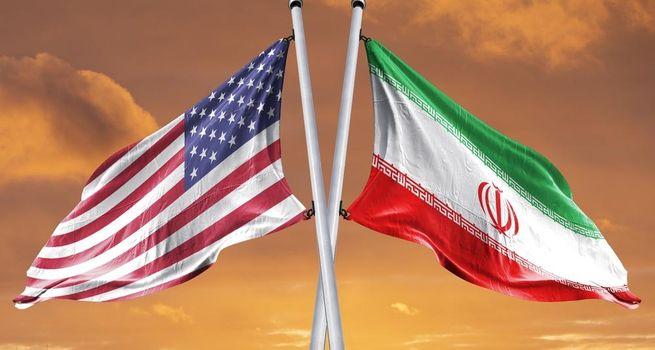
U.S. forces remain deployed around Iran as ceasefire terms on nuclear disarmament, Strait of Hormuz access, and sanctions relief stay unresolved.
Key Highlights
- S. forces remain fully deployed in and around Iran, with Trump warning that non-compliance will trigger a military response larger than any seen before.
- Washington's 15-point framework demands full nuclear disarmament; Iran's competing 10-point proposal retains enrichment rights, creating an unresolved structural gap.
- The Strait of Hormuz, carrying roughly 20% of global oil supply, remains operationally uncertain despite partial reopening under Iranian military coordination.
- Iran's nuclear material stockpile, enriched to 60% purity, can be escalated to weapons grade within weeks, limiting the effectiveness of military strikes alone.
- Pakistan-mediated negotiations resume in Islamabad on April 10, with a two-week window to bridge positions that remain fundamentally incompatible.
A Ceasefire, Not a Deal
President Donald Trump issued a direct warning to Tehran on April 9, confirming that all U.S. ships, aircraft, military personnel, ammunition, and weaponry would remain in and around Iran until the recently brokered ceasefire is fully complied with. The consequences of non-compliance, in his framing, would be military action bigger and stronger than anything previously deployed.
The warning arrived days after Washington and Tehran agreed to a fragile two-week truce, more than five weeks after the United States and Israel launched coordinated strikes on Iran on February 28. Trump described the campaign as major combat operations. The ceasefire, announced just ahead of a deadline Trump had set himself, paused the most intense phase of hostilities in the region since 1979. Analysts are not treating it as a durable settlement.
The two conditions Trump has publicly attached to the agreement are unambiguous. Iran must never develop nuclear weapons. The Strait of Hormuz must remain open and safe for international shipping. Both carry significant strategic and macroeconomic weight.
Energy Markets and the Hormuz Variable
Iran's effective closure of the Strait of Hormuz since the war began produced what energy analysts have described as the largest oil supply disruption in modern history. The waterway carries approximately one-fifth of global daily oil flows and provides the only sea passage from the Persian Gulf to open waters. Before hostilities, Iran permitted an average of 120 to 150 vessels per day to transit unimpeded. That traffic came to a near-complete halt.
Crude oil prices dropped sharply on ceasefire news, as markets priced in resumed flow. The relief proved short-lived. Iran closed the strait again within hours of the truce taking effect, in response to continued Israeli strikes on Lebanon. Only three vessels transited the waterway in the initial period following the ceasefire announcement.
Iranian Foreign Minister Abbas Araghchi confirmed that passage would be permitted under coordination with Iranian armed forces during the two-week window, a formulation that preserves Tehran's ability to use maritime access as a negotiating instrument. The operational ambiguity around the reopening remains a live risk variable for global energy pricing.
The Nuclear Question Remains Structurally Unresolved
Washington's 15-point framework, delivered to Tehran via Pakistan in late March. requires Iran to surrender its enriched uranium stockpile and accept limits on its ballistic missile programme. Secretary of State Marco Rubio has stated publicly that the plan makes clear Iran can never have nuclear weapons.
Iran's 10-point counterproposal includes acceptance of enrichment for its nuclear programme, a phrase that appeared in Farsi-language versions circulated by Iranian state media but was absent from English-language versions shared with foreign press. The divergence was not incidental. Tehran's plan also demands full withdrawal of U.S. combat forces from regional bases, lifting of all primary and secondary sanctions, release of frozen Iranian assets, and full war damage compensation to be funded through Strait of Hormuz transit fees.
These positions are not separated by negotiating margin. They represent structurally incompatible definitions of what a post-conflict Iran looks like.
Iran's nuclear material stockpile presents a further complication. The country retains an estimated 400 kilograms of uranium enriched to 60% purity, a level that can be escalated to weapons grade at 90% within weeks according to nuclear analysts. U.S. Director of National Intelligence Tulsi Gabbard testified in March that the intelligence community has high confidence in the location of Iran's nuclear materials. IAEA Director-General Rafael Mariano Grossi cautioned, however, that Iran may be using decoy canisters, and that its nuclear knowledge base cannot be eliminated through military strikes. Trump has indicated U.S. forces will work with Iran to physically remove deeply buried nuclear material. Military and intelligence officials have acknowledged the operational difficulty of such a mission.
Mistrust as a Structural Risk Factor
Talks are scheduled to resume in Islamabad on April 10, with Iran's Supreme National Security Council agreeing to a two-week window to finalise terms. The negotiating environment carries significant institutional baggage.
Iran's government has not consistently acknowledged engaging in direct negotiations with the United States. As recently as late March, the speaker of the Iranian parliament stated publicly that no negotiations had been held. Tehran and Washington have both publicly framed the ceasefire as a victory for their respective positions, a dynamic that narrows the political space available to either side for substantive concession.
The competing frameworks diverge on uranium enrichment, ballistic missile limits, U.S. military presence in the region, sanctions relief sequencing, and the scope of any binding verification mechanism. Bridging those gaps within a two-week negotiating window would represent an outcome with few diplomatic precedents.
The Strategic Calculus
For global energy markets, regional stability, and nuclear non-proliferation architecture, the next fortnight carries material consequence. A durable agreement that permanently closes Iran's path to nuclear weapons and restores reliable Strait of Hormuz transit would represent a significant structural shift in Middle East risk pricing and a validation of maximum pressure as a coercive diplomatic instrument.
The alternative, as Trump's April 9 statement makes clear, is a return to active military operations. U.S. forces remain in position, loaded and ready. The ceasefire is a pause in hostilities, not a resolution of the conditions that produced them. The distance between those two outcomes will be determined in Islamabad, under a clock that is already running.


 Jun 05, 2026




 Please wait processing your request...