
 AU
AU
 UK
UK
 CA
CA
 NZ
NZ
 IND
IND

 US
US

 Share
Share
 X (Formerly Twitter)
 Whatsapp
 Facebook
 LinkedIn
 Telegram
 Email This Article
 Copy Link
 Summarize with AI
 Chat GPT
 Perplexity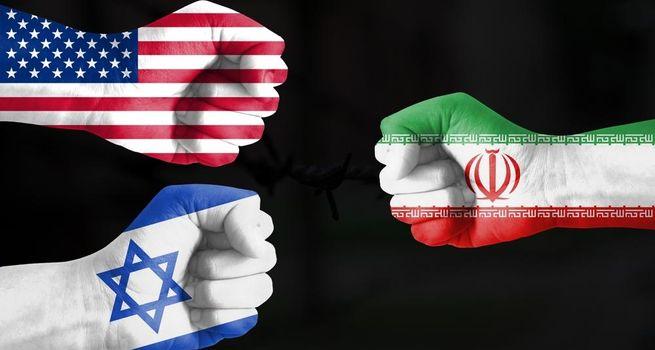
Key Highlights
- Iran launches three waves of missiles at Israel on Passover eve, wounding at least 16 in Tel Aviv and Bnei Brak
- US bombers strike ammunition depots in Isfahan as NASA satellites record fires over Tehran
- Iranian drone destroys Kuwait airport fuel depot; oil tanker struck off Qatar's coast
- Trump exit talk drives oil prices down two percent as markets price in early war conclusion
- NATO allies restrict US airspace access and logistics cooperation, drawing sharp rebuke from Washington
- Strait of Hormuz traffic collapses from 130 ships daily to fewer than six
- China and Pakistan release a joint five-point ceasefire proposal as Trump prepares national address
The Battlefield Contradicts the Briefing Room
On Tuesday, President Donald Trump told reporters the war was nearly finished. Within hours, Iran fired three waves of ballistic missiles at Israel. That gap between Washington's exit narrative and the operational reality on multiple fronts is the defining tension of a conflict entering its fifth week with no verified ceasefire framework in place.
Iranian state media confirmed that the Revolutionary Guards fired three waves of missiles at Israel within a single hour on Wednesday morning, timed precisely as Israelis prepared to mark the start of Passover. Iranian missile fire wounded at least 14 people across central Israel and Tel Aviv, according to Israel's Magen David Adom emergency service. At least 16 people, including a child, were wounded after missile fragments struck Tel Aviv and Bnei Brak.
The strikes did not originate from Iran alone. Yemen's Houthi rebels claimed a simultaneous ballistic missile attack on southern Israel, stating the barrage was conducted jointly with Iran and Hezbollah in Lebanon. The coordinated, multi-front nature of the assault raises serious questions about how degraded Iran's proxy network actually is, despite five weeks of sustained bombardment.
Strikes Inside Iran: Scale and Verification
Inside Iran, US and Israeli operations continued through the night. Images geolocated by CNN showed thick black smoke rising over Tehran after a new round of airstrikes on Wednesday, alongside fires near Mount Soffeh in Isfahan following a US bomber strike on an ammunition depot. Independent verification of damage inside Iran remains structurally limited given restricted media access and the suspension of IAEA monitoring at bombed sites. Claims of strategic success from the White House and Pentagon therefore carry an inherent verification gap that analysts and policymakers must weigh carefully.
Energy Infrastructure and Maritime Disruption
The economic dimension of the conflict intensified sharply in the last 24 hours. Kuwait's airport fuel depots were struck by an Iranian drone, causing a large blaze and significant damage to fuel storage infrastructure, with Bahrain reporting a separate drone attack on an industrial facility.
At sea, one of three Iranian missiles struck an oil tanker off Qatar's coast, with no casualties reported. The targeting of commercial shipping marks a continued Iranian effort to impose economic costs beyond declared military targets, extending the conflict's reach into global supply chains.
Before hostilities began, approximately 130 ships transited the strait daily. That figure has fallen to six or fewer ships per day. Oil prices fell roughly two percent on Wednesday following Trump's remarks about a potential exit timeline, with Brent crude dropping to around $101.8 per barrel, reflecting market anticipation of a near-term end to the conflict rather than any structural improvement in supply. Should the exit timeline slip, a price reversal would be the probable outcome.
NATO Cracks: Allies Pull Back as Washington Pushes Forward
One of the most consequential developments of the past 24 hours has received less attention than the missile strikes but carries longer-term strategic implications. Several NATO allies have begun restricting US access to their airspace and logistical infrastructure in connection with the Iran campaign.
Spain's Defence Minister confirmed that the country had closed its airspace to US planes involved in the Iran war, with Prime Minister Pedro Sanchez having signalled the measure during a parliamentary debate days earlier. The move drew an immediate and sharp response from Secretary of State Rubio. "We have countries like Spain, a NATO member that we are pledged to defend, denying us the use of their airspace and bragging about it," Rubio said, framing the refusal as a direct breach of alliance reciprocity.
Trump went further. In remarks directed at broader NATO behaviour, he criticised allied nations for failing to support a campaign he has framed as a collective security interest, and raised the prospect of reassessing existing alliance commitments. The threat to reassess alliances is not new from this administration, but the context gives it greater weight. A war being fought partly from European-adjacent bases, with European energy infrastructure exposed to Hormuz disruption, is precisely the scenario in which allied cohesion should be at its strongest. That it is fracturing instead points to a deeper structural problem in transatlantic coordination that will outlast this conflict.
The practical consequences are already visible. Restricted airspace forces longer routing for US aircraft, adds logistical complexity, and reduces operational flexibility at a moment when the administration is simultaneously trying to wind down the campaign and maintain battlefield pressure.
Diplomacy: One Serious Proposal, One Political Speech
China and Pakistan jointly released a five-point proposal calling for an immediate cessation of hostilities, protection of civilian infrastructure, security of international shipping lanes, and adherence to the UN Charter, with Beijing framing the initiative as an effort to contribute to regional de-escalation.
The proposal carries no enforcement mechanism. Iran has not responded to the existing US 15-point framework, with Foreign Minister Araqchi stating that message exchanges do not constitute negotiations. The distance between the two sides on substance remains wide.
Trump addresses the nation Wednesday at 9 p.m. ET. The structural question the speech must answer is whether the US is withdrawing because its strategic objectives have been met or because the domestic cost of continuing, rising fuel prices, NATO friction, and military fatalities, has made continuation politically untenable. Those are materially different conclusions with different implications for regional stability, energy markets, and the long-term credibility of US deterrence across the Middle East.
The last 24 hours have not resolved that question. They have sharpened it considerably.


 Jun 05, 2026




 Please wait processing your request...