
 AU
AU
 UK
UK
 CA
CA
 NZ
NZ
 IND
IND

 US
US

 Share
Share
 X (Formerly Twitter)
 Whatsapp
 Facebook
 LinkedIn
 Telegram
 Email This Article
 Copy Link
 Summarize with AI
 Chat GPT
 Perplexity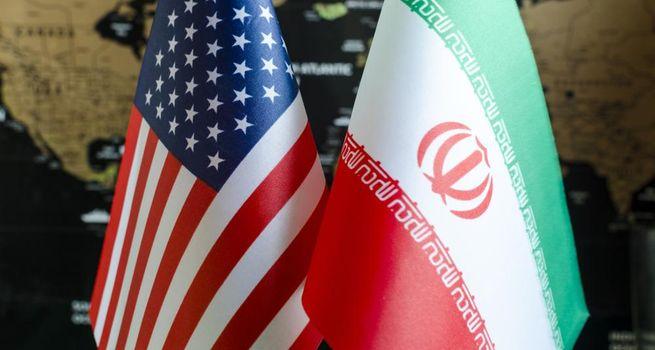
US-Iran peace talks mask a deeper structural impasse: incompatible negotiation frameworks that markets are mispricing as temporary. Here's what that means for oil, gold, and global risk premiums.
Key Highlights
- The US 15-point framework demands zero enrichment and proxy disengagement as preconditions for sanctions relief.
- Iran's 10-point proposal seeks immediate sanctions removal and formal recognition of civilian nuclear rights.
- The conflict reflects incompatible negotiation architectures, not merely a gap in terms.
- Oil market volatility and energy sector divergence are likely to persist regardless of tactical ceasefires.
- Convergence requires mutual dilution of core sovereign positions, which remains low probability near term.
A Negotiation Defined by Structural Incompatibility
The diplomatic engagement between Washington and Tehran is frequently framed as a stalled negotiation awaiting the right political moment. That framing is analytically insufficient. The current exchange of proposals, the US 15-point framework on one side and Iran's 10-point counter-framework on the other, does not represent a standard diplomatic gap bridgeable through concession trading. It represents a collision between two fundamentally incompatible conceptions of sovereign statehood, security, and the ordering of obligations.
Markets appear to be pricing this as a temporary dislocation, a manageable geopolitical friction that periodic diplomacy might resolve. That pricing assumption deserves scrutiny. The structural incompatibility embedded in these two frameworks suggests that the risk premium associated with this confrontation is durable, not episodic.
US Framework: Disarmament as a Precondition for Integration
The US framework is built on a compliance-first logic. Its core demands include the complete cessation of uranium enrichment, a rollback of Iran's ballistic missile programme, disengagement from proxy networks across Iraq, Syria, Lebanon, and Yemen, and the conditional phasing of sanctions relief tied to verified adherence.
The architecture of this proposal reflects a strategic objective that extends beyond nuclear risk management. Washington is, in effect, offering Iran a pathway into a rules-based international order, but only after Iran has restructured the capabilities that give it independent strategic leverage. Integration is the reward; disarmament is the price.
From a macroeconomic perspective, the sanctions regime embedded within this framework functions as a capital allocation instrument. By controlling Iran's access to the global financial system, dollar-denominated transactions, and energy export revenues, the US exercises indirect control over the liquidity conditions of Iran's economy. Compliance becomes the mechanism through which capital flows are restored.
This is not a sanctions regime designed to punish indefinitely. It is designed to discipline sovereign behaviour. The incentive structure is clear. The sequence, however, is non-negotiable from Washington's perspective: compliance precedes reward.
Iran Framework: Sovereignty, Security Guarantees, and Economic Reset
Iran's counter-framework proceeds from an entirely different logic. Tehran insists on the retention of civilian enrichment rights as a non-negotiable element of national sovereignty, demands the immediate and unconditional removal of sanctions prior to any phased compliance commitments, seeks financial compensation for economic damage sustained during the sanctions period, and requires formal recognition of Iran's role as a regional power.
This is a front-loaded concession model. Iran is not asking for phased rewards tied to phased compliance. It is demanding that the external pressure be removed first, after which a domestic political environment capable of sustaining graduated adjustment might plausibly emerge.
The economic rationale is coherent. Iran's currency has lost substantial value over the sanctions period. Capital flight, inflation, and fiscal deterioration have constrained the regime's domestic legitimacy. Immediate sanctions removal is framed not as a diplomatic preference but as a structural precondition for economic stabilisation. Restoring capital flows, normalising currency markets, and rebuilding fiscal buffers are objectives that require external pressure to be lifted before internal reform can be credibly sequenced.
Iran's parliamentary security committee has advanced the Strait of Hormuz Management Plan, which proposes charging vessels up to $2 million per transit, accepting payment in yuan and cryptocurrency, and barring ships linked to the US or Israel entirely. Tehran frames this toll regime as reconstruction financing, but structurally it represents an attempt to convert temporary military leverage into a permanent, sanctions-resistant revenue stream.
Structural Clash: Compliance vs Sovereignty
The central incompatibility between these two frameworks is not about numbers, timelines, or enrichment percentages. It is about the order of operations and the definition of security itself.
The US model is sequential. Compliance must be demonstrated and independently verified before economic relief is granted. The implicit theory is that sovereignty is earned through demonstrated alignment with international norms.
The Iranian model is concurrent or reversed. Economic normalisation must precede sustained compliance, and sovereignty is an a priori right that cannot be conditionally granted by external actors. Any framework that makes sovereignty contingent on foreign-defined performance standards is, from Tehran's perspective, a framework that encodes permanent subordination.
This is not a disagreement about terms. It is a conflict between two incompatible negotiation architectures. One treats economic access as a reward for normative compliance. The other treats economic access as a precondition for normative engagement. These two positions cannot be bridged through incremental compromise. Any agreement that partially satisfies both simultaneously satisfies neither sufficiently to generate domestic political support on either side.
Execution Risk: Why Bridging the Gap is Structurally Difficult
Even in scenarios where temporary convergence is reached, the execution risks are severe. The trust deficit between Washington and Tehran is not rhetorical. The US withdrawal from the 2015 Joint Comprehensive Plan of Action demonstrated to Iranian policymakers that US administrations cannot credibly bind successor governments to diplomatic commitments. Any sanctions relief granted under a new framework carries the implicit risk of reversal at the next electoral cycle.
Verification of nuclear compliance introduces additional friction. Intrusive inspection regimes require Iranian acceptance of sovereignty constraints that the current framework explicitly refuses. Partial verification arrangements that satisfy Washington minimally are unlikely to unlock the full economic normalisation that Tehran requires.
Domestic political constraints operate symmetrically. American administrations face institutional resistance to any framework perceived as rewarding Iranian regional behaviour. Iranian leadership faces comparable resistance to any framework perceived as capitulating on enrichment rights or regional influence. Partial alignment faces not only technical execution risk but low credibility durability, because domestic opposition on both sides can effectively destabilise any agreement reached at the negotiating table.
Market Implications: Risk Premium Likely to Persist
Financial markets have historically treated US-Iran tensions as episodic rather than structural. The current environment warrants a reassessment of that assumption.
Oil markets remain most directly exposed. The Strait of Hormuz carries approximately 20 percent of global oil flows. Sustained uncertainty over Iranian behaviour, whether through direct conflict or proxy escalation, maintains a durable supply-risk premium embedded in energy prices. This premium feeds directly into headline inflation and, through energy input costs, into second-round inflationary pressures across manufacturing and logistics sectors.
Gold is pricing a dual hedge: monetary uncertainty from elevated inflation and geopolitical uncertainty from Middle East instability. The two dynamics are reinforcing rather than substitutable, which sustains institutional demand for monetary hedges independent of interest rate trajectory.
Equity markets show sector divergence consistent with a structural rather than cyclical risk environment. Energy equities continue to benefit from supply-side uncertainty, while cyclical sectors sensitive to global demand face compression from the broader liquidity tightening that persistent energy costs impose.
The institutional framing that treats current conditions as a temporary de-escalation window likely underestimates the duration of the geopolitical risk premium. Structural impasses do not resolve on the timelines that tactical diplomacy implies.
Capital Allocation and Investor Behaviour
Geopolitical uncertainty functions as a shadow tightening mechanism on global liquidity. When energy cost volatility persists, central banks face constrained flexibility, fiscal conditions tighten for energy-importing economies, and risk asset valuations face headwinds that are independent of domestic monetary policy.
Institutional positioning that reflects this dynamic would logically maintain defensive allocations in commodities and energy equities, reduce exposure to cyclical risk assets sensitive to headline-driven repricing, and monitor liquidity conditions in emerging market economies where energy import costs represent a larger share of current account balances.
The geopolitical risk premium in this context is not a line item that disappears with a diplomatic communique. It is embedded in the supply-chain architecture of global energy markets, and it persists as long as the structural conditions generating it remain unresolved.
Scenario Framework: Impasse, Not Delay
Genuine convergence would require both parties to dilute their core strategic positions. Washington would need to accept limited enrichment capacity as a permanent Iranian sovereign right. Tehran would need to accept a phased compliance model with credible verification mechanisms. Third-party mediators, whether through Oman, the European Union, or multilateral formats, would need to provide enforcement guarantees that reduce the credibility risk of defection on either side. Without such guarantees, sustained compliance remains economically irrational for Iran and politically indefensible for the US. The probability of this convergence in the near term is low. These are not negotiating postures. They are structural expressions of two incompatible theories of security and sovereignty.
The US-Iran dynamic is therefore a doctrinal conflict, not a diplomatic gap. Short-term ceasefires and tactical de-escalation can suppress volatility. They cannot resolve the incompatibility that makes sustained convergence structurally improbable. The geopolitical risk premium is not episodic. It is embedded in global energy supply architecture, in institutional positioning across commodity and fixed-income markets, and in the shadow liquidity constraints that energy cost volatility imposes on monetary policy flexibility globally. The current peace process may stabilise conditions temporarily. It does not resolve the structural incompatibility that continues to shape global risk pricing.


 Jun 05, 2026




 Please wait processing your request...