
 AU
AU
 UK
UK
 CA
CA
 NZ
NZ
 IND
IND

 US
US

 Share
Share
 X (Formerly Twitter)
 Whatsapp
 Facebook
 LinkedIn
 Telegram
 Email This Article
 Copy Link
 Summarize with AI
 Chat GPT
 Perplexity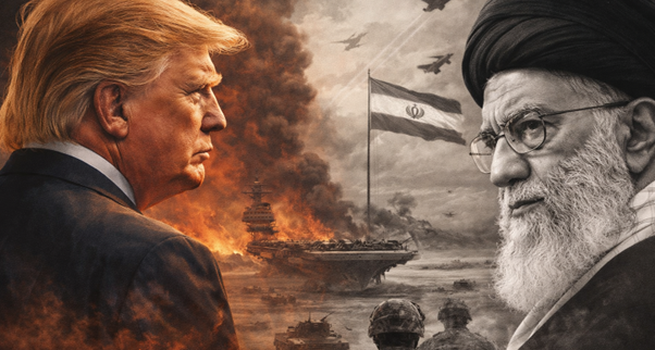
Key Highlights
- The United States is increasing military forces in the Middle East as Iran nuclear talks face collapse, raising the risk of U.S. military strikes on Iran.
- Stalled negotiations over the 2015 Iran nuclear deal have deepened geopolitical tensions between Washington and Tehran.
- Aircraft carriers, fighter jets and warships positioned in the Gulf signal elevated U.S. military readiness.
- A potential U.S.–Iran conflict could disrupt the Strait of Hormuz and drive global oil prices sharply higher.
- Financial markets are reacting to rising geopolitical risk, with energy markets and global equities sensitive to war headlines.
The United States and Iran may be moving closer to a direct conflict. Officials in Washington have warned that military strikes on Iran could happen within weeks. If that takes place, it could lead to a larger and longer war in the Middle East.
At the heart of the crisis are failed nuclear talks and a major American military buildup in the region. The situation is tense. Diplomacy is slowing down. Military forces are moving into place.
Nuclear Talks in Crisis: The Future of the Iran Nuclear Deal
For months, the United States and Iran have tried to restart talks about Iran’s nuclear program. These talks relate to the Joint Comprehensive Plan of Action, also known as the 2015 Iran nuclear deal. That agreement once limited Iran’s nuclear work in exchange for relief from economic sanctions.
When the United States, under President Donald Trump, withdrew from the deal during his earlier term, tensions increased. Since then, Iran has expanded parts of its nuclear program. Western officials worry that Iran is getting closer to having the ability to build a nuclear weapon, even though Iran says its program is peaceful.
Recently, advisers close to President Trump, including Jared Kushner, reportedly met with Iran’s foreign minister. These meetings were meant to close the gap between both sides. However, big disagreements remain.
Vice President JD Vance has signalled that diplomacy may not last much longer. That statement has increased fears that military action could follow if talks fail.
U.S. Military Buildup in the Middle East
At the same time as the talks are struggling, the United States has increased its military presence in the Middle East. Aircraft carriers, warships and hundreds of fighter jets have been sent to the region.
The Pentagon says this is meant to deter Iran and protect American forces and allies. But when so many forces gather in one place, the risk of conflict grows. Military analysts say that any strike on Iran would likely be more complex than recent limited operations elsewhere.
Iran’s nuclear facilities are spread out and protected. A military operation could take weeks rather than days. That makes the situation even more serious.
What Could Happen If War Breaks Out
A war between the United States and Iran would not stay limited to just two countries. Iran has allies and armed groups in Iraq, Syria and Lebanon. It also has missiles and drones that could target American bases or regional partners.
One major concern is the Strait of Hormuz. This narrow waterway carries about one fifth of the world’s oil supply. If fighting disrupts shipping there, oil prices could rise quickly. Higher oil prices often lead to higher fuel costs and more inflation around the world.
Financial markets are already reacting to headlines about rising tensions. Investors dislike uncertainty. The possibility of war creates fear in stock markets, oil markets and currency markets.
Israel and Gulf Countries Watching Closely
Israel has long said it will not allow Iran to develop a nuclear weapon. Gulf countries are also concerned. They want security, but they also fear the damage that a large war could cause to their economies and cities.
If the United States launches airstrikes, Iran could respond with missile attacks or cyber operations. Even a small mistake could turn into a larger regional war.
That is why many leaders are urging caution. A war could be difficult to control once it begins.
Is There Still Time for Diplomacy?
Even with troops and ships in place, diplomacy is not completely over. Backchannel discussions are still happening. Both sides know that war would bring heavy costs.
For the United States, a conflict would require money, military strength and political support at home. For Iran, it could mean economic damage and serious internal pressure.
However, trust is low. Each side doubts the promises of the other. Domestic politics also make compromise harder. Leaders must show strength to their own voters and supporters.
The World Waits as Risk of Military Action Rises
With no clear breakthrough in negotiations and military forces ready, the risk of strikes against Iran is rising. Officials warn that action could come within weeks if talks collapse completely.
The outcome is uncertain. A limited strike could remain contained. Or it could trigger a chain of events that spreads across the region.
For now, the world watches carefully. Oil markets remain sensitive. Investors remain cautious. Diplomats continue their quiet efforts.
The line between pressure and war is thin. History shows that when diplomacy fails and armies move into position, events can move faster than leaders expect.
Whether this moment leads to renewed talks or open conflict may depend on decisions made in the coming days. The stakes are high not only for Washington and Tehran, but for the global economy and regional stability as well.


 Jun 15, 2026




 Please wait processing your request...