
 AU
AU
 UK
UK
 CA
CA
 NZ
NZ
 IND
IND

 US
US

 Share
Share
 X (Formerly Twitter)
 Whatsapp
 Facebook
 LinkedIn
 Telegram
 Email This Article
 Copy Link
 Summarize with AI
 Chat GPT
 Perplexity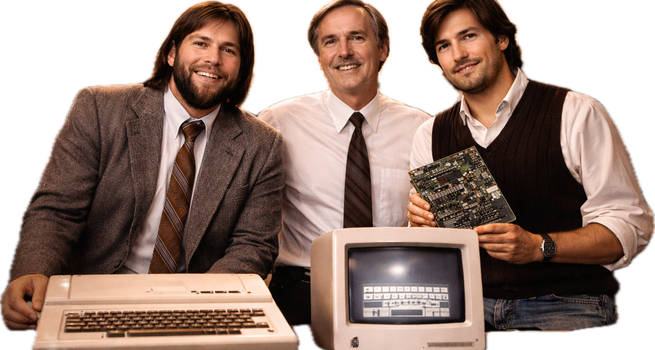
From the brink of bankruptcy to the most valuable company in history, a half-century study of the only firm that built integration into a competitive weapon
Apple Inc (NASDAQ: AAPL), On April 1, 1976, three men signed a partnership agreement in a suburban garage in Los Altos, California. Steve Jobs was twenty-one. Steve Wozniak was twenty-five. Ronald Wayne, the oldest at forty-one, was brought in for his commercial experience. Twelve days later, Wayne sold his 10 per cent stake back to his co-founders for eight hundred dollars, a decision that has since acquired the status of folklore. The remaining two partners had combined capital of roughly $1,750, raised by selling a Volkswagen van and a Hewlett-Packard calculator. Their first product, the Apple I, was a motherboard priced at $666.66.
Fifty years on, the company those men founded has reached a market capitalisation that, at various points in the past five years, has exceeded the gross domestic product of every country in the world except the United States, China, Germany, Japan and India. It has returned nearly a trillion dollars in cash to shareholders in just over a decade. It has built an installed base of more than two billion active devices. It has, through a combination of hardware, software, silicon and services, achieved something no other consumer technology company has managed: sustained premium pricing power over forty years across multiple product categories and multiple macroeconomic cycles.
The trajectory is not a straight line. In the middle of that journey, Apple came within an estimated ninety days of bankruptcy. The story of how it did not collapse, and what it became instead, is worth telling in detail on the occasion of its half-century.
The founding and the first ascent: 1976–1984
The Apple II, launched in 1977 after Mike Markkula's $250,000 investment gave the company a financial foundation, was one of the first mass-market personal computers. It was also the first product to demonstrate the philosophy that would define Apple across every subsequent era. Rather than shipping a kit to be assembled by hobbyists, as its competitors did, Apple shipped a finished machine. The case was designed. The power supply was quiet. The keyboard was integrated. The product was meant to be used, not built.
Revenues reflected the fit. The company generated $774,000 in its first fiscal year, $7.8 million in its second, and $47.9 million in its third. By December 1980, Apple was ready for public markets. Its initial public offering on the Nasdaq priced at $22 per share, raised approximately $100 million, and valued the company at $1.8 billion. It was the largest IPO since Ford Motor Company's in 1956, and it created roughly three hundred millionaires overnight, more than any company had at any point in history.
The Macintosh, launched on 24 January 1984 with Ridley Scott's "1984" Super Bowl commercial, cemented Apple's cultural identity. It was the first commercial computer to bring a graphical user interface to a mass audience. The product was, in many ways, a generation ahead of its time. The problem was that being a generation ahead is often a commercial liability rather than an asset.
The long decline: 1985–1996
The boardroom collision between Jobs and John Sculley, the former Pepsi executive Jobs had recruited in 1983 by asking whether he wanted to sell sugar water or change the world, ended with Jobs being stripped of operational responsibility in May 1985. He left the company he had co-founded shortly afterward, spending the next twelve years at NeXT Computer and acquiring Pixar from George Lucas.
What followed at Apple was a slow unravelling that would have been invisible to most observers at the time. Revenue continued to grow in absolute terms through the late 1980s, reaching $5.6 billion by 1990 and $7 billion by 1992. But the market was shifting underneath the company, and Apple's leadership was not adapting.
The shift was Windows. Microsoft's Windows 3.0, launched in 1990, and Windows 95, launched in 1995, offered a good-enough graphical interface running on cheap commodity hardware from hundreds of manufacturers. The Wintel alliance of Microsoft software and Intel processors created a vast, interoperable, competitively priced ecosystem that Apple could not match on price. Apple's premium vertically integrated model suddenly looked expensive and isolated rather than visionary. Market share, which had been around 16 per cent of the personal computer market in the late 1980s, collapsed toward 4 per cent by the mid-1990s.
The strategic responses made the situation worse. Under Sculley and then Michael Spindler, Apple allowed its product line to balloon into incoherence. By the mid-1990s the company was selling dozens of Macintosh models with overlapping specifications and confusing names, organised under brand lines including Performa, Quadra, Centris and LC. Customers could not easily tell which Mac to buy. Retailers could not stock the range. Engineering resources were spread across too many simultaneous projects.
In 1994, Spindler licensed the Mac operating system to third-party clone makers, hoping to expand the installed base through partners including Power Computing, Motorola and Umax. The result was commercial disaster. Clone makers targeted the high-margin professional segment where Apple made most of its money, undercutting Apple on price while Apple bore the full cost of operating system development. The programme generated neither the expected volume gains nor sustainable economics.
Simultaneously, Apple spent hundreds of millions of dollars attempting to modernise the Macintosh operating system, which had been built on foundations laid in 1984 and lacked protected memory, preemptive multitasking and proper multi-user support. Project Copland, launched in 1994 as the next-generation Mac OS, became a textbook case of software development failure. It was cancelled in 1996 having shipped nothing. A parallel effort called Pink, pursued through a joint venture with IBM called Taligent, consumed further resources and produced nothing commercial.
By fiscal 1996, the numbers had turned catastrophic. Apple posted an $816 million loss, its worst in history. Market capitalisation fell below $3 billion. The business press openly speculated about bankruptcy. Gil Amelio, who replaced Spindler in early 1996, inherited a company that was simultaneously mismanaged, underfunded, strategically confused and losing credibility with customers, developers and investors.
In December 1996, Amelio made the decision that would save Apple. He acquired NeXT Computer, the company Jobs had founded after leaving Apple, for $429 million. The acquisition's ostensible purpose was to obtain NeXTSTEP as the foundation for a modern Mac operating system. Its actual consequence was to bring Steve Jobs back into the building.
The turnaround: 1997–2000
Jobs returned initially as an adviser, then as interim chief executive in July 1997 after Amelio was removed by the board. What he found was a company roughly ninety days from insolvency, by some contemporary estimates. Apple had lost more than $1.8 billion across 1996 and 1997 combined. Cash reserves were dwindling. Credit rating agencies had downgraded the debt. The stock traded below $4 per share in split-adjusted terms.
Jobs moved with a speed and ruthlessness that has few parallels in corporate history.
In August 1997, at the Macworld Expo in Boston, he announced a $150 million investment from Microsoft in non-voting Apple shares, alongside a five-year commitment from Microsoft to continue developing Office for Mac and a cross-licensing patent agreement. The audience booed when Bill Gates appeared by video link. The investment itself was symbolic more than financially material, but the developer commitment was essential. At a moment when Apple's installed base was shrinking and third-party developers were deprioritising the platform, Microsoft's public commitment to continued Mac software development stabilised the ecosystem at exactly the moment it was most at risk.
In the same period, Jobs terminated the clone licensing programme, effectively buying out Power Computing for $100 million and ending the arrangement with other licensees over the following year. He ordered a massive simplification of the product line, reducing the Mac range to a two-by-two matrix: consumer and professional, desktop and portable. The four resulting products, which became the iMac, Power Mac G3, iBook and PowerBook G3, replaced dozens of overlapping SKUs.
Financial discipline returned. Inventory levels were slashed. Projects without clear strategic value were cancelled, including the Newton personal digital assistant line. Operating expenses fell. Margins began to recover.
The iMac, launched in May 1998, was the commercial hit that confirmed the turnaround. Designed by Jonathan Ive and his team, the translucent blue all-in-one computer sold 800,000 units in its first five months. It generated cash flow, restored consumer enthusiasm, and repositioned Apple culturally as a design leader rather than a struggling computer maker. By fiscal 1998, Apple was back in profit with $309 million in net income on $5.9 billion in revenue. The following year delivered $601 million in net income. The near-death experience was over.
The cornerstone
The period from 1997 to 2001 is when Apple's defining strategic principle was established in a form that would not change for the next twenty-five years. That principle was the commitment to end-to-end integration of hardware, software and services within a single controlled ecosystem, as the source of competitive advantage.
This was not a new idea at Apple. It had been implicit in the Apple II and explicit in the original Macintosh. What changed under the returning Jobs was the institutional conviction that vertical integration was the company's permanent strategic posture, not a historical accident to be abandoned under competitive pressure.
The decision ran directly against the prevailing business school orthodoxy of the 1990s, which held that horizontal specialisation produced superior efficiency and that companies should focus on narrow capabilities while letting market forces coordinate the rest. The Wintel model was held up as the validation of this view. Apple's near-death seemed to confirm the verdict.
Jobs rejected the verdict. He believed, and subsequent events have largely validated, that in consumer technology the experience is the product, and that the experience can only be controlled if every layer of the stack is controlled. Hardware must be designed for the software. Software must be designed for the hardware. Both must be designed for the human using them. Services must extend naturally from the devices. Retail must reflect the brand. Packaging must feel considered. Silicon must be designed for specific known products rather than general markets.
This is the cornerstone. Every strategic decision Apple has made since 1997, from the iPod to the Apple Silicon transition to the Vision Pro, is a direct expression of this principle.
The iPod and iTunes: 2001–2006
The iPod, launched on 23 October 2001, was the first new product category under the integrated philosophy, and the first major test of whether the Apple capability stack could be extended beyond personal computers.
The device itself was an expression of the cornerstone. Apple designed the hardware, wrote the software, controlled the user interface, and built iTunes as the desktop application that fed content to the device. When the iTunes Store launched in April 2003, Apple extended the integration into a services layer, selling individual songs at 99 cents each and establishing the commercial model for legitimate digital music distribution.
Competitors sold MP3 players. Apple sold an experience in which ripping, organising, purchasing, syncing and playing music were integrated into a single seamless flow. The competitors were not technically inferior on every specification. They were structurally incapable of matching the experience because no single competitor controlled the hardware, the software and the distribution simultaneously.
The iPod transformed Apple's economics. Revenue grew from $5.4 billion in fiscal 2001 to $19.3 billion in fiscal 2006. iPod unit sales exceeded 39 million in fiscal 2006 alone. Cash reserves expanded. The share price, which had bottomed below $1 per share in split-adjusted terms during the worst of the late 1990s, climbed steadily. Apple was no longer a computer company. It had become a consumer electronics company with computers as one of several businesses.
The iPhone and the transformation: 2007–2011
On 9 January 2007, Jobs took the stage at Macworld in San Francisco and described a new product as three things: a widescreen iPod with touch controls, a revolutionary mobile phone, and a breakthrough internet communicator. They were not three separate devices, he said, but one device. That device was the iPhone, and it changed everything.
The company dropped "Computer" from its name the same day, becoming simply Apple Inc. The symbolism was appropriate. The iPhone would transform the company from a successful consumer electronics firm into the most valuable enterprise in corporate history.
The iPhone's launch in June 2007 initiated the steepest sustained revenue ramp in business history. Fiscal 2007 revenue reached $24.6 billion. By fiscal 2011 it had reached $108.2 billion, a more than fourfold increase in four years. Net income grew from $3.5 billion to $25.9 billion over the same period. In August 2011, Apple briefly surpassed ExxonMobil to become the world's most valuable publicly traded company.
The App Store, launched in July 2008 with five hundred applications, extended the integrated model into a two-sided marketplace. Developers gained access to a rapidly growing installed base of wealthy, engaged customers. Apple collected a 30 per cent commission on transactions. The relationship created flywheel dynamics that competitors have spent fifteen years trying and failing to replicate at comparable scale.
The iPhone also validated, on an unprecedented scale, the philosophical claim underlying the cornerstone. The iPhone did not succeed because it had better specifications than the BlackBerry or Nokia devices it replaced. It succeeded because it delivered an experience those devices could not match. The difference was integration. Apple owned the hardware, the operating system, the App Store, the payments rails, and eventually the silicon. Competitors owned fragments.
The transition and the scale: 2011–2018
Steve Jobs resigned as chief executive on 24 August 2011 and died on 5 October 2011 from complications of pancreatic cancer. Tim Cook, the operations executive Jobs had brought to Apple in 1998 to fix the supply chain chaos he inherited, assumed the top job.
The transition was watched with intense scepticism. Cook had no product design pedigree. He did not give keynotes like Jobs. He was not a cultural figure in the way Jobs had been. The question, repeated constantly through the early 2010s, was whether Apple's innovation engine depended on a single individual who was no longer alive.
The subsequent fifteen years have answered that question. Under Cook, Apple has executed the largest capital return programme in corporate history, transitioned Macs to custom silicon, launched two entirely new product categories in the Apple Watch and the Vision Pro, built Services into a business larger than most Fortune 100 companies, and multiplied the company's market capitalisation by roughly ten times.
March 2012 marked the start of the capital return era. Cook announced Apple's first dividend since 1995 and a $10 billion share repurchase programme. The scale of the programme has expanded continuously since. By the end of calendar year 2025, Apple had returned approximately $935 billion to shareholders through dividends and buybacks combined, one of the largest corporate capital return programmes ever undertaken.
The milestones came in sequence. Fiscal 2012 revenue reached $156.5 billion with net income of $41.7 billion, then the largest corporate profit in technology history. A seven-for-one stock split in June 2014 made shares more accessible to retail investors. The Apple Watch launched in April 2015. Apple Music launched in June 2015. Services revenue crossed $30 billion for the first time in fiscal 2017.
On 2 August 2018, Apple became the first US public company to reach a $1 trillion market capitalisation, closing at $207.39 per share. The milestone had seemed unimaginable even a few years earlier. It was reached on the strength of an iPhone business that had continued to grow for more than a decade, a Services business that had emerged as a genuine second growth engine, and a wearables ecosystem that had established a third.
The Services pivot and the trillion-dollar milestones: 2019–2022
The decade after the first trillion-dollar milestone redefined what Apple was to the financial markets. Through the 2010s, Apple had been valued principally on its iPhone cycle: each new device's sales trajectory dominated quarterly discussions, and concerns about iPhone saturation periodically depressed the stock. Through the early 2020s, that narrative shifted.
Services revenue, which included the App Store, Apple Music, iCloud, AppleCare, Apple TV+, Apple Arcade, Apple News+ and Apple Pay, crossed $46 billion in fiscal 2019, $53 billion in fiscal 2020, $68 billion in fiscal 2021, $78 billion in fiscal 2022, $85 billion in fiscal 2023 and $96 billion in fiscal 2024. Services gross margins exceeded 70 per cent, compared with hardware margins closer to 35 per cent. The shift altered Apple's economic profile materially.
On 19 August 2020, Apple became the first US company to reach a $2 trillion market capitalisation, reaching the milestone only two years after crossing $1 trillion. The pandemic had accelerated demand for Apple products as consumers invested in devices that would support work from home, education from home and entertainment from home. Revenue for fiscal 2021 reached $365.8 billion with net income of $94.7 billion, both all-time records.
On 3 January 2022, Apple briefly touched a $3 trillion market capitalisation intraday, the first company in history to cross that threshold, though it closed marginally below the mark. On 30 June 2023, it closed above $3 trillion for the first time on a closing basis. By the end of calendar year 2025, Apple's market capitalisation sat in the range of $3.7 trillion to $3.9 trillion, having spent much of the prior two years oscillating within striking distance of $4 trillion.
Apple Silicon and the full-stack consolidation: 2020 onward
The announcement at WWDC in June 2020 that Apple would transition its Mac line from Intel to custom silicon was arguably the clearest expression of the cornerstone philosophy since Jobs's return. For more than a decade, Apple had been designing its own A-series chips for the iPhone and iPad, giving it control over the performance, power and feature profile of those devices in ways no Android competitor could match.
Extending that capability to the Mac meant that Apple would, for the first time since the original Macintosh, control every layer of its personal computer stack: the silicon, the operating system, the software frameworks, the hardware design and the retail experience. Intel, which had been the processor supplier for Macs since 2005, would be removed from the equation.
The M1 chip launched in November 2020. Reviews were extraordinary. The M1 MacBook Air delivered performance per watt that no Intel-based laptop could approach, along with battery life that in many cases doubled its predecessors. The M1 Pro and M1 Max followed in 2021, the M2 family in 2022, the M3 in 2023, the M4 in 2024 and the M5 in 2025.
Each generation demonstrated the same point: when a company designs silicon for specific known products rather than general markets, and when it designs the operating system on top of that silicon, the resulting performance envelope is structurally unreachable by horizontally organised competitors. Intel, having lost the Apple account, has spent the subsequent years attempting to catch up in laptop performance per watt and has not fully succeeded.
Vision Pro and the spatial frontier: 2023–2026
The Vision Pro, announced at WWDC in June 2023 and launched in the United States in February 2024, marked Apple's first entirely new product category since the Apple Watch. The mixed-reality headset priced at $3,499 was deliberately positioned as a premium first-generation device rather than a mass-market launch, in much the same way the original iPhone had been positioned relative to its subsequent derivatives.
Early commercial performance has been mixed. The device has not achieved iPhone-scale adoption, and Apple has not yet shipped the promised lower-cost variant at this writing. But the Vision Pro's strategic importance is not captured by first-year unit sales. It represents Apple's bet on spatial computing as the next major paradigm after mobile, and it establishes the company's foothold in that paradigm on its own terms.
The device also embodies the cornerstone in its purest form. Apple designed the custom silicon, the custom displays, the visionOS operating system, the industrial design, the manufacturing process and the retail demonstration experience. Every layer is Apple's. No competitor making a mixed-reality headset, including Meta with the Quest line and various other entrants, has this degree of integration. Whether spatial computing becomes the next mass computing paradigm is still unresolved. If it does, Apple is positioned in that category with the same advantages it carried into mobile in 2007.
Why competitors could not follow
The question that has haunted Apple's competitors for two decades is why the model is not replicable. Dell, HP, Lenovo, Microsoft, Amazon and Google have each attempted elements of the Apple strategy, and none has successfully reproduced the whole.
The answer lies in organisational structure rather than product development. Apple is organised around capabilities, not products. It has a unified industrial design function, a unified software function, a unified silicon function, a unified operations function, a unified retail function. When the company enters a new product category, it applies existing capabilities to a new problem rather than building a new business.
Dell is organised around product lines with separate financial accountability. Entering a smartphone market requires Dell to build a smartphone organisation from scratch, which means building the capabilities alongside the products. The resulting attempts have consistently underperformed. The Dell Streak was discontinued within two years of its 2010 launch. The Dell DJ Ditty music player failed. The Dell LCD TV line was discontinued.
HP acquired Palm for $1.2 billion in 2010 to enter the smartphone business, killed the entire webOS effort within fifteen months, and wrote off the investment. The HP TouchPad tablet was discontinued forty-nine days after launch.
Lenovo acquired Motorola Mobility from Google in 2014 for roughly $2.9 billion and has struggled with the resulting smartphone business ever since. The Motorola business continues to operate but has never regained the cultural or commercial position it held before the acquisition.
Microsoft has tried hardware repeatedly and failed repeatedly. Zune lost decisively to iPod. Windows Phone lost decisively to iPhone and Android. Microsoft Band lost decisively to Apple Watch and Fitbit. The Nokia acquisition in 2014 resulted in write-downs exceeding $7.5 billion. The Surface line has reached modest viability but only after more than a decade of losses, and Surface is fundamentally a PC rather than a new category.
The common pattern across all these failures is the same. The companies treated category extension as a portfolio decision rather than a capabilities extension. They hired people, built supply chains, launched products, and discovered that the capabilities required to make a truly differentiated consumer device are not the capabilities around which they had built their companies.
Apple possesses those capabilities because it spent from 1997 to the present rebuilding itself around them. The rebuilding was triggered by near-death. No horizontal competitor has had an equivalent crisis severe enough to force the same kind of transformation. Absent such a crisis, existing structures resist the reorganisation required.
The shareholder wealth creation
The numbers behind the fifty-year journey are difficult to absorb even with repeated exposure.
A single share purchased at IPO in December 1980 for $22 would, through five subsequent stock splits in 1987, 2000, 2005, 2014 and 2020, have become 224 shares. At a closing price of approximately $250 per share at the end of calendar year 2025, those 224 shares would have been worth roughly $56,000. The same $22 invested in the S&P 500 index with dividends reinvested would have grown to approximately $1,800.
A $1,000 investment in Apple at the IPO, with dividends reinvested, would have grown to approximately $2.8 million to $3 million by the end of calendar year 2025, a return multiple of roughly 2,800 to 3,000 times. The equivalent S&P 500 investment would have reached approximately $75,000 to $85,000. Apple outperformed the benchmark by a factor of roughly thirty-five to forty times over forty-five years.
Market capitalisation has grown from $1.8 billion at IPO to approximately $3.8 trillion by the end of calendar year 2025, a multiple of around 2,100 times. Cumulative capital returned to shareholders through dividends and buybacks since 2012 has reached approximately $935 billion, a figure greater than the entire market capitalisation of all but a handful of companies in the world. Combined enterprise value appreciation and cumulative capital returns represent total shareholder wealth creation of approximately $4.7 trillion since the IPO.
These are not merely impressive numbers. They are among the largest wealth creation events in the history of capital markets.
What the next fifty years might demand
Apple arrives at its fiftieth anniversary with a set of advantages and a set of vulnerabilities. The advantages are structural and deep: the integrated ecosystem, the custom silicon leadership, the Services flywheel, the brand, the cash flow and the capital return capacity. The vulnerabilities are genuine and worth acknowledging.
Regulatory pressure on the App Store business model has grown considerably, with the European Union's Digital Markets Act forcing changes to Apple's long-standing commission structure and alternative payment restrictions. Similar pressure is building in the United States through antitrust litigation and in jurisdictions including South Korea, Japan and India. The Services business, which has become central to Apple's valuation premium, is exposed to this regulatory trajectory.
Artificial intelligence has emerged as a computing paradigm that Apple entered later than its peers. Apple Intelligence, announced in June 2024, has been rolled out incrementally and has faced criticism for falling behind the AI capabilities of Google, Microsoft and OpenAI-powered alternatives. Whether Apple can re-establish leadership in the AI era remains an open question.
China remains both a manufacturing base and a significant end market, and the geopolitical relationship between the United States and China directly affects Apple's operations. The company has begun diversifying production into India and Vietnam, but the scale of its China exposure cannot be unwound quickly.
Succession beyond Tim Cook has not been publicly addressed in detail, and investor attention to that question will intensify in the coming years.
None of these challenges is insurmountable. All of them are manageable within the framework Apple has built. The deeper question is whether the integrated ecosystem model, which has proven so durable against horizontal competitors in consumer hardware, retains its advantages in a world where the next computing paradigm may be defined by artificial intelligence models rather than physical devices. This is the strategic question the next decade will answer.
The meaning of the fifty-year arc
Apple's first fifty years encompass a trajectory that would be difficult to believe if it had not happened. A garage partnership became a listed company. A listed company became a category leader. A category leader nearly collapsed. A near-collapse was reversed by the return of a founder. A reversal became a transformation. A transformation became a dominant position in multiple overlapping markets. A dominant position became the most valuable company in the history of capital markets.
The arc is not primarily a story about products, although the products matter. It is not primarily a story about leadership, although the leadership has been extraordinary. It is primarily a story about the durability of a specific strategic principle, held through periods of apparent obsolescence, validated over decades against every competing philosophy, and compounded through patient execution into the largest concentration of enterprise value ever assembled in consumer technology.
The principle is that integration, coherently executed, beats fragmentation in categories where experience is the product. Apple has held this principle since 1977, abandoned it briefly during the 1990s, returned to it decisively under Jobs, and extended it under Cook into every product category the company has entered. Fifty years in, there is still no public company that has built a comparable capability stack or sustained a comparable integration discipline.
Whether the next fifty years will be as extraordinary as the first is unknowable. What is knowable is that Apple reaches its half-century not as an ageing incumbent awaiting disruption but as a company that has repeatedly reinvented its economic engine every ten to fifteen years since its near-death, each reinvention extending the same fundamental philosophy into a new domain. The philosophy is the asset. The products are its expression.
That is the anatomy of the comeback. It is also, plausibly, the anatomy of what comes next.
This article is intended for informational purposes and does not constitute investment advice. Figures are stated as of the time of writing and should be verified against primary sources for precise accuracy.


 Jun 05, 2026




 Please wait processing your request...