
 AU
AU
 UK
UK
 CA
CA
 NZ
NZ
 IND
IND

 US
US

 Share
Share
 X (Formerly Twitter)
 Whatsapp
 Facebook
 LinkedIn
 Telegram
 Email This Article
 Copy Link
 Summarize with AI
 Chat GPT
 Perplexity
Meta Description: Global equity capital markets surged 40% in Q1 2026, with IPO proceeds jumping 47% to $44 billion. As SpaceX, OpenAI, and Anthropic eye historic listings, can U.S. markets handle the coming wave? Here's what investors need to know.
Key Highlights
- Global equity capital markets issuance rose 40% year-on-year to USD 211 billion in Q1 2026
- IPO proceeds climbed 47% to USD 44 billion despite a 4% decline in the number of listings
- SpaceX targets a valuation of up to USD 1.75 trillion, which could make it one of the largest IPOs in history
- S. IPO proceeds surged 91% year-on-year, underscoring institutional depth and demand
- Geopolitical tensions, software sector weakness, and regulatory scrutiny remain key risk factors
Capital Markets in 2026: A Resilient Start With High Stakes Ahead
The first quarter of 2026 delivered the strongest global equity capital markets performance since 2021. Companies raised USD 211 billion across share sales in the three months to March 31, according to LSEG data, a 40% increase from the same period a year earlier. IPO proceeds alone reached USD 44 billion, a 47% jump, even as the total number of listings dipped slightly.
These figures arrive against a complicated macroeconomic backdrop. Conflict in the Middle East, a pronounced selloff in software-sector equities, and continued uncertainty over the pace of monetary easing have unsettled investor sentiment across asset classes. That equity issuance held firm and in some cases accelerated through this period says something meaningful about the structural depth of institutional capital markets, particularly in the United States.
The more pressing question is what comes next. Several of the largest potential listings in capital markets history are queued for the months ahead, each carrying valuations that would test liquidity conditions even in benign environments.
Mega-Listings on the Horizon: SpaceX, OpenAI, and Anthropic
Several of the most consequential potential listings in capital markets history are now in the pipeline, each carrying valuations that would test liquidity conditions even in benign environments.
SpaceX is reportedly targeting an IPO at a valuation of up to USD 1.75 trillion, with proceeds that could exceed USD 75 billion. If it proceeds on that scale, it would rank among the largest public offerings ever recorded. The company's position in satellite infrastructure and commercial launch services has made it a rare asset: operationally credible, strategically critical, and largely shielded from the software weakness that has weighed on other technology names.
OpenAI and Anthropic are also understood to be considering public listings later in the year. Both occupy central positions in the artificial intelligence infrastructure buildout — a theme that has attracted sustained institutional interest even as sentiment toward software and consumer tech has cooled. The degree to which AI infrastructure can continue commanding premium valuations amid broader sector divergence will be one of the defining valuation questions of the year.
These listings are not guaranteed. They are, however, structurally significant. The combined implied proceeds from SpaceX, OpenAI, and Anthropic could represent a meaningful liquidity event for the private equity firms and early institutional investors that seeded them. The secondary effects on capital allocation across the broader technology sector could be considerable.
U.S. Market Depth: A Structural Advantage Under Pressure
The United States continued to serve as the deepest and most liquid venue for large equity transactions. American companies raised more than USD 23 billion through IPOs in the year to date, a 91% increase from the prior year. That figure reflects both genuine demand from institutional investors and the structural advantages that U.S. capital markets offer to issuers seeking to absorb very large transactions without material price concession.
This depth is not unlimited. Volatility in the software sector has already recalibrated expectations for certain categories of issuer. A prolonged geopolitical disruption, a deterioration in corporate earnings growth, or a sharp revision to interest rate expectations could reduce the effective capacity of markets to absorb the scale of issuance now in the pipeline.
Still, the institutional investor base has thus far chosen to remain engaged. The absence of any systemic retreat from equities, despite the ambient noise of conflict and macroeconomic uncertainty, suggests that large-cap, defensively positioned issuers with genuine earnings visibility retain access to capital on reasonably favorable terms.
The Defence Rotation and Asian Strength
Outside the United States, the sector composition of IPO activity tells a distinct story. In Europe, the Middle East, and Africa, IPO proceeds reached nearly USD 7 billion, up from USD 5.8 billion in the same period a year earlier. The pipeline is weighted toward defence, reflecting both the geopolitical environment and the fiscal decisions of European governments accelerating defense procurement.
The largest single deal of the quarter was the USD 4.5 billion IPO of Czech defence group CSG, which priced successfully and was well absorbed by institutional investors. That outcome reinforced a broader thesis: companies that are structurally tied to government spending and national security priorities are carrying a relative valuation premium in the current environment.
Asia also performed credibly. IPO deal values across Asian markets rose 15% to USD 13.6 billion. The technology sector remained the primary driver, though activity broadened into industrials, natural resources, and financials. Japanese payments firm PayPay completed its IPO after only a brief, single-day delay linked to Middle East tensions, a signal that execution risk, while real, is manageable for well-prepared issuers.
What Could Go Wrong
Not every deal has crossed the line. Visma's potential USD 20 billion IPO in London and the planned float of Dutch telecoms firm Odido have both been postponed. These deferrals underscore that while institutional appetite is present, it is not indiscriminate. Deal-specific factors, including regulatory scrutiny, pricing ambition, and sector positioning, continue to drive differentiated outcomes.
The private equity overhang remains a structural concern. Firms are under increasing pressure to return capital to limited partners after an extended period of subdued exit activity. The IPO market has become the primary release valve. If market conditions deteriorate and that valve closes, the implications for fund performance and future capital raising could be significant.
Conclusion
The first quarter of 2026 demonstrated that institutional capital markets retain meaningful capacity to absorb large equity transactions under conditions of elevated uncertainty. The test that follows, centered on SpaceX, OpenAI, and other large-scale listings, will determine whether that capacity extends to transactions of historic scale. Investors, issuers, and underwriters face the same fundamental question: how much depth is enough, and at what valuation does confidence become risk?
The structural case for selective engagement with the IPO pipeline remains intact. The execution risk, however, is real and contingent on conditions that no participant fully controls.


 Jun 05, 2026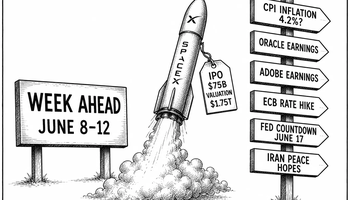




 Please wait processing your request...