
 AU
AU
 UK
UK
 CA
CA
 NZ
NZ
 IND
IND

 US
US

 Share
Share
 X (Formerly Twitter)
 Whatsapp
 Facebook
 LinkedIn
 Telegram
 Email This Article
 Copy Link
 Summarize with AI
 Chat GPT
 Perplexity
Key Highlights
- SpaceX may file its IPO prospectus imminently, advancing what could be the largest listing in history
- The company is reportedly targeting a valuation near $1.8 trillion
- Deepening ties between SpaceX and Tesla are reshaping investor perception
- SpaceX’s margin profile could significantly exceed traditional aerospace peers
- Elon Musk’s cross-company influence remains central to valuation narratives
Introduction: A Defining Moment for Capital Markets
The prospect of an initial public offering by SpaceX is rapidly transitioning from speculation to near-term reality. Reports indicate that the company could file its IPO prospectus within days, marking a pivotal moment not only for equity markets but also for the broader innovation economy.
For investors, the implications extend beyond the listing itself. The event is prompting a reassessment of valuation frameworks across high-growth technology and industrial companies, particularly Tesla, whose strategic and operational ties to SpaceX have deepened in recent years.
At stake is more than a record-breaking IPO. The listing could redefine how markets price founder-led ecosystems, vertically integrated innovation, and frontier technologies spanning artificial intelligence, aerospace, and advanced manufacturing.
Global Capital Markets and the Rise of Mega Listings
The anticipated IPO arrives at a time when global capital markets are recalibrating toward scale and profitability. Over the past decade, public investors have grown increasingly selective, prioritising cash flow visibility and margin resilience over pure growth narratives.
Yet SpaceX represents a departure from conventional benchmarks. With a reported valuation target approaching $1.8 trillion, the company would surpass most listed industrial and technology firms, rivaling the market capitalisation of Tesla itself.
The scale reflects structural shifts in the space economy. SpaceX currently accounts for more than half of global orbital launches, underpinned by its reusable rocket technology that has materially reduced launch costs. This cost advantage has enabled the company to capture a dominant share of both commercial and government contracts, creating a high-barrier market position.
At the same time, broader macro conditions remain supportive. Equity markets, including the S&P 500, have demonstrated resilience, aided by easing commodity prices and stabilising geopolitical expectations. This backdrop provides a conducive environment for a landmark listing.
Strategic Positioning: SpaceX as a Multi-Domain Platform
Market Leadership in the Space Economy
SpaceX’s core strength lies in its vertically integrated model. By controlling launch systems, satellite infrastructure, and mission operations, the company has created a closed-loop ecosystem that enhances efficiency and reduces dependency on external suppliers.
Its Starlink satellite network further expands this advantage, generating recurring revenue streams that complement its launch business. This dual-engine model positions SpaceX as both an infrastructure provider and a service platform.
Expansion into Artificial Intelligence Infrastructure
A key driver behind the IPO is the company’s ambition to expand into artificial intelligence infrastructure. Plans to deploy data centres in space signal a strategic pivot toward high-performance computing capabilities that could redefine latency, data transmission, and processing efficiency.
This ambition has been reinforced by the integration of xAI, an artificial intelligence venture now linked to SpaceX’s broader ecosystem. The convergence of aerospace and AI introduces a new category of capital-intensive, high-margin opportunities that traditional valuation models struggle to capture.
Interlinkages with Tesla
The relationship between SpaceX and Tesla has become increasingly material. In 2025, Tesla invested $2 billion into xAI, which SpaceX subsequently acquired. Additionally, both companies are collaborating on a semiconductor manufacturing initiative aimed at producing advanced AI computing hardware.
These developments create a feedback loop in investor perception. Success in one entity reinforces confidence in the broader ecosystem led by Elon Musk.
Financial Profile and Margin Dynamics
Superior Profitability Potential
One of the most striking aspects of SpaceX’s financial profile is its margin structure. Estimates suggest EBITDA margins could reach as high as 50 percent, significantly above the roughly 20 percent average for aerospace companies within the S&P 500.
This level of profitability reflects several structural advantages:
- Reusability of launch vehicles, reducing capital intensity over time
- High utilisation rates across launch infrastructure
- Recurring revenue from satellite services
- Limited direct competition at scale
While such margins are rare, they are not unprecedented. TransDigm Group, for instance, has demonstrated that specialised aerospace firms can sustain margins above 50 percent through pricing power and niche market dominance.
Capital Requirements and IPO Scale
The IPO is expected to raise as much as $50 billion, making it potentially the largest capital raise in history. The proceeds are likely to be directed toward:
- AI infrastructure development
- Expansion of satellite networks
- Scaling launch capabilities
- Semiconductor manufacturing investments
The magnitude of capital deployment underscores the company’s ambition to operate at the intersection of multiple high-growth sectors.
Financial and Market Implications for Tesla Stock
Valuation Spillover Effects
For Tesla, the SpaceX IPO introduces both opportunities and risks. On one hand, the listing could enhance Musk’s credibility as a value creator, reinforcing investor confidence in Tesla’s long-term strategy.
On the other hand, relative valuation comparisons may become more pronounced. If SpaceX achieves a higher valuation multiple, investors may begin to reassess Tesla’s premium, particularly in the context of its evolving growth trajectory.
Capital Allocation and Strategic Alignment
The growing integration between the two companies suggests a shift toward ecosystem-based capital allocation. Tesla’s investment in AI and semiconductor manufacturing aligns with SpaceX’s infrastructure ambitions, indicating a coordinated strategy across Musk-led entities.
This alignment could unlock synergies but also raises questions about capital efficiency and governance. Investors will closely monitor how resources are allocated across ventures and whether returns justify the scale of investment.
Investor Sentiment and Leadership Premium
Ultimately, the SpaceX IPO is likely to reinforce the “leadership premium” associated with Elon Musk. Markets have historically assigned higher valuations to companies led by visionary founders, particularly when they demonstrate the ability to scale across industries.
A successful IPO would strengthen this narrative, potentially supporting Tesla’s valuation even in the face of competitive and operational challenges.
Stock Market Outlook and Investment Strategy
Repricing of Innovation Assets
The listing could trigger a broader repricing of innovation-driven companies. Investors may place greater emphasis on:
- Platform scalability
- Margin sustainability
- Cross-industry integration
- Founder-led execution
This shift could benefit companies with strong technological moats while putting pressure on those with less differentiated offerings.
Sector Rotation and Capital Flows
The IPO is also likely to influence sector allocation. Capital may rotate toward aerospace, AI infrastructure, and advanced manufacturing, reflecting growing investor interest in long-duration growth themes.
At the same time, traditional sectors may face relative underperformance as capital is redirected toward high-growth opportunities.
Strategic Outlook: The Convergence of Space, AI, and Capital
Looking ahead, SpaceX’s trajectory will depend on its ability to execute across multiple fronts simultaneously. Key considerations include:
- Scaling AI infrastructure without compromising core operations
- Maintaining cost leadership in launch services
- Navigating regulatory frameworks across jurisdictions
- Managing capital intensity while sustaining high margins
For Tesla, the focus will be on leveraging synergies while maintaining operational discipline. The interplay between the two companies will remain a central theme for investors.
More broadly, the IPO signals a new phase in the evolution of capital markets, where boundaries between industries are increasingly blurred and valuation frameworks must adapt to multi-domain business models.
Conclusion
The impending IPO of SpaceX represents a landmark event with far-reaching implications. Beyond its scale, the listing encapsulates a shift toward integrated innovation ecosystems that span aerospace, artificial intelligence, and advanced manufacturing.
For Tesla, the development introduces both validation and complexity. As investors reassess valuation frameworks and strategic alignment, the influence of Elon Musk will remain a defining factor.
In a market increasingly driven by scale, vision, and execution, the SpaceX IPO may well set the benchmark for the next generation of global champions.


 Jun 05, 2026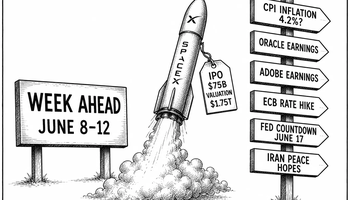




 Please wait processing your request...