
 AU
AU
 UK
UK
 CA
CA
 NZ
NZ
 IND
IND

 US
US

 Share
Share
 X (Formerly Twitter)
 Whatsapp
 Facebook
 LinkedIn
 Telegram
 Email This Article
 Copy Link
 Summarize with AI
 Chat GPT
 Perplexity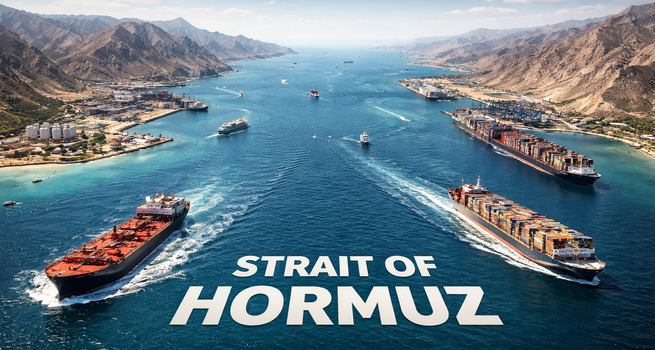
Key Highlights
- Strait of Hormuz disruption affects nearly 25% of global seaborne oil trade.
- Ship transits have collapsed by about 97%, signalling a severe supply bottleneck.
- Oil and gas prices have surged sharply, triggering inflation concerns.
- Asia faces the highest exposure to energy supply disruptions.
- Rising shipping, insurance and fuel costs are amplifying global economic risks.
A Critical Chokepoint Under Stress
The sudden disruption in the Strait of Hormuz has emerged as one of the most significant macroeconomic shocks in recent years. Often described as the world’s most important energy corridor, the strait handles roughly a quarter of global seaborne oil trade, equivalent to nearly 20 million barrels per day.
Recent developments have transformed what was once a geopolitical risk into a tangible economic event. Ship traffic through the passage has dropped sharply, while energy prices have surged, raising immediate concerns about supply chains, inflation, and global growth.
Markets are beginning to price in the shock, but the full extent of its impact may still be underestimated.
Global Trade and Energy Markets: A Systemic Disruption
Energy Market Shock and Oil Price Surge
The most immediate effect of the disruption has been felt in energy markets. Oil prices have climbed above $90 per barrel, marking a sharp increase of approximately 27% in a matter of days. Natural gas markets have reacted even more aggressively, with prices surging by around 74% over the same period.
Such rapid price movements reflect both supply constraints and heightened risk premiums. The Strait of Hormuz is not merely a transit route but a critical artery for global energy flows, linking major producers in the Middle East with consumers across Asia and beyond.
With ship transits falling by roughly 97%, from an average of around 129 vessels per day to single digits, the scale of the disruption is unprecedented in recent years.
Sector Analysis: Shipping, Freight and Supply Chain Stress
Shipping Costs and Maritime Disruptions
The impact extends beyond energy prices into the broader logistics ecosystem. Shipping costs have surged across multiple dimensions:
- Tanker rates have risen between 54% and 72%
- Marine fuel costs have nearly doubled, increasing by around 100%
- War-risk insurance premiums have surged two to four times per voyage
These increases are not isolated. They represent a compounding effect, where higher fuel costs, insurance premiums, and limited vessel availability combine to push freight rates higher.
The result is a sharp increase in the cost of moving goods globally, particularly energy and bulk commodities.
Macro Impact: Inflation Transmission Across the Economy
Energy to Food Inflation Link
The current disruption highlights a familiar but often underestimated dynamic: the transmission of energy price shocks into broader inflation.
The relationship can be summarised as a cascading effect:
Energy → Transport → Food
Higher oil and gas prices increase transportation and production costs, which in turn raise food prices. This effect is further amplified by the role of fertilizers, a significant portion of which also passes through the Strait of Hormuz.
Approximately one-third of global fertilizer trade moves through the strait. Any disruption in supply can lead to higher agricultural input costs, ultimately feeding into food inflation.
This dynamic has been observed during previous global shocks, including the pandemic and the early stages of the Ukraine conflict.
Regional Exposure: Asia at the Epicentre
Energy Dependence and Economic Vulnerability
Asia emerges as the most exposed region in this scenario. Approximately 84% of crude oil and 83% of liquefied natural gas transported through the Strait of Hormuz is destined for Asian markets.
This concentration creates a structural vulnerability. Countries across Asia rely heavily on imported energy to sustain industrial activity, power generation, and economic growth.
Any sustained disruption could lead to:
- Energy shortages
- Rising import costs
- Currency depreciation pressures
- Slower economic growth
The implications extend beyond energy markets into broader macroeconomic stability.
Financial Market Implications: Rising Risk Premiums
Bond Markets and Capital Flows
The disruption is also being reflected in financial markets, particularly in bond yields across Middle Eastern economies. Yields have risen between 0.24 and 0.64 percentage points, indicating increased risk premiums.
Higher yields reflect investor concerns about:
- Regional instability
- Fiscal pressures from higher subsidy costs
- Potential disruptions to export revenues
At the same time, global investors are reassessing risk exposure, leading to shifts in capital flows and asset allocation.
Equity Market Trends: Winners and Losers
Sectoral Divergence in Global Markets
The shock is creating clear divergences across equity markets.
Beneficiaries include:
- Energy producers, which benefit from higher oil and gas prices
- Shipping and tanker companies, supported by rising freight rates
- Defense companies, amid heightened geopolitical tensions
Sectors under pressure include:
- Airlines, facing higher fuel costs
- Logistics and transport companies, dealing with rising operating expenses
- Energy-importing economies, particularly in emerging markets
This divergence reflects the broader re-pricing of risk and opportunity across sectors.
Stock Market Outlook: Stagflation Risks Re-emerge
The combination of rising energy prices and supply chain disruptions raises the spectre of stagflation, a scenario characterised by high inflation and slowing growth.
Central banks, already navigating complex policy environments, may face renewed challenges:
- Tightening policy to control inflation risks slowing growth further
- Maintaining accommodative policy risks entrenching inflation
The balance between these objectives becomes increasingly difficult in the face of external shocks such as this.
Strategic Outlook: Duration Will Define the Impact
The ultimate impact of the Strait of Hormuz disruption will depend largely on its duration and intensity.
In a short-term scenario, markets may absorb the shock through higher prices and temporary supply adjustments. However, a prolonged disruption could lead to:
- Structural shifts in energy trade routes
- Increased investment in alternative supply chains
- Accelerated energy transition efforts
At the same time, governments may be forced to intervene through strategic reserves, subsidies, or diplomatic measures to stabilise markets.
Conclusion: A Shock Markets Cannot Ignore
The disruption in the Strait of Hormuz represents more than a regional geopolitical event. It is a systemic shock with far-reaching implications for energy markets, global trade, and inflation dynamics.
While markets have begun to react, the full extent of the impact remains uncertain. The interconnected nature of modern economies means that disruptions in one critical node can propagate rapidly across multiple sectors and regions.
For investors and policymakers alike, the key question is not whether the shock matters, but how long it will last and how deeply it will reshape the global economic landscape.


 Jun 05, 2026




 Please wait processing your request...