
 AU
AU
 UK
UK
 CA
CA
 NZ
NZ
 IND
IND

 US
US

 Share
Share
 X (Formerly Twitter)
 Whatsapp
 Facebook
 LinkedIn
 Telegram
 Email This Article
 Copy Link
 Summarize with AI
 Chat GPT
 Perplexity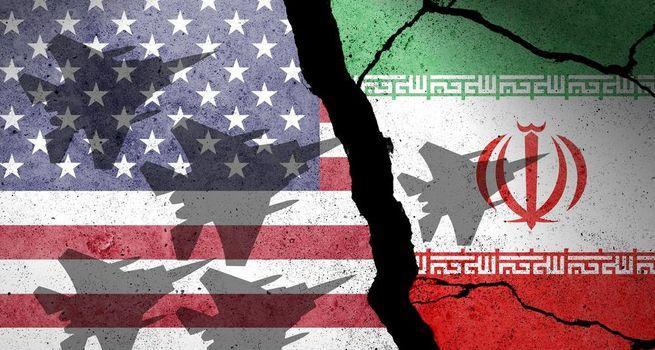
Allied nations blocking American aircraft, treaty partners negotiating with adversaries, oil markets pricing in permanent strategic fracture. The Iran war has not created a transactional world order. It has simply made one impossible to ignore.
Key Highlights
- Spain, Italy, France and Switzerland blocked or restricted U.S. military overflights during Operation Epic Fury, signalling a structural fracture in automatic allied compliance.
- The Philippines conducted independent bilateral diplomacy with Tehran over Hormuz safe-passage rights, bypassing Washington entirely, as the strait's closure threatened roughly 21 percent of global oil and liquefied natural gas supply.
- Multialignment, long a quiet default across emerging economies, is now the explicit strategic posture of countries that collectively host more than 40 U.S. overseas military installations.
- The erosion of American predictability, not hostility to American power, is driving governments toward deliberate strategic diversification.
- Oil markets, dollar demand, and defense procurement are all beginning to price in the structural erosion of automatic allied compliance, a realignment with long-duration capital implications.
A Fracture in Plain Sight
When American B-2 stealth bombers and Israeli jets launched coordinated strikes across Iran on February 28 in what Washington designated Operation Epic Fury, the military planning assumed a familiar operating environment. Bases would be available. Allies would comply. The architecture of post-Cold War alignment would hold.
It did not. Spain shut its airspace to American military aircraft. Italy turned planes away from Sigonella, one of the most strategically positioned bases in the Mediterranean theatre. France blocked Israeli aircraft transporting American munitions through its airspace. Switzerland, citing its laws of permanent neutrality, rejected seven of eleven U.S. flight requests in three weeks. These were not adversaries. They were treaty-bound partners of the most powerful military on earth, and they said no.
"If NATO is just about us defending Europe if they're attacked, but them denying us basing rights when we need them, that is not a very good arrangement."
Marco Rubio, U.S. Secretary of State, March 2026
He was correct in the diagnosis. The arrangement he described is not the arrangement that now exists. The war did not create this reality. It revealed one that had been forming for a decade.
The Calculus of Refusal
Spain's Defense Minister Margarita Robles stated the logic without diplomatic softening: two countries went to war and expected others to join them. Italy's Giorgia Meloni, governing from the political right, and Spain's Pedro Sanchez, governing from the left, reached the same decision through different ideological routes. The underlying calculation was identical across both governments: domestic opposition to the war outweighed the risk of American displeasure. Pragmatism, not principle, determined the outcome.
That same pragmatism defined the response in the Gulf. Bahrain, Kuwait, Qatar and the UAE collectively host approximately 30,000 U.S. military personnel across five major installations. All have absorbed Iranian missile and drone strikes as a direct consequence of that hosting relationship. Kuwait had desalination infrastructure damaged. The UAE reportedly downplayed fuel-storage drone strikes to avoid public escalation. These governments did not sign up to serve as frontlines in a bilateral American-Iranian conflict. The security guarantee they purchased is delivering something materially different.
Multialignment as Default Strategy
Scholars had a term for this pattern of behaviour before the war made it unavoidable in policy discussions: multialignment. The practice involves maintaining overlapping partnerships across rival blocs without committing fully to any. Turkey, a NATO member, purchased Russia's S-400 missile defence system. India, a partner in the Quad security framework, continued importing Russian crude at a volume exceeding 1.7 million barrels per day through 2025 and declined to impose sanctions over Ukraine. Saudi Arabia deepened investment relationships with Beijing while simultaneously hosting five American military installations. Kazakhstan publicly describes its simultaneous engagement with Russia, China, the European Union and the United States as deliberate diversification that enhances strategic autonomy, not indecision.
The Institute for Economics and Peace, in its January 2026 report on geopolitical fragmentation, identified the same pattern across Indonesia, Brazil, South Africa, Mexico and Vietnam. Each government has expanded engagement in multiple strategic directions, reducing exposure to any single patron and maximising leverage with all of them. The Iran war has accelerated and publicly confirmed what was already the dominant posture of most of the global order.
The Philippines case merits separate attention. A treaty ally of the United States, Manila opened direct bilateral negotiations with Tehran over safe-passage arrangements for Philippine-flagged vessels in the Strait of Hormuz while American bombers remained active over Iranian territory. Washington was not consulted. The message was unambiguous: allied status does not preclude independent diplomacy with active American adversaries when national economic interests are at stake.
Asymmetric Dividends
The strategic beneficiaries of this reordering require little identification. Russia, still subject to comprehensive Western sanctions over Ukraine, watched the Trump administration temporarily waive restrictions on Russian oil in transit as Washington scrambled to manage energy prices in the wake of Hormuz disruption. A significant concession, extracted at zero operational cost to Moscow.
China declined to assist in securing the Strait of Hormuz. It did not need to intervene. Each week that American credibility deteriorates with Gulf partners and Pacific treaty allies, Beijing's patient, non-interventionist posture accumulates comparative attractiveness. The most transactional power in the current environment is the one absorbing costs. Its principal competitor is collecting geopolitical returns by doing very little.
Market Implications: Pricing Strategic Autonomy
Capital markets are beginning to reflect what strategists have known for years. Brent crude has traded at a sustained geopolitical risk premium since the Hormuz closure, with options markets pricing elevated volatility well into the second half of 2026, an indication that traders no longer treat supply disruptions as temporary shocks to be quickly resolved by allied coordination. They are pricing in structural instability.
The dollar's traditional safe-haven premium is also under quiet pressure. In prior Middle East crises, investors rotated into U.S. Treasuries and dollar-denominated assets as allied unity reinforced confidence in American institutional stability. This cycle has been more muted. Gold has outperformed Treasuries as a safe-haven destination since the strikes began, suggesting that a subset of institutional investors are hedging not just against the conflict but against the reliability of the American-led security architecture itself.
Defense procurement patterns across Europe and the Indo-Pacific carry longer-duration capital implications. Germany's Rheinmetall, France's Thales and South Korea's Hanwha are all operating against multi-year order backlogs as governments accelerate domestic defense industrial capacity rather than defaulting to American supply chains. This is not merely a budgetary response to NATO burden-sharing pressure. It is a structural diversification of military supply away from single-patron dependence, with direct revenue implications for European and Asian defense sectors and a gradual compression of the market dominance historically held by U.S. prime contractors.
What the Post-War Order Looks Like
The Iran conflict will eventually reach resolution through diplomacy, exhaustion or mutual calculation. Former Iranian Foreign Minister Javad Zarif has already outlined a peace framework. Pakistan has pushed for negotiations. The structural conditions for a deal exist. What will not resolve with the conflict is the strategic recalibration it has accelerated.
Automatic alignment with the United States operated on specific assumptions: that American power would be exercised within understood normative frameworks, that alliance relationships would be consistently honoured, and that diplomacy would receive a genuine trial before military force was applied. Those assumptions have been damaged not only by this conflict but by the decade of precedent that made it possible. Diplomatic talks in Geneva between Washington and Tehran were described by Iranian Foreign Minister Abbas Araghchi as approaching resolution in late February. The Trump administration abandoned the process and ordered strikes. Watching governments drew their own conclusions about the durability of American commitments.
The European Council on Foreign Relations noted earlier this year that NATO summit statements are now shaped less by shared strategic ambition than by a collective effort to avoid fracturing consensus. The institution persists in formal terms while its political coherence contracts.
What replaces automatic alignment is not anti-Americanism. It is something structurally more durable and harder to reverse: deliberate, carefully calibrated hedging. Governments will cooperate with Washington when it serves their interests and resist when it does not. They are quietly constructing contingency architecture for both scenarios simultaneously.
The United States is no longer operating a system of alliances. It is operating within a marketplace of interests. That marketplace has no loyalty provisions, no automatic compliance clauses, and no exit penalties it has not already absorbed. The question is not whether Washington can restore the old arrangement. It is whether it can compete effectively in the one that has replaced it.


 Jun 05, 2026




 Please wait processing your request...