
 AU
AU
 UK
UK
 CA
CA
 NZ
NZ
 IND
IND

 US
US

 Share
Share
 X (Formerly Twitter)
 Whatsapp
 Facebook
 LinkedIn
 Telegram
 Email This Article
 Copy Link
 Summarize with AI
 Chat GPT
 Perplexity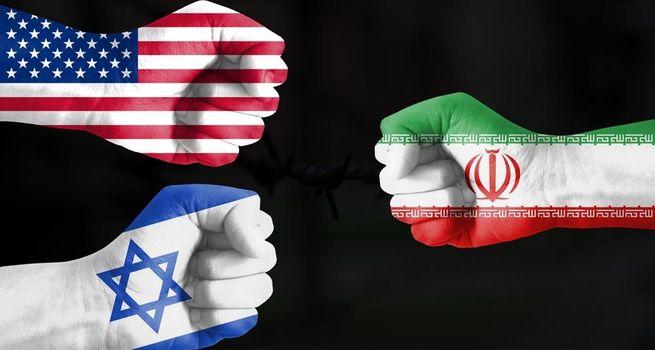
Key Highlights
- Israel is expanding military operations despite ongoing U.S.-Iran ceasefire talks
- A new strategy focuses on buffer zones across Lebanon, Gaza, and Syria
- The approach signals a shift toward long-term conflict management rather than resolution
- Territorial control now extends across multiple fronts, increasing military strain
- Markets face prolonged geopolitical risk with implications for energy and stability
Ceasefire Diplomacy Meets Ground Reality
Even as diplomatic efforts between the United States and Iran attempt to stabilize the Middle East, developments on the ground suggest a fundamentally different trajectory. Israel’s evolving military strategy indicates preparation for a prolonged and structurally embedded conflict rather than a near-term resolution.
This divergence between diplomacy and military execution introduces a new paradigm for markets and policymakers. The concept of a contained conflict is giving way to a broader and more persistent geopolitical risk environment.
Geopolitical Analysis: From Deterrence to Permanent Engagement
Israel’s current strategy reflects a significant doctrinal shift. Rather than aiming to eliminate adversaries such as Hezbollah or Hamas, the focus has moved toward degrading capabilities and maintaining control through buffer zones.
These buffer zones now extend across multiple regions, including southern Lebanon, Gaza, and parts of Syria. The objective is to create physical distance between threats and Israeli population centers.
This approach acknowledges a critical reality. Adversarial groups cannot be fully eradicated, and therefore must be managed through continuous military pressure.
The implication is a transition from episodic conflict to a sustained state of engagement.
Strategic Doctrine: The Rise of Buffer Zone Warfare
The establishment of buffer zones represents a structural shift in military thinking. Israel is no longer relying solely on defensive measures within its borders but is actively extending its security perimeter outward.
In southern Lebanon, operations aim to create a zone extending 5 to 10 kilometers beyond the border, reducing the range of potential attacks.
This strategy is being replicated across other regions. In Gaza and Syria, similar zones are being maintained to prevent future incursions and limit operational capabilities of hostile groups.
The doctrine is based on preemptive action rather than reactive defense. Emerging threats are addressed before they materialize, reflecting a more aggressive security posture.
Territorial Dynamics: Expanding Control and Political Implications
The expansion of buffer zones has resulted in increased territorial control across multiple fronts. Israel now maintains influence over significant areas in Lebanon, Gaza, Syria, and the West Bank.
This development carries both strategic and political implications. While it enhances short-term security, it also raises concerns about long-term governance, international law, and regional stability.
Some political factions within Israel have advocated for more permanent territorial changes, including annexation. Although not formal policy, such rhetoric reinforces perceptions of expansion.
For affected populations, the destruction of infrastructure and displacement of communities adds a humanitarian dimension to the conflict.
Military and Operational Implications: Sustained Resource Commitment
Maintaining multiple active fronts requires substantial military resources. The need to patrol buffer zones, conduct operations, and respond to threats across regions places increasing strain on personnel and logistics.
Analysts have highlighted the long-term sustainability challenges of such a strategy. Continuous deployment across several theaters may reduce operational flexibility and increase fatigue within the armed forces.
At the same time, the approach may provide immediate tactical advantages by reducing the likelihood of large-scale attacks.
The balance between short-term security gains and long-term resource constraints will be critical.
Financial and Market Implications: Persistent Risk Premium
The shift toward a prolonged conflict framework has direct implications for financial markets. Geopolitical risk is likely to remain elevated, particularly in energy markets where supply routes and infrastructure are vulnerable.
Investors are increasingly factoring in a sustained risk premium rather than temporary volatility. This affects asset allocation, commodity pricing, and currency movements.
Energy markets remain especially sensitive. Continued instability in the region can disrupt supply chains and influence global inflation dynamics.
Equity markets may also reflect this uncertainty, particularly in sectors exposed to geopolitical developments.
Strategic Outlook: From Crisis to Structural Instability
Looking ahead, the Middle East conflict appears to be transitioning from an acute crisis to a chronic condition. The concept of a “forever war” suggests that periods of relative calm may be interspersed with ongoing low-intensity conflict.
Diplomatic efforts, while important, may struggle to address the underlying structural dynamics driving the conflict. Partial agreements are unlikely to deliver lasting stability.
For global markets, this implies a prolonged period of uncertainty with intermittent spikes in volatility.
The focus will shift from resolution timelines to risk management and adaptation.
A New Geopolitical Normal
Israel’s strategic shift toward buffer zones and sustained engagement marks a turning point in the Middle East conflict. The move reflects a pragmatic recognition of enduring threats but also introduces new complexities.
For markets and policymakers, the implications are significant. The transition from temporary conflict to structural instability reshapes expectations across energy, security, and economic domains.
In this environment, geopolitical risk is no longer episodic. It becomes a persistent feature of the global landscape


 Jun 05, 2026




 Please wait processing your request...