
 AU
AU
 UK
UK
 CA
CA
 NZ
NZ
 IND
IND

 US
US

 Share
Share
 X (Formerly Twitter)
 Whatsapp
 Facebook
 LinkedIn
 Telegram
 Email This Article
 Copy Link
 Summarize with AI
 Chat GPT
 Perplexity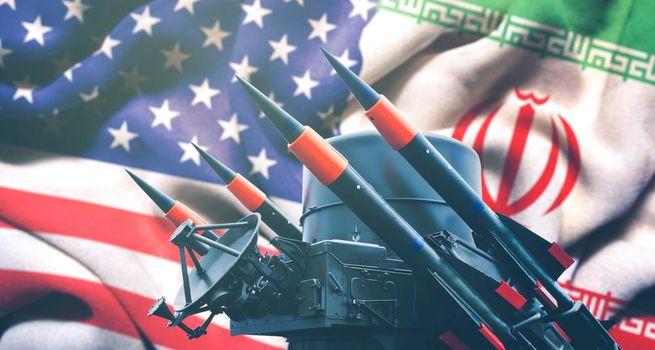
The US president has threatened to destroy Iran's entire power grid by 8pm ET. Markets and allies are watching — but few believe he will pull the trigger.
Key Highlights
- 8pm deadline looms — Trump has set what he describes as a final ultimatum for Iran to reopen the Strait of Hormuz or face destruction of its entire power grid and bridge network "in one night"
- Third deadline this cycle — Similar ultimatums were issued and then quietly shelved in March and early April, creating a credibility gap that markets are only partially discounting
- Strikes already under way — US and Israeli forces have hit Iranian bridges, rail links and petrochemical sites in recent days, marking a significant escalation even as power plants remain untouched
- Internal military resistance — Pentagon officials have reportedly raised concerns about the lawfulness of orders to strike civilian energy infrastructure wholesale; Iran's deployment of civilian "human chains" around power stations adds further complication
- Legal exposure is real — Targeting objects indispensable to civilian survival is prohibited under international humanitarian law; large-scale grid strikes would almost certainly trigger war crimes proceedings
- Deal chances rated "slim" — Senior US officials described prospects of an agreement before the deadline as slim; Iran has rejected recent proposals and threatened to restrict passage through Bab al-Mandeb
- Oil markets on edge — Brent crude rose sharply on Tuesday before paring gains; traders are pricing in an optionality premium rather than a full strike scenario
- Most likely outcome: another extension — Analysts and officials broadly expect a further delay, possibly with limited symbolic strikes on non-grid targets to demonstrate resolve
- Nuclear risk dismissed — Despite some commentary, analysts regard actual use of nuclear weapons as a near-impossibility in this context
Donald Trump has issued what he calls a final ultimatum to Tehran: reopen the Strait of Hormuz or face the destruction of every power plant and bridge in Iran "in one night." The deadline, set for 8pm Eastern Time on Tuesday, is the most aggressive yet in a months-long campaign of escalating threats that has rattled oil markets, alarmed US allies and prompted frantic diplomatic back-channelling from European capitals.
And yet, for all the fury of the president's language — one Truth Social post warned that "a whole civilisation will die tonight" — seasoned Iran-watchers and former US officials counsel a familiar caution. They have been here before.
"The pattern is well established," said one former senior State Department official who served during Trump's first term. "A deadline is set. Markets spike. Then comes the extension, dressed up as evidence of 'productive talks.' We've seen this movie at least three times since March."
A Habit of the Theatrical
Since late winter, Trump has set and then quietly shelved multiple deadlines for Iran, each accompanied by language of mounting severity. In March, a 48-hour ultimatum over Hormuz came and went with a brief communiqué citing "ongoing diplomatic channels." In early April, a similar cycle played out. On each occasion, the administration described the reprieve as a sign of good faith, not retreat.
That history partly explains why markets, though volatile, have not fully priced in the catastrophic scenario Trump is describing. Brent crude rose sharply on Tuesday morning before paring some gains, a move traders attributed less to belief in imminent strikes than to the optionality premium now embedded in every Trump deadline.
"He's cried wolf enough times that there's a discount applied," said a commodities strategist at a major European bank. "But the discount isn't total, because eventually crying wolf and being wrong creates its own pressure to act."
The Legal and Military Obstacle Course
Even if Trump wished to execute the threat in full, the obstacles are formidable. Large-scale strikes on civilian power infrastructure — hospitals, water treatment, heating for ordinary households — would almost certainly be characterised by international legal bodies as violations of the laws of armed conflict, specifically prohibitions on attacking objects indispensable to civilian survival under Additional Protocol I of the Geneva Conventions.
More striking, according to people briefed on internal Pentagon discussions, is the unease within the US military itself. Senior officers have reportedly raised concerns about the lawfulness of orders to target the civilian grid wholesale, and about the personal legal exposure that could follow. Iran has compounded the political difficulty by organising civilians into "human chains" around power stations — a tactic designed to maximise the propaganda cost of any strike and put Western television producers in an impossible position.
"The imagery would be devastating," said one European diplomat. "Whatever you think of the Iranian government, pictures of a country in darkness, of hospitals without power, of people freezing — that changes the political calculus in every allied capital overnight.
But the Risks Are Real
To dismiss the threat entirely, however, would be to misread the moment. The situation today is materially different from previous cycles in several respects.
US and Israeli forces have already struck Iranian infrastructure in recent days — bridges, rail links and petrochemical installations. The threshold has moved. Power plants remain the last significant category of civilian-adjacent target not yet hit, but the direction of travel is unmistakeable.
The Hormuz blockade, meanwhile, is doing real economic damage. Oil prices have surged, shipping insurance has become prohibitively expensive for some operators, and the pressure on Trump from domestic political constituencies — including energy producers and logistics companies — is acute. He has framed the Strait as an existential interest of the United States, language that constrains his own room for manoeuvre.
Senior US officials described the chances of a deal before the deadline as "slim" on Tuesday afternoon. Iran has rejected the most recent American proposals and responded with a threat of its own — to restrict passage through Bab al-Mandeb, the chokepoint at the southern end of the Red Sea — a move that, if executed, would dramatically widen the crisis.
What Comes Next
The most likely outcome, according to the majority of analysts and officials spoken to for this article, remains some form of extension — perhaps framed around a new round of talks, perhaps accompanied by limited strikes on bridges or other non-grid infrastructure as a demonstration of seriousness.
A full "Power Plant Night," as it has become known in Washington policy circles, would represent a leap into largely uncharted territory: a deliberate campaign to destroy the civilian energy infrastructure of a nation of 90 million people, almost certainly triggering humanitarian catastrophe, a collapse of diplomatic relations with European allies, potential Iranian retaliation against US assets and Gulf partners, and a further surge in global energy prices at a moment when inflation remains politically sensitive.
The nuclear dimension — raised in some commentary — analysts regard as a near-impossibility in this context, a rhetorical artefact rather than a genuine operational consideration.
What is not in doubt is that the rhetoric has reached a new intensity. Whether that intensity reflects a genuine intention or the culmination of a pressure campaign designed to force last-minute concessions from Tehran, the world will have at least a partial answer by Tuesday night.


 Jun 05, 2026




 Please wait processing your request...