
 AU
AU
 UK
UK
 CA
CA
 NZ
NZ
 IND
IND

 US
US

 Share
Share
 X (Formerly Twitter)
 Whatsapp
 Facebook
 LinkedIn
 Telegram
 Email This Article
 Copy Link
 Summarize with AI
 Chat GPT
 Perplexity
S&P 500, Nasdaq and Dow drift near flatline as geopolitical fragility tempers energy price optimism and investors await Friday's CPI print
Key Highlights
- S&P 500 (SPX), Nasdaq 100 (NDX) and Dow Jones Industrial Average (DJIA) all near flatline on Thursday, pausing the previous session's rally
- Iran accused the US of violating their ceasefire agreement and renewed threats to vessels at the Strait of Hormuz
- Nvidia (NASDAQ: NVDA), AMD (NASDAQ: AMD) and Broadcom (NASDAQ: AVGO) fell more than 0.5% as risk sentiment retreated from Wednesday's highs
- FOMC minutes flagged growing caution over war-driven inflation; Friday's CPI print now in sharp focus
US equities lost momentum on Thursday, with major indices drifting near the flatline as investors confronted renewed signs of instability in the US-Iran ceasefire, undermining the brief optimism that had sent stocks surging in the previous session.
The S&P 500 (SPX), the Nasdaq 100 (NDX) and the Dow Jones Industrial Average (DJIA) all opened close to unchanged, a sharp contrast to Wednesday's broad advance, which had been fuelled by hopes that a diplomatic breakthrough would restore oil flows from the Gulf region and ease inflationary pressures across the global economy.
Those hopes were swiftly complicated. Iranian officials accused Washington of violating the terms of the agreement, and Tehran renewed its threats against vessels positioned to cross the Strait of Hormuz — a chokepoint through which a significant share of the world's seaborne oil passes. The developments cast doubt over the White House's earlier signal that the deal would accelerate a return to regional stability and pave the way for lower energy prices, a narrative that had sent oil prices and bond yields sharply lower on Wednesday.
The reversal weighed most visibly on the technology sector, where Wednesday's rally in risk assets had provided the sharpest tailwind. Nvidia (NASDAQ: NVDA), AMD (NASDAQ: AMD) and Broadcom (NASDAQ: AVGO) each fell more than 0.5%, as the recovery in sentiment that had lifted the sector proved short-lived. The moves underscored how sensitive equity markets have become to geopolitical headlines, with investors reluctant to extend positions in the absence of clearer resolution.
Adding to the cautious mood, minutes from the Federal Open Market Committee's most recent meeting, published on Thursday, confirmed that policymakers are growing increasingly alert to the inflationary consequences of the conflict. Committee members flagged concern that elevated energy prices, if sustained, could complicate the path back to the Fed's 2 per cent inflation target and delay any easing of monetary policy.
That concern will be put in sharper relief on Friday, when the Bureau of Labor Statistics releases the latest Consumer Price Index data. The print is expected to offer the first quantitative read on how far higher energy costs have begun to filter through to broader price pressures — and will be closely scrutinised by both bond markets and policymakers for signals on the timing of future rate decisions.
For now, markets remain in a holding pattern, caught between the residual optimism of Wednesday's ceasefire-driven rally and the uncomfortable reality that the path to resolution remains far from certain.


 Jun 05, 2026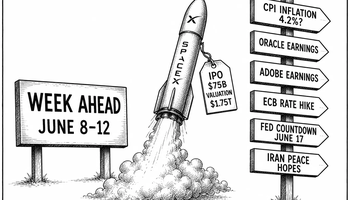




 Please wait processing your request...