
 AU
AU
 UK
UK
 CA
CA
 NZ
NZ
 IND
IND

 US
US

 Share
Share
 X (Formerly Twitter)
 Whatsapp
 Facebook
 LinkedIn
 Telegram
 Email This Article
 Copy Link
 Summarize with AI
 Chat GPT
 Perplexity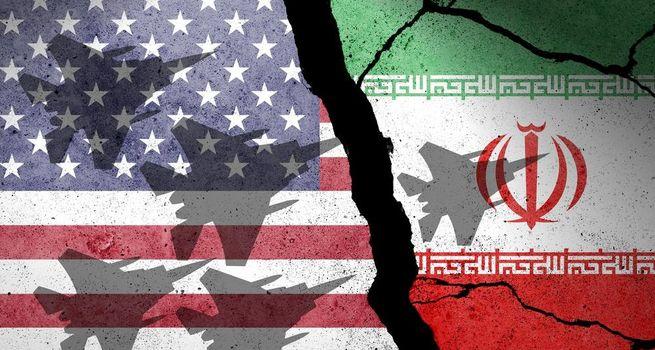
Trump's Iran ceasefire suspends strikes for two weeks, but Israel's Lebanon exclusion creates an enforcement asymmetry markets have not fully priced.
Key Highlights
- President Donald Trump suspended planned military strikes against Iran for two weeks, contingent on the full reopening of the Strait of Hormuz.
- The ceasefire carries no formal treaty architecture, resting entirely on a conditional 10-point Iranian proposal that diverges from the US position on key terms.
- Israel's explicit exclusion of Lebanon from the ceasefire scope introduces the single most consequential enforcement risk to the agreement's survival.
- Continued Israeli strikes against Hezbollah create direct pressure on Tehran to withdraw from Hormuz compliance commitments before the window closes.
- Markets have priced a reduction in tail risk, not a resolution; Lebanon remains the variable most capable of reversing that repricing.
A Ceasefire Defined by What It Excludes
On the evening of April 7, 2026, President Donald Trump announced via Truth Social that the United States would suspend planned military strikes against Iran for two weeks. The announcement came just two hours before an 8 p.m. deadline he had imposed for Iran to meet demands centred on reopening the Strait of Hormuz, the strategic waterway through which roughly a fifth of the world's oil supply passes.
The ceasefire is not a peace agreement. It is a conditional suspension of hostilities with a defined operational trigger, a fixed time horizon, and no binding legal framework. Iran's own state broadcaster emphasised the temporary nature of the arrangement, directing military branches to observe the ceasefire order while clarifying that the war itself had not ended. Tehran's framing, delivered through official channels, is the most direct indicator of how provisional the agreement remains.
What the ceasefire includes matters less analytically than what it excludes. Israel's position on Lebanon has introduced a structural fault line that neither Pakistani mediation nor the Islamabad negotiation track can easily bridge.
The Ceasefire Framework and Its Built-In Fragility
Iran's 10-point proposal includes controlled passage through the strait coordinated by its armed forces, compensation for war damages, and the withdrawal of US forces from all regional bases. Trump described it as a workable basis for negotiation, a formulation that signals tactical engagement without committing to Tehran's core demands.
The interpretive gap between the two sides on Hormuz itself is already material. Iran has stated that its military will regulate passage through the strait and is planning to charge ships for transit, a position that directly conflicts with the US stance on free and unencumbered passage. That divergence is not a secondary technical matter. It is a foundational disagreement on who controls the world's most strategically sensitive waterway, and it must be resolved within a two-week window before formal negotiations in Islamabad have had the opportunity to mature.
Pakistan's Prime Minister Shehbaz Sharif has invited both delegations to Islamabad on April 10, 2026, to continue negotiations toward a conclusive agreement. The mediation channel is credible and constructive. But institutional momentum through a third-party intermediary cannot compensate for the absence of binding commitments between the principal parties, particularly when one of those parties has already drawn a boundary that the other's closest ally refuses to observe.
Lebanon: The Variable That Determines Whether the Ceasefire Survives
The Lebanon exclusion is the central analytical issue in assessing ceasefire durability and its transmission into market conditions.
Netanyahu's office stated that while Israel supports the suspension of strikes against Iran, the ceasefire does not include Lebanon, directly contradicting Pakistan's prime minister, who had indicated the agreement would cover Lebanon and elsewhere. That contradiction is not procedural. It defines the operational boundaries of the ceasefire and, critically, it reveals that the parties most directly involved do not share a common understanding of what they have agreed to.
Israel has been striking what it describes as Hezbollah targets in Lebanon and has invaded the country's southern sector, citing security concerns. Hezbollah, backed by Iran, has launched periodic retaliatory attacks against Israel throughout the conflict. The relationship between Iranian strategic commitments and Hezbollah operational activity is not incidental. Iran cannot credibly maintain Hormuz compliance before its domestic constituencies while its primary regional proxy is being struck by Israeli forces under a ceasefire that Tehran believed covered Lebanon.
Analysts have raised direct questions about whether Israel would end its strikes against Hezbollah in Lebanon, citing its record of breaking similar arrangements in the past. The historical precedent, combined with the explicit language in Netanyahu's statement, makes Israeli restraint in Lebanon the least structurally supported assumption in the base case scenario.
The enforcement asymmetry is stark. Iran is required to hold open a waterway that carries roughly a fifth of global oil supply, while Israeli military operations against its most significant regional partner continue uninterrupted. That asymmetry is not sustainable over a two-week window in which domestic political pressure within Iran will be acute and continuous.
Market Pricing and the Lebanon Risk Premium
The one-day fall in oil prices following the ceasefire announcement was the largest since the 1991 Gulf War, with Brent crude dropping approximately 14% and WTI falling roughly 15%. Equities surged globally, Treasury yields fell, and safe-haven demand for the dollar compressed. The cross-asset signal was unambiguous: markets repriced the removal of an extreme tail risk.
What markets have not priced is the Lebanon variable. The relief rally reflects the elimination of an imminent catastrophic strike scenario. It does not reflect a stable geopolitical equilibrium. US crude remains up more than 70% since the year began, even after the sharp post-ceasefire decline, a persistent signal that supply risk has been reduced but not removed.
Energy market analysts have cautioned that the two-week ceasefire does not guarantee resumption of normal tanker flows through the Strait. Cargo insurance repricing, tanker routing adjustments, and counterparty risk in shipping contracts do not unwind on announcement alone. If Lebanon escalates and Iran withdraws from compliance, the crude spike would likely exceed the post-ceasefire decline in both speed and magnitude, given how rapidly positioning has shifted.
For institutional investors, the rally compresses the window for defensive repositioning while underlying structural risk remains unresolved. Market participants broadly assess that re-escalation risk remains on the table and that safe-haven unwinds in the dollar and fixed income may prove short-lived if Lebanon deteriorates. Maintaining partial commodity hedges while monitoring the Lebanese front alongside the Islamabad track is the analytically defensible near-term framework.
Conclusion
The Trump ceasefire has reduced the probability of immediate catastrophic escalation and created a structured window for diplomacy. That is a meaningful development. Markets have correctly reflected it.
The durability of that window depends almost entirely on Lebanon. Israel's refusal to include it in the ceasefire scope has created an enforcement asymmetry that places Iran under simultaneous pressure to comply with Hormuz obligations while absorbing continued strikes against Hezbollah. That combination is structurally unstable over a two-week horizon.
The ceasefire is not peace. It is a conditional pause whose survival depends on a variable that none of the parties most invested in its success currently control. Capital allocation frameworks, hedging strategy, and macro policy assessments must reflect that distinction clearly as the Islamabad negotiations begin and the clock runs.


 Jun 05, 2026




 Please wait processing your request...