
 AU
AU
 UK
UK
 CA
CA
 NZ
NZ
 IND
IND

 US
US

 Share
Share
 X (Formerly Twitter)
 Whatsapp
 Facebook
 LinkedIn
 Telegram
 Email This Article
 Copy Link
 Summarize with AI
 Chat GPT
 Perplexity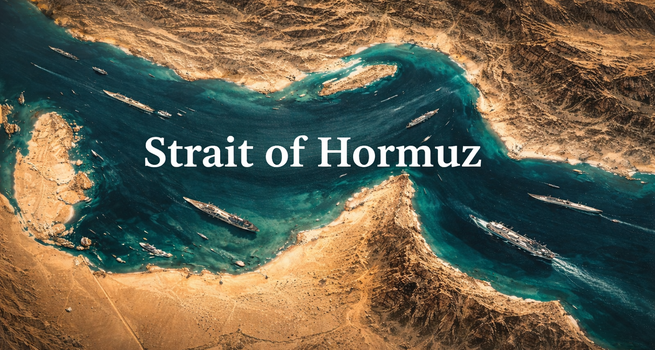
Key Highlights
- US–Iran–Israel tensions embed a structural geopolitical risk premium in the global oil market and macroeconomic outlook.
- Collapse of nuclear negotiations raises proliferation risk, heightening long-term energy volatility and regional security instability.
- Strait of Hormuz chokepoint vulnerability threatens 20% of traded crude flows, amplifying supply shock and inflation risk.
- Shipping rerouting, higher insurance costs, and OPEC+ production discipline are reshaping liquidity, capital allocation, and growth outlook across energy markets.
How It All Unravelled: The US–Iran–Israel Triangle
To understand where things stand today between the United States, Iran, and Israel, one must trace a thread that runs through decades of broken promises, regime calculations, and regional ambitions. What began as a Cold War alignment, the United States and Israel as close allies, Iran under the Shah as a partner, collapsed spectacularly with the 1979 Islamic Revolution. From that rupture, the modern tripartite hostility was born, and it has only deepened with each passing decade.
The United States never fully reconciled with the Iran that emerged from revolution. Diplomatic ties were severed after the 1979 hostage crisis, when Iranian students held 52 American diplomats captive for 444 days. Washington labeled Tehran a state sponsor of terrorism, and Iran enshrined hostility to America, 'the Great Satan', into its revolutionary identity. Through the 1980s, the US tilted toward Iraq during the Iran-Iraq War, providing Saddam Hussein with intelligence even as chemical weapons were deployed. For Iran, this was proof that American hostility was existential, not circumstantial.
Israel's relationship with Iran followed a parallel but distinct arc. During the Shah's era, Israel and Iran quietly cooperated, trade, intelligence sharing, even covert arms deals. The revolution ended that, replacing a pragmatic monarchy with a theocracy that embedded anti-Zionism into its founding doctrine. Over the following decades, Iran built, funded, and armed the network of proxy forces, Hezbollah in Lebanon, Hamas in Gaza, the Houthis in Yemen, that encircled Israel. For Jerusalem, Tehran's nuclear ambitions were not a distant policy problem but a civilizational threat.
The post-2003 landscape accelerated these tensions dramatically. The US invasion of Iraq inadvertently handed Iran a strategic windfall: its most dangerous Arab neighbor was dismantled, creating a power vacuum that Tehran rushed to fill. Iranian-backed militias gained influence across Iraq, Syria, and Lebanon. By the 2010s, Iran had effectively constructed what analysts call the 'Axis of Resistance', a crescent of influence stretching from Tehran through Baghdad and Damascus to Beirut and Gaza. Israel watched this encirclement with mounting alarm.
The Trump administration's 2018 withdrawal from the JCPOA, the 2015 nuclear deal, and the 'maximum pressure' sanctions campaign pushed Iran's economy to the brink but also hardened its leadership's resolve. Biden's attempts at diplomacy reopened talks, but by 2022 they had stalled, and Hamas's October 7, 2023 attack on Israel, and Israel's subsequent war in Gaza, made any near-term rapprochement between Washington and Tehran effectively impossible. By 2025, the region was operating in open, if sometimes undeclared, warfare: Israeli strikes on Iranian assets in Syria, US strikes on Houthi positions in Yemen, and Iranian proxies targeting American troops across Iraq and Syria.
Why the Nuclear Talks Collapsed
Few diplomatic endeavors of the 21st century carry more consequence than the effort to contain Iran's nuclear program, and few have failed as repeatedly and expensively. The 2015 Joint Comprehensive Plan of Action was heralded as a landmark multilateral achievement: Iran agreed to cap uranium enrichment, reduce its stockpile, and submit to international inspections in exchange for sanctions relief. It held, imperfectly, until 2018.
The Trump administration's unilateral withdrawal, justified on the grounds that the deal did not address Iran's ballistic missile program or its support for regional proxies, shattered the framework. Iran responded by gradually abandoning its commitments, enriching uranium to higher and higher levels. By 2023, Tehran was enriching uranium to 83.7 percent purity, alarmingly close to the 90 percent threshold for weapons-grade material. The International Atomic Energy Agency (IAEA) reported that Iran had accumulated enough fissile material to potentially construct multiple nuclear devices, if it chose to weaponize.
When the Biden administration entered negotiations in 2021, an interim agreement seemed within reach. But talks in Vienna stalled on two central disputes: Iran demanded removal from the US foreign terrorist organization list for the Islamic Revolutionary Guard Corps (IRGC), a non-starter in Washington given domestic political pressures, and Iran sought stronger guarantees that a future US president could not again walk away from a deal. Having been burned once, Tehran demanded ironclad commitments that American domestic law simply cannot provide.
The October 7 Hamas attacks ended whatever residual diplomatic momentum remained. With Israeli public opinion demanding Iran be held accountable as Hamas's patron, and US lawmakers competing to appear hawkish on Iran, the political space for a deal evaporated. Iran, for its part, saw little incentive to constrain its nuclear program while it watched its proxy network demonstrate lethality against Israel. By 2025, Iran's nuclear program was more advanced than at any point in history, and the diplomatic architecture to constrain it lay in ruins.
The collapse of nuclear talks has profound implications beyond non-proliferation. Saudi Arabia, long the anchor of US Gulf strategy, has publicly stated that it would seek its own nuclear capabilities if Iran acquires a weapon. The prospect of a nuclear-armed Middle East, with multiple competing states holding the bomb, is the nightmare scenario that all previous diplomacy was designed to prevent. That scenario is now closer to reality than at any point since the Cold War.
The Strait of Hormuz: The World's Most Dangerous Chokepoint
At its narrowest, the Strait of Hormuz is just 21 miles wide. Through this sliver of water between Iran and the Omani peninsula passes roughly 20 percent of the world's traded oil, approximately 17 to 18 million barrels per day. It is the jugular vein of the global economy, and Iran controls the northern shore. Threatening to close the Strait is Tehran's most powerful card, one it has wielded repeatedly as both warning and leverage.
Since 2019, the Strait has seen steadily escalating incidents. Iran seized British-flagged tanker Stena Impero in 2019, citing maritime violations but clearly signaling its willingness to use shipping as a pressure instrument. In 2023 and into 2024, Iranian forces and affiliated Houthi forces in the Red Sea conducted dozens of attacks on commercial shipping, deploying drones, missiles, and limpet mines. The Houthis alone struck or threatened over 100 vessels by early 2025, disrupting trade lanes and forcing major shipping companies to reroute around the Cape of Good Hope, adding weeks and millions of dollars in costs per voyage.
The United States and allied navies have responded with Operation Prosperity Guardian and sustained airstrikes against Houthi launch sites, but the threat has proven remarkably resilient. The Houthis, armed with Iranian-supplied drones and anti-ship missiles, have demonstrated that asymmetric warfare can impose enormous costs on global commerce at a fraction of the military expenditure required to defend against it.
Iran has not directly closed the Strait, doing so would be an act of war that would invite immediate and overwhelming US military response. But it does not need to close it entirely to cause damage. Even the credible threat of closure, demonstrated by periodic harassment of tankers, is sufficient to push insurance premiums skyward, alter shipping routes, and create market volatility. This is Tehran's preferred instrument: calibrated pressure that falls just below the threshold of outright war.
If a direct military confrontation between Israel and Iran were to escalate, triggered, say, by an Israeli strike on Iranian nuclear facilities, analysts widely believe Iran would immediately move to at least partially interdict Hormuz traffic. Even a two-to-three week closure would send oil prices above $150 per barrel, threaten global recession, and trigger panic buying across Asian economies heavily dependent on Gulf crude. Japan, South Korea, India, and China collectively source a major share of their oil through Hormuz. A prolonged closure is not merely an economic disruption, it is a potential catalyst for a wider global crisis.
The Oil Economy: Near-Term Pressures and Long-Term Shifts
The oil market is not a single, calm body of water but a system of competing currents, geopolitical risk premiums, OPEC+ supply decisions, the accelerating energy transition, and the dollar's dominance as the settlement currency for crude. The US-Iran-Israel crisis sits at the intersection of all of these forces, and its trajectory will shape oil economics for years to come.
In the near term, the geopolitical risk premium built into oil prices has become a structural feature rather than a transient spike. Markets have learned to price in a baseline level of Middle East instability, but they remain vulnerable to sudden escalation. A strike on Iranian oil infrastructure, which Iran has threatened to retaliate against Gulf Arab production if it occurs, could remove 3 to 4 million barrels per day from global supply almost overnight. Saudi Arabia and the UAE have spare capacity, but not enough to compensate for simultaneous Iranian and Houthi disruptions.
OPEC+ has been navigating this environment with careful, politically sensitive production decisions. Saudi Arabia, despite its formal alliance with the United States, has increasingly charted an independent course, maintaining production cuts to support prices even as Washington urged increased output to manage inflation. The kingdom's Vision 2030 program requires sustained oil revenues to fund its economic transformation, and Riyadh is acutely aware that every year of geopolitical instability is simultaneously a threat and an opportunity, threat because it destabilizes the region, opportunity because it elevates the price at which Saudi crude sells.
For oil tanker shipping, the strategic landscape has been permanently altered. The rerouting of tankers around the Cape of Good Hope, avoiding both the Red Sea and the Strait of Hormuz risk zone, has increased voyage distances by 30 to 40 percent on routes connecting the Gulf to European markets. This has tightened global tanker supply significantly, as ships are away from port longer, effectively removing vessel capacity from the market. Day rates for Very Large Crude Carriers (VLCCs) surged through 2024, benefiting tanker owners even as their insurance costs rose sharply.
The longer-term picture is complicated by the energy transition. The International Energy Agency and most major forecasters project that global oil demand will peak sometime in the late 2020s, driven by EV adoption, efficiency improvements, and the expansion of renewable energy, particularly in China, the world's largest oil importer. This creates a paradox: the geopolitical risk premium is rising at the very moment that structural demand growth is expected to slow. Countries and oil companies are simultaneously managing the tail risk of a supply shock and the long-term certainty of declining dependence on fossil fuels.
The United States itself has been transformed by the shale revolution. American domestic production has made the US the world's largest oil producer and reduced, though not eliminated, its strategic dependence on Gulf supply. But the global market is fungible: a supply shock anywhere affects prices everywhere, regardless of where a country sources its own barrels. American consumers and the American economy are not insulated from a Hormuz crisis by domestic production alone.
No Easy Exits
The triangle of tension between the United States, Iran, and Israel has no simple resolution in sight. Each actor is locked into positions shaped by decades of mutual hostility, domestic political imperatives, and strategic calculations that leave little room for compromise. Iran will not abandon its nuclear program without security guarantees that Washington cannot credibly provide. Israel will not accept a nuclear-armed Iran and retains the military capability, and political will, to strike. The United States is stretched between its commitment to Israeli security, its interest in Gulf stability, and its desire to avoid another Middle Eastern war.
The Strait of Hormuz remains the most dangerous single geographic chokepoint in the global economy. If this crisis tips into open military conflict, it is through that narrow passage that the world will feel the consequences most acutely, in fuel prices, in supply chain disruptions, in the cascading economic damage that inevitably follows when the arteries of global trade are severed.
The world's energy future may be electric and renewable. But the path to that future still runs through the Persian Gulf, and right now, that path is more treacherous than it has been in a generation.

_06_12_2026_23_00_13_327450.jpg)
 Jun 12, 2026




 Please wait processing your request...