
 AU
AU
 UK
UK
 CA
CA
 NZ
NZ
 IND
IND

 US
US

 Share
Share
 X (Formerly Twitter)
 Whatsapp
 Facebook
 LinkedIn
 Telegram
 Email This Article
 Copy Link
 Summarize with AI
 Chat GPT
 Perplexity
Kevin Warsh confirmed as Federal Reserve chair in the most divisive vote in Fed history, inheriting a Central Bank facing rising Inflation, oil-driven price pressures, and White House demands for rate cuts.
Key Highlights
- Senate confirms Kevin Warsh as Federal Reserve chair in a 54-45 vote, the most divisive in the institution's history.
- Warsh inherits a policy environment defined by above-target inflation, surging oil prices, and stalled rate-cut expectations.
- Markets are recalibrating, with some now pricing in the possibility of a rate increase by year-end.
- Warsh's stated agenda includes Balance Sheet reduction and tighter coordination with the Treasury Department.
- His first FOMC meeting as chair is scheduled for June 16-17, which will be closely watched for tonal signals.
A Confirmation Forged in Division
The Senate voted 54-45 to confirm Warsh, in what stands as the most divisive confirmation vote ever recorded for a Federal Reserve chair. The vote fell almost entirely along party lines, with Pennsylvania Democratic Senator John Fetterman the sole crossover vote in Warsh's favour.
Warsh, 56, takes over from Jerome Powell, whose term expires Friday and who has led the central bank since 2018. The transition closes a process that stretched across the better part of a year, involving a wide field of candidates before the White House settled on Warsh.
An Uncomfortable Inheritance
The timing is anything but straightforward. Warsh takes over with inflation rising and markets grappling with the likely course of central bank policy, while President Donald Trump continues to Demand lower interest rates. A surge in oil prices since the start of the Iran war has swung investor expectations toward the possibility of a rate increase by year-end, with the Fed's current target range for short-term borrowing costs sitting at 3.50% to 3.75%.
The confirmation came against the backdrop of separate reports showing inflation well above the Fed's 2% target and pipeline pressures accelerating at their highest levels in more than three years. Rate-cut expectations have been scaling back, complicating both the political narrative around Warsh's appointment and his own policy latitude.
The Warsh Agenda
Warsh has not been ambiguous about his priorities. He says he plans "regime change" at the Fed, including tightening its coordination with the Treasury Department and the Trump administration on non-monetary policies, and placing the institution on course toward a smaller balance sheet, which he argues should allow for a lower policy rate over time.
During his first stint at the Fed from 2006 to 2011, Warsh was a critic of the unprecedented expansion of asset purchases that pushed the institution's balance sheet past $4 trillion, arguing at the time that quantitative easing had gone too far. That history shapes how markets are reading his likely disposition toward Monetary Policy.
Market Reaction and Analyst Caution
Analyst commentary following the confirmation has been measured, with most reserving judgment until Warsh's first FOMC press conference. Bond Market strategists have flagged a material risk around inflation expectations, noting that long-term breakeven inflation rates, while still broadly anchored, have been drifting higher and sit near multi-year ceilings. The concern is that any dovish signalling from incoming Leadership could destabilise the long end of the Yield Curve at a moment when it can least absorb it.
Equity and Wealth-management/">Wealth Management strategists have broadly interpreted the confirmation as signalling a more inflation-conscious Fed, given Warsh's longstanding criticism that policymakers remained too accommodative for too long following the Pandemic. Others have pointed to the structural complexity of the environment Warsh is inheriting, where the conventional tools of monetary policy carry limited reach against cost pressures originating in energy markets and trade policy. Raising rates does not lower global oil prices, and it cannot unwind the inflationary pass-through from tariffs. The balance of risks between inflation and employment is, by most readings, as difficult to navigate as any the Fed has faced in recent years.
What June Will Reveal
Warsh's first meeting as chair of the Federal Open Market Committee is scheduled for June 16-17. The post-meeting press conference will serve as his first structured opportunity to define the tonal and strategic direction of his tenure in a format that markets can directly assess.
Warsh will also be the wealthiest Fed chair on record, with holdings well above $100 million, and will be required to divest many of his investments under strict conflict-of-interest policies implemented following disclosure of questionable trading practices among senior Fed officials.
The structural question facing investors is not whether Warsh holds hawkish instincts, but whether those instincts will survive contact with a White House that has made its preferences plain. On that point, June will likely offer the first meaningful answer.


 Jun 05, 2026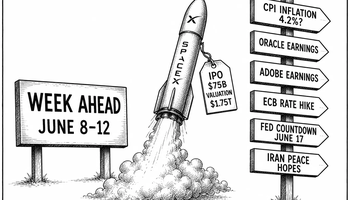




 Please wait processing your request...