The Offer

Company Overview
Beta Technologies Inc. (BETA) is an innovative aerospace company pioneering the future of sustainable flight through its vertically integrated electric aircraft platform and propulsion systems. The company designs, manufactures, and sells high-performance electric aircraft, propulsion systems, batteries, and charging infrastructure, positioning itself as a leader in the transition to clean aviation. Its flagship aircraft, the ALIA CTOL, has demonstrated exceptional efficiency—achieving up to 95% fuel cost savings and 42–74% lower operating costs versus traditional aircraft and helicopters—while successfully completing missions with the U.S. Military, UPS, and United Therapeutics. With proprietary control over key technologies such as batteries, motors, and flight control systems, Beta offers customers a comprehensive ecosystem for electric aviation, spanning cargo, defense, passenger, and medical markets. The company’s scalable technology platform, FAA-aligned certification strategy, and 188,000-square-foot production facility in Vermont (expandable to 355,000 sq. ft.) reinforce its readiness for commercial scale and global expansion, positioning BETA as a frontrunner in the next era of electric aviation.
Key Highlights
Primary Offering:
25,000,000 shares (underwriters an option to purchase up to 3,750,000 additional shares of Class A common stock)
Use of proceeds:
Beta Technologies Inc. expects to receive approximately USD 700.3 million in net proceeds from its initial public offering, or USD 806.0 million if the underwriters fully exercise their option to purchase additional shares, based on an assumed offering price of USD 30.00 per share. The company plans to utilize the proceeds primarily for general corporate purposes, providing financial flexibility to support operations, innovation, and growth initiatives. Additionally, each USD 1.00 change in the offering price would alter net proceeds by roughly USD 23.6 million, while a 1,000,000-share change in the number of shares offered would impact proceeds by approximately USD 28.4 million.
Dividend policy:
Beta Technologies Inc. does not plan to declare or pay any cash dividends on its Class A common stock in the foreseeable future. The company intends to retain all future earnings to fund operations, support business expansion, and invest in aircraft production, manufacturing facilities, and its charging network both domestically and internationally. Any future decision regarding dividends will remain at the discretion of the Board of Directors, subject to factors such as financial performance, capital requirements, and available investment opportunities.
Massive Multi-Sector Growth Opportunity in Electric Aviation
- Expansive Total Addressable Market (TAM): Beta Technologies Inc. identifies a substantial long-term growth opportunity in the electric and hybrid aircraft industry, estimating a total addressable market (TAM) of approximately 60,000 aircraft units valued at USD 250 billion through 2035, with an average selling price of USD 4 million per unit. Including aftermarket components, services, and maintenance, the company projects an additional USD 750 billion in lifetime revenue potential, bringing the total opportunity to USD 1 trillion. Beta’s focus on both conventional takeoff and landing (CTOL) and vertical takeoff and landing (VTOL) aircraft positions it to capture value across commercial, defense, cargo, and passenger aviation segments, leveraging scalable technologies for maximum market reach.
- Lifecycle and Recurring Revenue Potential: Each BETA aircraft presents a multi-decade recurring revenue opportunity through sales of batteries, motors, maintenance, training, and charging infrastructure, which are essential for electric aviation fleets. As the company’s aircraft base expands globally, recurring maintenance and component replacement needs are expected to generate steady revenue streams over a 20-year lifecycle. Importantly, aviation maintenance requirements are non-deferrable, even during downturns, providing resilience to BETA’s aftermarket business model. The company’s integrated platform strategy aims to capture value throughout an aircraft’s lifecycle, establishing a predictable and high-margin revenue base.
- Multi-Sector Market Penetration Opportunities: BETA is strategically positioned across four major markets—cargo and logistics, medical, defense, and passenger aviation—each offering significant growth potential. In cargo and logistics, e-commerce expansion and supply chain efficiency demands have driven strong interest, with UPS and Bristow among its firm order customers. In medical transport, partnerships with United Therapeutics, Metro Aviation, and New Zealand Air Ambulance highlight growing adoption for low-cost, eco-friendly healthcare logistics. Defense applications present a robust pipeline of approximately 2,000 aircraft by 2035, supported by increased global security spending. Lastly, the passenger segment represents a transformative opportunity as 20% of global flights under 300 miles shift toward electric aviation, enabling cost-effective, sustainable regional air mobility solutions that align with evolving transportation needs.
Strategic Positioning in the Emerging Global Electric Aviation Revolution
- The Rise of Electric Aviation and Industry Transformation: Electric aviation is redefining aerospace by significantly lowering operating costs, reducing emissions, and creating new short-haul and regional travel opportunities. With quieter and more efficient propulsion systems, electric aircraft enable direct routes between smaller cities, supporting logistics, defense, medical, and passenger operations. As battery innovations and regulatory support accelerate, Beta Technologies stands at the forefront of this global transition toward sustainable air mobility.
- Expanding Maintenance, Infrastructure, and Market Ecosystem: The shift to electric aircraft is driving sustained demand for maintenance, replacement batteries, and charging infrastructure, all of which provide recurring revenue streams. Beta’s vertically integrated model allows it to efficiently serve this growing ecosystem while maintaining strategic control of key technologies. With exposure across cargo, medical, defense, and passenger markets, the company is well-positioned to benefit from the sector’s expansion.
- Multi-Sector Growth Opportunities Across Core Markets: Beta is capturing multi-industry growth through strong momentum in cargo, medical, defense, and passenger aviation. Orders from major players like UPS, United Therapeutics, and U.S. defense partners demonstrate rising adoption of its electric aircraft. With over 10,000 passenger aircraft orders globally for short-distance routes, the company is poised to play a leading role in advancing the electric aviation revolution.
Financial Highlights (Results of Operations) (Expressed in USD)
- Revenue Performance and Growth Drivers: During the six months ended June 30, 2025, Beta Technologies recorded a USD 4.4 million increase in product revenues compared to the same period in 2024, primarily driven by new commercial contracts for electric propulsion motors, batteries, and flight control systems. Service revenues also rose by USD 3.5 million, or 50.6%, supported by new engineering and consulting service agreements, expanded commercial partnerships, and higher utilization of the company’s charging infrastructure. This growth reflects continued market traction and increased customer engagement across both product and service lines, underscoring the company’s progress toward commercial scalability.
- Cost of Revenues and Margin Expansion: Cost of product revenues rose modestly, by only 1% year-over-year, owing to the completion of several higher-cost contracts in 2024. In contrast, service revenue costs increased by USD 0.8 million (53.4%), primarily due to higher labor and material expenses for commercial contracts, partially offset by reduced costs for government-related service agreements. Despite these cost increases, product gross margin improved by USD 4.4 million, and service gross margin rose by USD 2.7 million (49.9%), driven by a favorable shift in customer mix and contract terms. These margin gains reflect Beta’s operational efficiency, disciplined cost management, and the growing profitability of its service-oriented business model.
- Operating Expenses and Financial Items: Research and development (R&D) expenses rose USD 23.8 million (25.8%), reflecting sustained investment in aircraft development, testing, certification, and prototype production. The increase was largely attributed to higher materials costs, labor and stock-based compensation, and depreciation related to new production facilities. General and administrative (G&A) expenses increased by USD 17.5 million (47.9%), driven by higher compensation costs, expanded workforce, and professional fees. Interest expense and income remained relatively stable, while income tax expense increased by USD 0.3 million due to higher foreign taxable earnings. Overall, these increases highlight Beta’s strategic investments in talent, infrastructure, and R&D to support long-term growth and product commercialization.
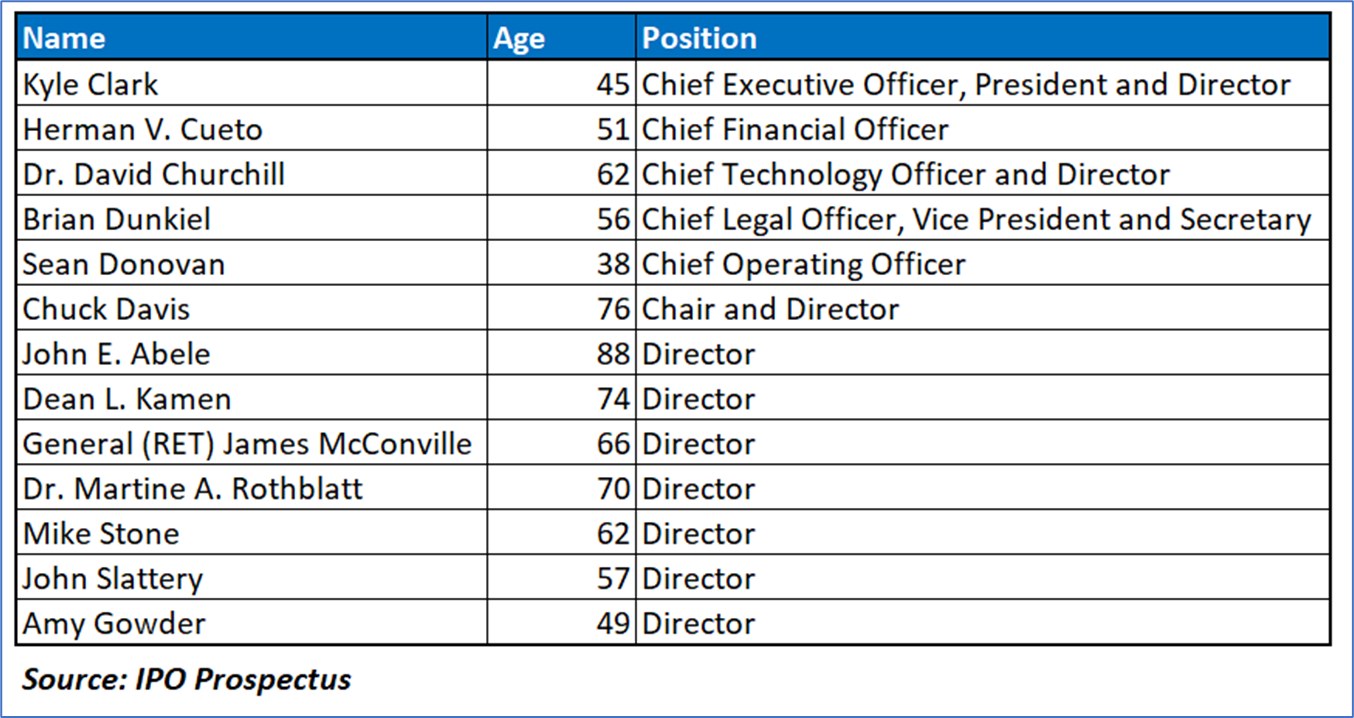
Key Management Highlights
Risk Associated (High)
Investment in the IPO of “BETA” is exposed to a variety of risks such as:
- Regulatory and Certification Risk: BETA’s business depends heavily on obtaining timely FAA certification for its electric aircraft, propulsion systems, and charging infrastructure. Delays or failures in the certification process could significantly postpone commercialization, limit market access, and increase development costs. Given the emerging nature of electric aviation, evolving regulatory frameworks add further uncertainty to timelines and compliance requirements.
- Technology Development and Production Execution Risk: As a developer of next-generation electric aircraft, BETA faces material risks in scaling complex technologies such as electric propulsion, battery systems, and flight control integration. Any technical setbacks, production inefficiencies, or supply chain disruptions could lead to cost overruns, quality issues, or delivery delays. Moreover, maintaining performance reliability and safety standards during mass production will be critical to sustaining customer confidence and securing long-term contracts.
- Market Adoption and Capital Intensity Risk: Electric aviation remains a nascent market with uncertain adoption rates and high upfront capital requirements. BETA’s growth depends on widespread customer acceptance across cargo, defense, and passenger segments, as well as the buildout of charging infrastructure. Inadequate demand, slower-than-expected infrastructure development, or funding constraints could impair revenue growth and profitability. Additionally, as a pre-profit company, sustained investment in R&D and manufacturing expansion will continue to pressure cash flows until full-scale commercialization is achieved.
Conclusion
Beta Technologies Inc. (BETA) represents a compelling long-term investment opportunity in the rapidly emerging electric aviation industry, underpinned by its vertically integrated business model, proven technology, and growing commercial traction across multiple sectors. With its flagship ALIA CTOL aircraft delivering up to 95% fuel cost savings and over 40–70% lower operating costs versus traditional aircraft, BETA has demonstrated the commercial and operational viability of electric flight through successful collaborations with the U.S. Military, UPS, and United Therapeutics. The company’s proprietary control over core technologies—including batteries, propulsion systems, and charging infrastructure—positions it as a full-stack enabler of sustainable aviation. Supported by an estimated USD 1 trillion total addressable market through 2035, BETA is strategically expanding across cargo, medical, defense, and passenger segments, each offering substantial near- and long-term growth potential. With a robust certification pathway, expanding production capacity in Vermont, and proceeds of over USD 700 million from the IPO earmarked for growth and innovation, Beta Technologies stands poised to lead the global transition toward cleaner, cost-efficient, and scalable electric aviation solutions.
Hence, given the financial performance of the company, use of proceeds, and associated risks “Beta Technologies Inc (BETA)” IPO seems “Attractive" at the IPO price.
Past performance is not a reliable indicator of future performance.

 AU
AU
 UK
UK
 CA
CA
 NZ
NZ
 IND
IND

 US
US

 Please wait processing your request...