
 CA
 NZ
 UK
 AU
 IND

 US

The Direxion Daily Technology Bear 3X Shares (TECS) is designed to deliver approximately three times the inverse (-3x) of the daily performance of a technology-focused index, before fees and expenses. Unlike traditional ETFs that provide diversified long exposure, TECS is a leveraged inverse ETF, meaning it seeks to profit from declines in the technology sector on a daily basis.
To achieve this objective, the fund primarily uses derivative instruments such as swaps, futures, and options, rather than directly shorting individual stocks. Because the leverage is reset daily, the ETF is structured to track the inverse of the index’s daily return with amplified magnitude. As a result, TECS is generally intended for short-term tactical trading rather than long-term investment holding.

Exposure to the Broad Technology Sector
TECS provides inverse exposure to a broad basket of technology companies, typically including firms operating across software, semiconductors, hardware, and digital platforms. The ETF’s performance is therefore closely tied to overall trends in the technology sector rather than a single company.
Key factors influencing performance include movements in large-cap technology stocks, semiconductor cycles, interest rate expectations, valuation adjustments in growth equities, and macroeconomic conditions affecting risk sentiment. During periods of technology sector weakness or market corrections, TECS is designed to generate amplified positive returns, whereas rising technology markets would result in amplified losses.
Tactical Positioning in Volatile or Bearish Market Conditions
Given its inverse leveraged structure, TECS is commonly used by traders seeking to capitalize on short-term downside movements or hedge exposure to technology stocks. Potential catalysts that may drive technology sector declines include earnings disappointments, tightening monetary policy, rising interest rates, valuation compression, or broader risk-off sentiment in equity markets.
By providing inverse exposure through an exchange-traded instrument, TECS allows investors to express bearish views on the technology sector without directly engaging in short selling or complex derivatives. However, due to its daily reset mechanism and leverage, the ETF may exhibit heightened volatility and path-dependent returns.
Suitability and Strategic Use Cases
The ETF is designed primarily for experienced investors and active traders who understand leveraged and inverse ETF mechanics and actively manage their positions. Due to daily compounding effects, TECS is generally unsuitable as a long-term core portfolio holding.
Common strategic applications include:
• Short-Term Bearish Trading: Investors anticipating near-term declines in technology stocks may use TECS to amplify potential gains.
• Portfolio Hedging: Market participants may use the ETF to hedge exposure to technology-heavy portfolios during periods of expected volatility or downside risk.
• Tactical Macro Positioning: Traders may use TECS to express views on macro factors such as rising interest rates or tightening liquidity, which may negatively impact growth-oriented technology stocks.
Key Risks and Considerations
Investors should carefully evaluate the risks associated with leveraged inverse ETFs before investing in TECS:
• Leverage and Compounding Risk: Because the ETF targets three times the inverse daily return, longer holding periods may produce returns that diverge significantly from the expected inverse multiple due to compounding effects.
• Volatility Risk: Technology stocks are inherently volatile, and leverage amplifies both gains and losses, leading to potentially significant short-term fluctuations.
• Market Direction Risk: The ETF is designed to benefit from declining markets; sustained upward movements in technology stocks may result in amplified losses.
• Derivative Instrument Risk: The use of swaps and other derivatives introduces counterparty risk, liquidity considerations, and structural complexity.
• Higher Expense Structure: Leveraged and inverse ETFs typically carry higher expense ratios compared to traditional index funds.
Conclusion
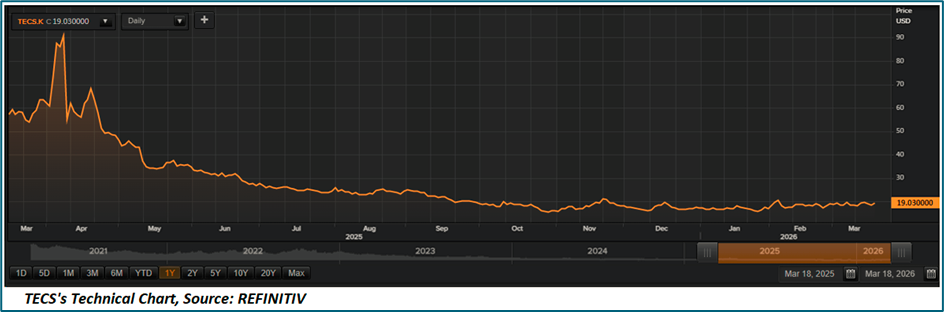
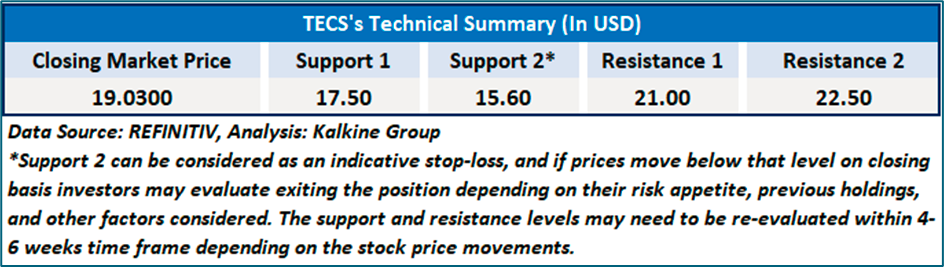
The Direxion Daily Technology Bear 3X Shares (TECS) offers a leveraged inverse trading instrument designed to provide amplified daily exposure to declines in the technology sector. The ETF may be suitable for traders seeking to capitalize on short-term bearish movements or hedge existing technology exposure. However, due to the effects of daily leverage resets, compounding dynamics, and heightened volatility, TECS is best suited for short-term tactical strategies with active risk management, rather than long-term investment allocation.
Kalkine Equities LLC, with Delaware File Number 4697384, Foreign Qualification Registration in California File Number 202109211078, and Texas File Number 805521396, is authorized to provide general advice only. The information on https://kalkine.com/ does not take into account any of your investment objectives, financial situation or needs. You should consider the appropriateness of advice taking into account your own objectives, financial situation and needs and seek independent financial advice before making any financial decisions. The link to our Terms and Conditions and Privacy Policy has been provided for your reference. On the date of publishing the reports (mentioned on the website), employees and/or associates of Kalkine do not hold positions in any of the stocks covered on the website. These stocks can change any time and readers of the reports should not consider these stocks as advice or recommendations later.
Past performance is not a reliable indicator of future performance.
 Please wait processing your request...