
 AU
AU
 UK
UK
 CA
CA
 NZ
NZ
 IND
IND

 US
US

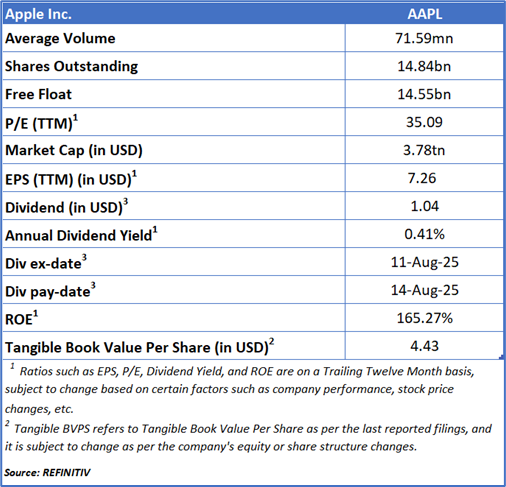
Apple Inc.
Apple Inc. (NASDAQ: AAPL) develops, produces, and sells smartphones, personal computers, tablets, wearables, and accessories, while also offering a wide range of related services. The company’s product portfolio spans iPhone, Mac, iPad, and Wearables, Home and Accessories. Its software ecosystem covers iOS, iPadOS, macOS, watchOS, visionOS, and tvOS. Additionally, Apple provides services such as advertising, AppleCare, cloud solutions, digital content, and payment services.
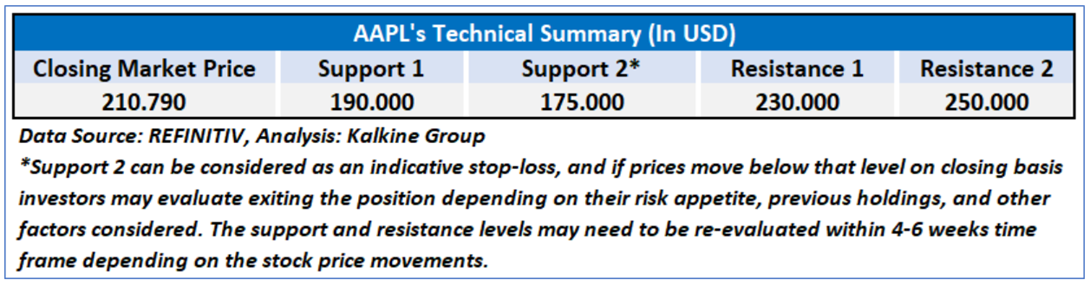
As per previous Kalkine’s American Tech Report published on ‘AAPL’ on May 13, 2025, Kalkine provided an ‘Buy’ stance on the stock at USD 210.79 based on fundamental analysis and the stock price has now moved up by ~ 19.71% since then and has breached resistance level 2.
Noted below are the details of support and resistance levels provided in our previous report:
Rationale:
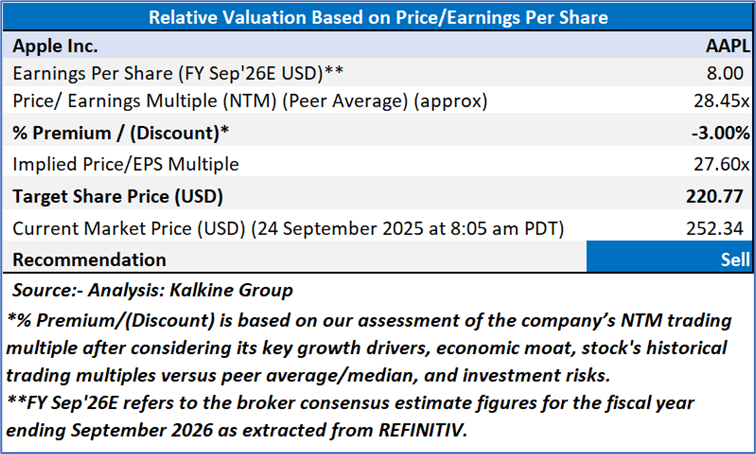
Valuation (Using Price/Earnings Per Share Multiple)
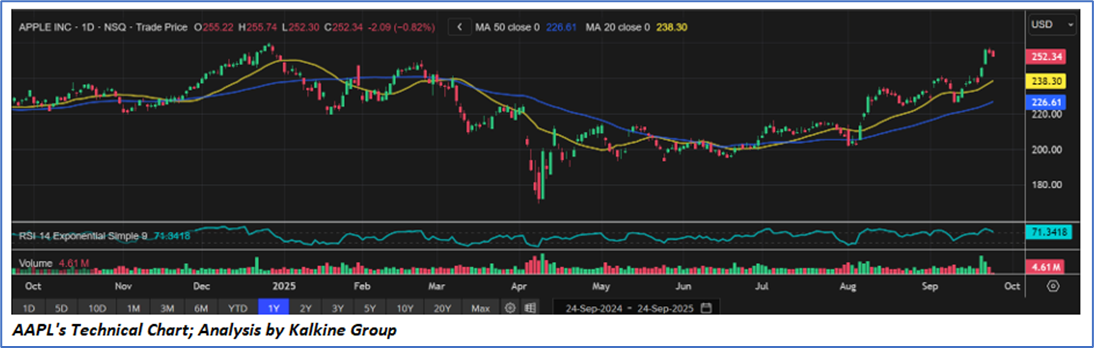
Share Price Chart
Conclusion
Apple faces mounting challenges as regulatory and legal pressures intensify, including U.S. antitrust lawsuits, a €500 million EU fine, and ongoing disputes with Epic Games. At the same time, macroeconomic headwinds such as inflation, currency fluctuations, and new tariffs are straining supply chains and compressing product margins. Weaker sales in categories like Wearables and a heavier expense base, driven by rising R&D and administrative costs, further weigh on performance. Combined with seasonality and its heavy reliance on iPhone revenues, these factors underscore the company’s vulnerability to both external risks and internal cost pressures
Based on the notional gains, valuation downside and price action stance, a "Sell" recommendation on Apple Inc. (NASDAQ: AAPL) has been given at the current market price of USD 252.34 as on 24 September 2025 at 8:05 am PDT.
Note 1: Past performance is not a reliable indicator of future performance.
Note 2: The reference date for all price data, currency, technical indicators, support, and resistance level is 24 September 2025. The reference data in this report has been partly sourced from REFINITIV.
Note 3: Investment decisions should be made depending on an individual's appetite for upside potential, risks, holding duration, and any previous holdings. An 'Exit' from the stock can be considered if the Target Price mentioned as per the Valuation and or the technical levels provided has been achieved and is subject to the factors discussed above.
Note 4: Target Price refers to a price level which the stock is expected to reach as per the relative valuation method and/or technical analysis taking into consideration both short-term and long-term scenario.
Note 5: ‘Kalkine reports are prepared based on the stock prices captured either from the London Stock Exchange (LSE) and or REFINITIV. Typically, both sources (LSE and or REFINITIV) may reflect stock prices with a delay which could be a lag of 15-20 minutes. There can be no assurance that future results or events will be consistent with the information provided in the report. The information is subject to change without any prior notice.’
Note 6: Dividend Yield may vary as per the stock price movement.
Kalkine Equities LLC, with Delaware File Number 4697384, Foreign Qualification Registration in California File Number 202109211078, and Texas File Number 805521396, is authorized to provide general advice only. The information on https://kalkine.com/ does not take into account any of your investment objectives, financial situation or needs. You should consider the appropriateness of advice taking into account your own objectives, financial situation and needs and seek independent financial advice before making any financial decisions. The link to our Terms and Conditions and Privacy Policy has been provided for your reference. On the date of publishing the reports (mentioned on the website), employees and/or associates of Kalkine do not hold positions in any of the stocks covered on the website. These stocks can change any time and readers of the reports should not consider these stocks as advice or recommendations later.
Past performance is not a reliable indicator of future performance.
 Please wait processing your request...