
 AU
AU
 UK
UK
 CA
CA
 NZ
NZ
 IND
IND

 US
US

 Share
Share
 X (Formerly Twitter)
 Whatsapp
 Facebook
 LinkedIn
 Telegram
 Email This Article
 Copy Link
 Summarize with AI
 Chat GPT
 Perplexity
BlackBerry (NYSE: BB) has surged to near 52-week highs as investors increasingly view its QNX platform as a critical software layer for autonomous systems, robotics, and Physical AI. While analysts remain cautious, growing interest in embedded operating systems and secure communications is reshaping the Investment narrative around the former smartphone pioneer.
Key Highlights
- BlackBerry (NYSE: BB) shares recently touched a 52-week high of $9.30 amid heavy trading Volume.
- Investors are increasingly focused on QNX as a potential operating system for Physical AI and robotics.
- The company's recent Earnings beat reinforced confidence in its software turnaround strategy.
- AtHoc's FedRAMP High recertification strengthens BlackBerry's position in government communications.
- Despite the rally, Wall Street's average price target remains significantly below current trading levels.
The Market Is Discovering a New BlackBerry
For much of the past decade, BlackBerry (NYSE: BB) has occupied a peculiar place in the technology landscape.
The company was no longer a smartphone giant, yet it had not fully convinced investors that its transformation into an enterprise software provider deserved a premium valuation. Revenue contraction, restructuring efforts, and shifting strategic priorities left many Market Participants skeptical about the company's long-term prospects.
That perception may be changing.
BlackBerry (NYSE: BB) shares recently climbed to nearly $9.30, marking a fresh 52-week high and extending a powerful rally that has increasingly disconnected the stock from traditional analyst expectations. The move has been accompanied by unusually strong trading volume and renewed investor interest in a Business segment that, until recently, attracted relatively little attention outside specialized automotive and embedded software circles.
That segment is QNX.
What was once viewed primarily as an automotive operating system is now being discussed as a foundational software platform for a potentially much larger market: Physical AI.
The emergence of that narrative is helping explain why investors have become increasingly enthusiastic even as analyst price targets remain anchored near half of the stock's current valuation.
Why the Physical AI Theme Is Reshaping the Investment Thesis
The first wave of the artificial intelligence boom revolved around cloud infrastructure, semiconductors, and large language models.
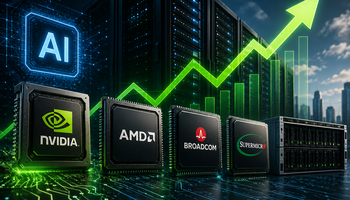
Companies such as NVIDIA (Nasdaq: NVDA), Advanced Micro Devices (NASDAQ: AMD), and Broadcom (NASDAQ: AVGO) became some of the market's largest beneficiaries as enterprises raced to build computational capacity.
The next phase may be fundamentally different.
Rather than focusing exclusively on digital intelligence, investors are increasingly examining how AI can be deployed in physical environments—robots, industrial automation systems, autonomous vehicles, medical devices, drones, and smart infrastructure.
This emerging category is often referred to as Physical AI.
Unlike traditional software applications, Physical AI systems operate in real-world environments where reliability, safety, security, and real-time responsiveness become mission-critical requirements.
That is precisely where BlackBerry's QNX operating system has spent decades building expertise.
QNX is already deployed in hundreds of millions of vehicles worldwide and powers critical embedded systems across automotive, industrial, healthcare, and aerospace applications.
As investors search for enabling technologies that can support autonomous machines and intelligent devices, QNX is increasingly being viewed as an important piece of the software stack.
QNX's Robotics Research Is Attracting Investor Attention
Fueling the narrative is BlackBerry's recent robotics developer benchmark report, which highlighted persistent software challenges across the robotics ecosystem.
The report identified software complexity, system integration issues, safety validation, and development bottlenecks as major barriers preventing broader adoption of autonomous robotic systems.
These challenges create an opportunity for specialized operating systems designed specifically for mission-critical environments.
Unlike consumer operating systems, embedded platforms such as QNX prioritize deterministic performance, security certification, fault tolerance, and real-time processing.
Those characteristics become increasingly valuable as autonomous systems transition from research laboratories into factories, hospitals, warehouses, transportation networks, and defense applications.
For investors, the report serves as a reminder that the future AI economy may require much more than advanced models and cloud infrastructure.
It may also require a trusted operating system layer capable of managing complex interactions between intelligent machines and the physical world.
That realization is helping elevate QNX's strategic importance.
Earnings Reinforce the Turnaround Story
The growing excitement surrounding Physical AI arrives at a time when BlackBerry's financial performance is also showing signs of improvement.
The company recently reported quarterly results that exceeded expectations, delivering adjusted Earnings Per Share of $0.06 compared with consensus estimates of $0.04.
Revenue increased approximately 10% year-over-year, marking one of the company's strongest growth performances in recent periods.
While BlackBerry (NYSE: BB) remains considerably smaller than many enterprise software peers, the earnings beat reinforced investor confidence that management's turnaround strategy is beginning to gain traction.
Importantly, the company is no longer dependent on a single growth engine.
Its business increasingly consists of multiple software franchises, including:
- QNX embedded software
- Secure communications
- Government Cybersecurity solutions
- Endpoint security technologies
- Critical event management systems
This Diversification provides investors with exposure to several long-term technology themes simultaneously.
FedRAMP Certification Strengthens the Government Opportunity
Another catalyst supporting recent momentum came from BlackBerry's AtHoc platform.
The company announced that AtHoc successfully completed its 2026 FedRAMP Class D (High) recertification, maintaining its eligibility for highly sensitive federal government deployments.
While such certifications rarely generate headline-grabbing excitement, they can be strategically important.
Government agencies increasingly require secure cloud-based communications systems capable of operating during emergencies, cybersecurity incidents, and national security events.
FedRAMP High certification represents one of the most rigorous security standards within the federal ecosystem.
Maintaining that certification reinforces BlackBerry's credibility among government customers and strengthens barriers to entry for potential competitors.
For investors evaluating long-term Recurring Revenue opportunities, the government's growing cybersecurity and resilience spending may represent an attractive market.
Why Analysts Remain Skeptical
Despite the stock's impressive rally, Wall Street remains cautious.
Consensus ratings continue to lean toward Hold recommendations, while recent analyst price targets remain dramatically below current trading levels.
RBC Capital's Paul Treiber recently established a $4.50 target, while Canaccord Genuity's Kingsley Crane issued a target near $4.40.
The gap between analyst estimates and market pricing reflects a fundamental disagreement about BlackBerry's future.
Analysts largely continue to evaluate the company based on traditional software valuation frameworks and current earnings power.
Investors, by contrast, increasingly appear to be pricing in optionality.
The market is effectively assigning value to future opportunities in robotics, autonomous systems, industrial AI, connected vehicles, and secure embedded computing.
Whether those opportunities ultimately materialize remains uncertain, but the divergence illustrates how emerging technology narratives can reshape market expectations long before they appear in financial statements.
Insider Selling May Temper Enthusiasm
One Factor that could concern investors is insider activity.
Over the past six months, company insiders have recorded multiple share sales without corresponding purchases.
CEO John Giamatteo, Chief Financial Officer Tim Foote, and several senior executives have collectively sold hundreds of thousands of shares.
While insider selling does not necessarily indicate deteriorating fundamentals—executives frequently sell for diversification or compensation-related reasons—it can raise questions when occurring alongside significant stock appreciation.
Investors often prefer to see insider buying during transformational growth stories, as it provides an additional signal of management confidence.
The absence of purchases may therefore remain a point of discussion among institutional investors.
Institutional Investors Are Sending Mixed Signals
Recent institutional ownership trends also paint a nuanced picture.
Several large investors, including FifthDelta and Legal &Amp; General, significantly increased their positions during the most recent quarter.
Meanwhile, other firms reduced exposure or exited positions entirely.
This mixed behavior suggests that professional investors remain divided on BlackBerry's long-term outlook.
Some view the company as an underappreciated software asset positioned to benefit from multiple secular technology trends.
Others remain unconvinced that current fundamentals justify the stock's rapid appreciation.
Such disagreement is often characteristic of companies undergoing strategic transitions.
Can BlackBerry Become an Infrastructure Play for Physical AI?
The most important question facing investors is whether BlackBerry can transform QNX from an automotive operating system into a broader infrastructure platform for autonomous systems.
If Physical AI becomes a major technology spending category over the next decade, software platforms capable of ensuring safety, reliability, and real-time performance could occupy a strategically valuable position.
The opportunity extends beyond robotics.
Autonomous vehicles, industrial automation, smart Manufacturing, intelligent healthcare devices, aerospace systems, and defense technologies all require embedded operating systems capable of managing mission-critical workloads.
QNX already possesses many of the certifications, relationships, and deployment experience needed to participate in those markets.
The challenge lies in translating technical Leadership into sustained revenue acceleration.
Investment Outlook
BlackBerry (NYSE: BB) is no longer being evaluated solely as a cybersecurity company or a former smartphone manufacturer. Increasingly, investors are viewing the company through the lens of Physical AI, autonomous systems, and embedded software infrastructure.
The combination of stronger-than-expected earnings, QNX's expanding strategic relevance, FedRAMP-certified communications software, and broader AI enthusiasm has created a compelling narrative that continues attracting investor capital.
Yet risks remain significant. Revenue growth is still modest relative to high-growth software peers, insider selling may concern some investors, and Wall Street analysts remain skeptical about the sustainability of the rally.
The next phase of the story will likely depend on whether BlackBerry can convert growing interest in Physical AI into measurable commercial wins and sustained financial growth.
For now, the market appears willing to bet that the company once known for smartphones may have found an unexpected second act at the intersection of robotics, autonomous systems, and the future of intelligent machines.

 Jun 05, 2026



 Please wait processing your request...