
 AU
AU
 UK
UK
 CA
CA
 NZ
NZ
 IND
IND

 US
US

 Share
Share
 X (Formerly Twitter)
 Whatsapp
 Facebook
 LinkedIn
 Telegram
 Email This Article
 Copy Link
 Summarize with AI
 Chat GPT
 Perplexity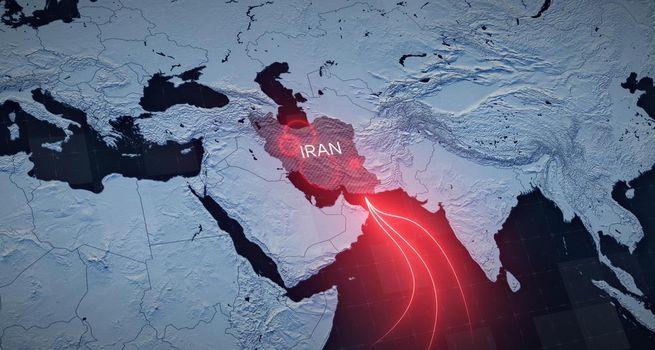
Highlights
- UAE crude output has dropped by approximately 1.5 million barrels per day as Hormuz remains blocked
- Fujairah, the UAE's key bypass export port, has been struck by drones twice in two days
- The IEA estimates over 8 million barrels per day of crude is now shut in globally
- Oil prices have surged past $100 per barrel with no short-term ceiling in sight
- India, Japan, and other major importers are scrambling to secure alternative supply
UAE crude production has fallen by more than half following the Strait of Hormuz closure. Here is what the historic supply shock means for global oil markets, prices, and energy security.
UAE Crude Output Drops by More Than Half
The United Arab Emirates, one of the world's most consequential oil producers, has seen its daily crude output fall by more than half as the Iran conflict and the effective closure of the Strait of Hormuz leave state oil giant ADNOC with nowhere to send its barrels.
The UAE's production cut has deepened to approximately 1.5 million barrels per day, up from 500,000 to 800,000 barrels per day as of March 10, while Kuwait's reduction has climbed to near 1.3 million barrels per day.
The scale of the pullback is staggering. The UAE produced just under 3.4 million barrels per day in January, accounting for more than 3% of global demand, making it OPEC's third-largest producer. In a matter of days, a significant portion of that output has simply gone offline.
The Strait of Hormuz: Why This Chokepoint Changes Everything
The trigger is a maritime emergency without modern precedent. The halt of commercial navigation through the Strait of Hormuz, a chokepoint that normally handles about a fifth of the world's oil supply, has inflicted massive disruptions on global energy markets.
With tankers unable to move, storage tanks across the Gulf are filling rapidly. Once they reach capacity, producers have no option but to shut wells. That is precisely what is now happening at scale across the Gulf region.
Fujairah Port Under Drone Attack: The Bypass Route Fails
The crisis is compounding by the hour. On Monday, ADNOC halted oil loading operations at the UAE's port of Fujairah, a major oil bunkering and storage hub, following a drone attack. Operations there had only just resumed on Sunday after a separate attack over the weekend.
The repeated strikes on Fujairah are particularly damaging because the port, fed by the Abu Dhabi Crude Oil Pipeline, represents the UAE's primary export route that bypasses the Strait entirely. But even that route has limits. The UAE's Fujairah pipeline handles roughly 1.5 million barrels per day, covering only about 47% of typical UAE crude exports, making it a partial, not complete, workaround for Hormuz disruptions.
A Regional Domino Effect Across Gulf Producers
The wider regional picture is equally alarming. Iraq's output is now down 70%, and the UAE and Kuwait have joined it in cutting production as storage capacity runs out. Others may be forced to follow as tankers continue avoiding the narrow waterway, rapidly reducing the number of empty vessels available for loading.
The cascading nature of these shut-ins means the supply shock is self-reinforcing. Every day the Strait remains closed, another producer is pushed closer to capacity limits.
The Largest Oil Supply Shock in Market History
The International Energy Agency has described the situation in the starkest terms. The agency estimates at least 8 million barrels per day of crude is now shut in, with a further 2 million barrels per day of condensates and natural gas liquids also offline, making this the largest supply disruption in the history of the global oil market.
For context, the 1973 Arab oil embargo removed roughly 5 million barrels per day from global markets. The current shock is nearly double that magnitude, and it unfolded within days rather than weeks.
Oil Prices Surge Past $100 With No Ceiling in Sight
Price markets are reflecting the chaos in real time. Futures tied to Abu Dhabi's flagship Murban crude closed at $103 a barrel on Friday, while Oman crude futures stood at $107 and Chinese crude oil futures settled at $109 in US dollar terms.
Analysts warn there is effectively no short-term price ceiling if disruptions persist. A prolonged closure could push benchmarks well beyond current levels, triggering broader economic consequences across import-dependent economies.
Iran Shows No Sign of Backing Down
The geopolitical backdrop offers little comfort to markets. On March 15, an Iranian commander stated that Iran would continue to use the Strait of Hormuz as a pressure point.
Alternative pipeline routes are being stretched to their limits. Saudi Arabia has been diverting oil to the Red Sea port of Yanbu via the East-West Crude Oil Pipeline, but the combined alternative pipeline capacity across all Gulf producers can only handle a fraction of normal Hormuz throughput, leaving a deficit of around 12 million barrels per day.
Global Economies Brace for Impact
The consequences are rippling far beyond the Gulf. India imports nearly half its crude oil and 60% of its natural gas via the Strait of Hormuz, while Japan sources over 70% of its Middle Eastern crude through the waterway and has already asked its government to release strategic petroleum reserves.
Emerging markets with limited foreign exchange reserves and high energy import dependency face the sharpest near-term risks as supply tightens and prices climb.
With no diplomatic resolution in sight and infrastructure under active attack, the world's most critical oil corridor remains effectively paralysed, and the pressure on Gulf producers shows no sign of letting up.
FAQs
- Why has UAE oil production fallen so sharply?
The Hormuz closure has blocked tankers, filling Gulf storage to capacity and forcing ADNOC to shut in wells.
- What is the Strait of Hormuz?
A narrow waterway carrying roughly one-fifth of global oil supply daily, connecting the Gulf to world markets.
- Is there an alternative UAE export route?
Yes, the Fujairah pipeline, but it covers only 47% of normal export volume and the port has been drone-struck twice this weekend.
- How does this compare to past oil crises?
The IEA calls it the largest supply disruption ever, roughly twice the scale of the 1973 Arab oil embargo.
- Which countries are most at risk?
India, Japan, China, and South Korea are most exposed, with India and Japan sourcing the majority of their Gulf oil via Hormuz.
- When could it resolve?
No timeline is clear. Iran confirmed on March 15 it intends to keep using the Strait as strategic leverage.


 Jun 16, 2026




 Please wait processing your request...