
 CA
 NZ
 UK
 AU
 IND

 US

 Share
 X (Formerly Twitter)
 Whatsapp
 Facebook
 LinkedIn
 Telegram
 Email This Article
 Copy Link
 Summarize with AI
 Chat GPT
 Perplexity

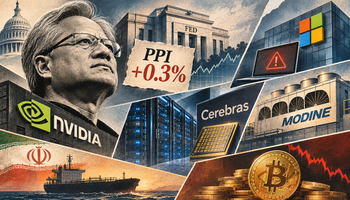
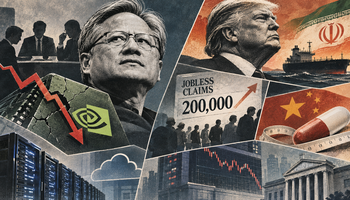
U.S. equities staged a strong rebound on Thursday, with major indices recovering from the previous session's selloff as investors returned to semiconductor stocks and reassessed the likelihood of additional Federal Reserve tightening.
The S&P 500 advanced roughly 1%, while the Nasdaq 100 outperformed thanks to continued strength across artificial intelligence and semiconductor names. The rally followed a volatile reaction to the Federal Reserve's latest policy meeting, where policymakers left interest rates unchanged but signaled that a rate hike remains possible before year-end.
Technology stocks led the recovery, with investors focusing on powerful AI-driven demand trends that continue to support earnings expectations across the semiconductor industry. Recent analyst upgrades for companies such as Micron Technology (NASDAQ: MU), Arm Holdings (NASDAQ: ARM), Marvell Technology (NASDAQ: MRVL), and Intel (NASDAQ: INTC) helped reinforce optimism surrounding the sector.
The rebound was particularly notable because it came after the Philadelphia Semiconductor Index suffered one of its sharpest declines of the month. Investors appeared willing to look through near-term monetary policy uncertainty and instead focus on improving fundamentals tied to AI infrastructure spending, memory pricing strength, and accelerating data center investment.
Semiconductor Stocks Continue to Drive Market Leadership
Semiconductors remain the market's most important leadership group.
Recent weeks have seen a wave of analyst upgrades and higher earnings estimates across the industry, fueled by robust demand for AI servers, high-bandwidth memory, custom accelerators, networking equipment, and advanced chip manufacturing technologies.
Analysts increasingly expect AI-related capital expenditures from hyperscalers such as Amazon, Microsoft, Alphabet, and Meta to remain elevated through at least 2027, providing a significant tailwind for the broader semiconductor ecosystem.
That narrative has helped offset concerns that higher interest rates could pressure equity valuations.
Investors Reassess Fed Risks
While the Federal Reserve's updated dot plot showed that several officials still anticipate the possibility of another rate increase, investors appear less convinced that further tightening will ultimately be necessary.
Markets are increasingly focused on whether slowing inflation and moderating economic activity will allow policymakers to remain on hold despite recent hawkish rhetoric.
The resulting shift in sentiment helped spark buying across growth-oriented sectors that had been heavily sold following the Fed announcement.
Risk Appetite Improves
Beyond technology, broader market sentiment was supported by easing geopolitical tensions following the U.S.-Iran interim peace agreement and the reopening of the Strait of Hormuz.
Lower oil prices and reduced geopolitical uncertainty have improved risk appetite across equities, particularly in sectors tied to economic growth and corporate investment.
While challenges remain—including higher-for-longer interest rates and slowing enterprise spending in some areas—the market's ability to rebound quickly highlights investors' continued willingness to buy growth opportunities tied to AI, cloud computing, and digital infrastructure.
Market Outlook
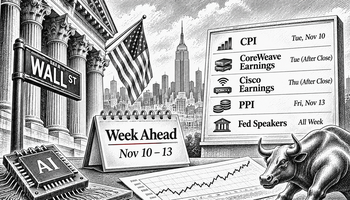
The next major test for equities will be upcoming earnings reports and economic data releases. Investors will be watching closely to determine whether corporate fundamentals can continue to justify elevated valuations, particularly within technology and semiconductor stocks.
For now, however, Thursday's rally suggests that AI-driven growth themes remain powerful enough to outweigh concerns about additional Federal Reserve tightening, helping the broader market regain momentum after a volatile week.

 Nov 13, 2026



 Please wait processing your request...