
 CA
 NZ
 UK
 AU
 IND

 US

 Share
 X (Formerly Twitter)
 Whatsapp
 Facebook
 LinkedIn
 Telegram
 Email This Article
 Copy Link
 Summarize with AI
 Chat GPT
 Perplexity
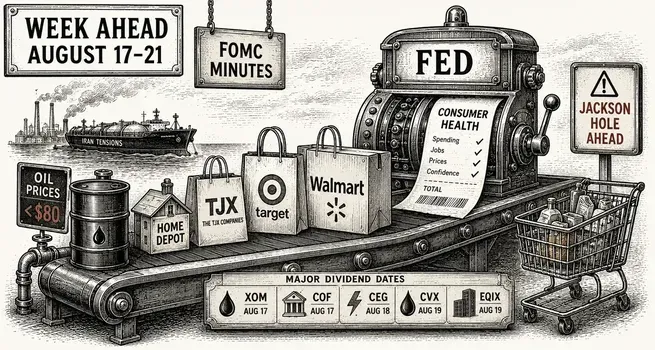
With the Federal Reserve offering little fresh guidance after its hawkish July hold and three dissenting votes in favour of an immediate rate hike, investors are increasingly looking to corporate Earnings to validate the bullish assumptions underpinning a market that hit a record high on Thursday. About 85% of S&P 500 companies reporting have beaten earnings estimates, with profits up 32.7% excluding mark-to-market gains, according to data.
The Jackson Hole symposium on August 27-29 is now the next major opportunity for policymakers to provide clarity on the Inflation and rate path. In the interim, Wednesday's FOMC minutes from the July meeting will be the most closely parsed Fed communication of the week, and Walmart's Thursday results will be the definitive consumer health read of the earnings season. The US has hardened economic pressure on Iran rather than signalling diplomatic progress, keeping energy prices elevated and Treasury yields sensitive to any escalation that could reignite the oil price spike that drove the market's July volatility.
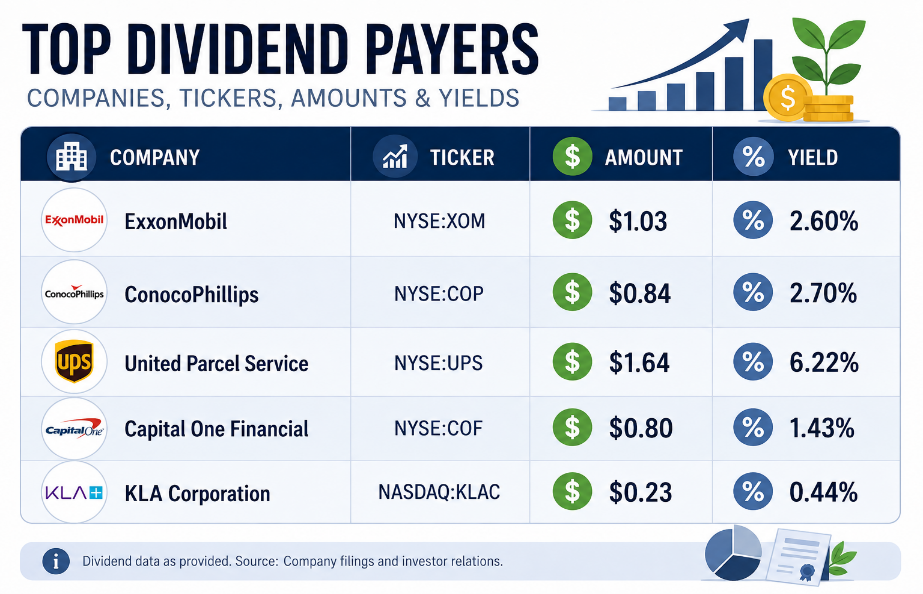
Monday, August 17
Economic Data
Industrial production for July, prior at 0.1% and forecast at 0.4%, opens the week and will be read as evidence of whether the goods-producing economy is recovering momentum after June's contraction. Capacity utilisation, prior at 76.1% and forecast at 76.4%, provides context. Housing starts for July, prior at 1.4 million and forecast to slow to 1.35 million, and building permits, forecast at 1.37 million, together signal whether the housing sector is stabilising under elevated Mortgage rate pressure. Import prices for July, prior at 0.3% and forecast at 0.1%, measured net of tariffs, provide an early read on whether the Iran-driven energy cost pass-through is easing in the trade data.
Tuesday, August 18
Earnings
Home Depot (NYSE:HD) reports before the open as the week's opening retail anchor and the primary housing-adjacent discretionary spending read. Its same-store sales and Pro segment commentary will indicate whether easing gasoline prices and the housing market's tentative stabilisation are beginning to translate into improved home improvement spending. Keysight Technologies (NYSE:KEYS) reports in the afternoon, providing an electronic test and measurement read on technology Capital spending cycles across semiconductor and communications end markets.
Dividends
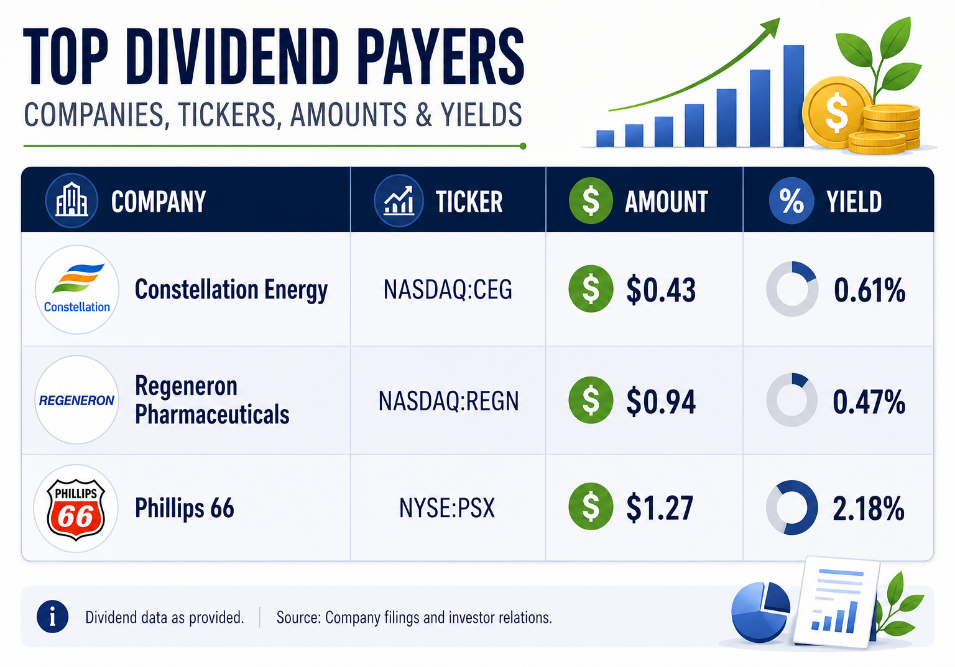
Wednesday, August 19
Earnings
Analog Devices (NASDAQ:ADI) reports before the open as the week's primary semiconductor read and a direct signal on AI infrastructure Investment health beyond the data centre segment. ADI's industrial and automotive semiconductor Demand commentary will be watched for evidence of whether the broader chip cycle is recovering or whether the concentration of AI-driven demand in a narrow set of memory and GPU companies is masking weakness elsewhere.
TJX Companies (NYSE:TJX) and Lowe's (NYSE:LOW) also report before the open, extending the retail earnings read. TJX provides an off-price and consumer trade-down signal; Lowe's a home improvement and housing-adjacent spending read alongside Home Depot's Tuesday results. Target (NYSE:TGT) also reports before the open, completing a Tuesday-Wednesday retail sweep that together with Thursday's Walmart print will provide the most comprehensive consumer spending picture of the Q2 season.
Dividends
Federal Reserve
The FOMC minutes from the July 29 meeting are released at 2:00 pm ET. The meeting produced a hold with three hawkish dissents from regional Fed presidents, underscoring a division within the policy-setting committee that markets have not yet fully priced. The minutes will be read for how explicitly dissenters framed their objections, whether the committee majority is moving toward a September hike or holding to a data-dependent posture, and how policymakers were discussing the impact of stalled Iran talks and renewed energy price pressure on the inflation outlook. With Warsh having abandoned forward guidance, the minutes now carry more informational weight than in prior Fed regimes, making Wednesday's release the most consequential regular Fed communication between now and Jackson Hole on August 27.
Thursday, August 20
Earnings
Walmart (NYSE:WMT) reports before the open as the week's defining earnings event and the most consequential consumer read of the entire Q2 season. As the world's largest retailer and a direct bellwether for household spending across income levels, its same-store sales volume, traffic trends, and commentary on how easing gasoline prices are affecting consumer behaviour will set the tone for the broader consumption narrative heading into the second half. Deere (NYSE:DE) reports before the open, with its agricultural equipment demand and guidance carrying a read on farm Economics and capital spending cycles under Commodity price Volatility driven by the Iran conflict. Intuit (NASDAQ:INTU) reports in the afternoon, providing a small Business financial software and tax services read on enterprise spending health.
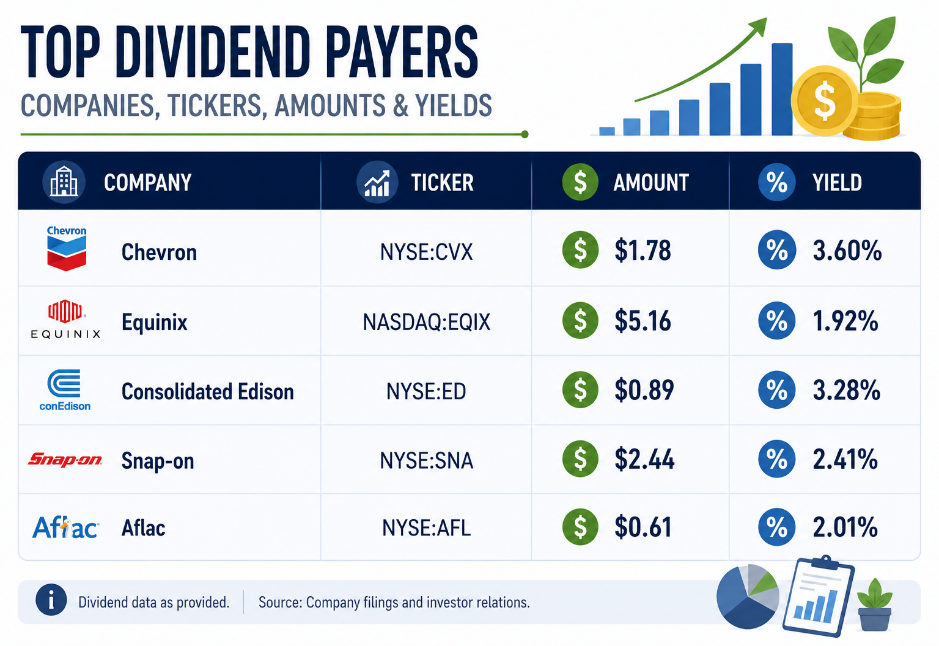
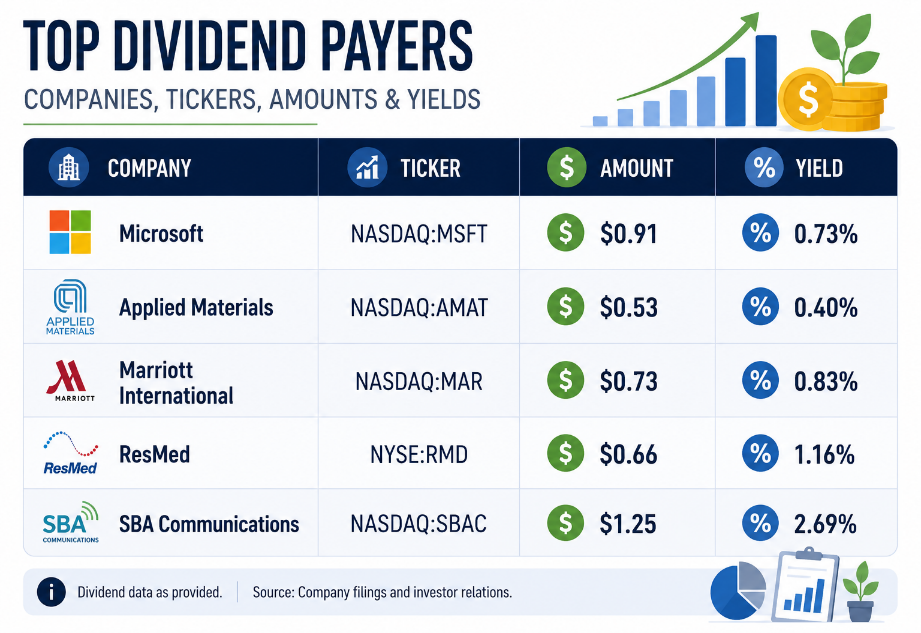
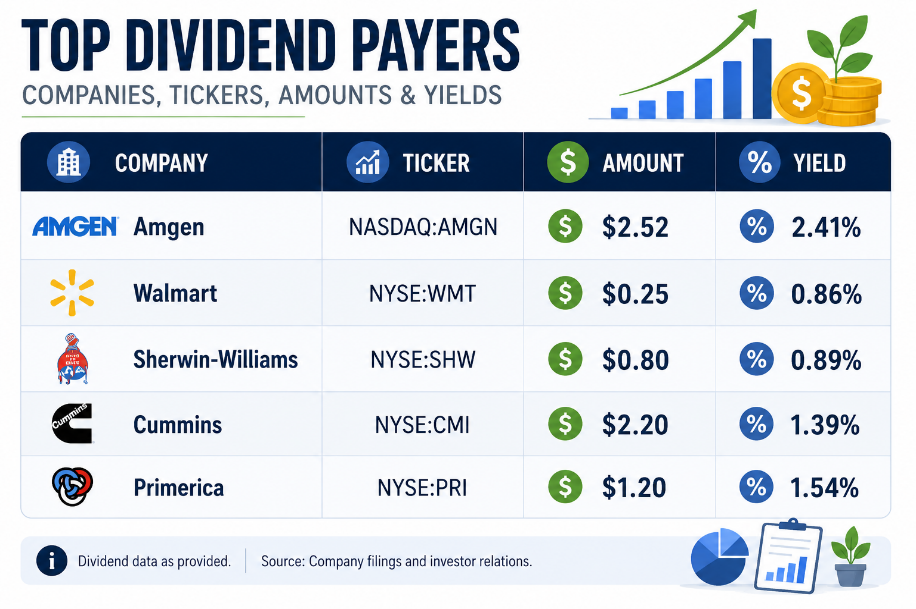
Dividends
Economic Data
Weekly jobless claims for the week ending August 15, prior at 209,000 and forecast at 205,000, provide the most current labour market read of the week. Leading indicators for July, prior at -0.2% and forecast at 0%, arrive at 10:00 am ET as a forward-looking composite activity read in the immediate run-up to the August 27 Jackson Hole symposium.
Friday, August 21
Economic Data
S&P Global flash PMI surveys for August close the week and are the most forward-looking data releases of the month. The US Flash Manufacturing PMI, prior at 53.8, and US Flash Services PMI, prior at 53.6, together provide the first real-time read on August economic activity, the first data point of the month that has not yet been affected by the Iran standoff hardening. Services at 53.6 in the prior print signals continued expansion, and the prices-paid sub-index will receive particular attention given that services inflation remains the most persistent component above the Fed's 2% target. Together, the flash PMIs will function as the market's first datapoint on whether the economy is carrying positive momentum into the final weeks before the September 16-17 Fed meeting.
Geopolitical Backdrop
The US-Iran standoff has hardened rather than eased entering this week, with Treasury Secretary Bessent signalling that the US will intensify economic pressure on Iran rather than pursue diplomatic engagement. The shift in posture has directly impacted Treasury yields, which remain sensitive to any escalation that could reignite the energy price spike that drove the market's July volatility. Commercial vessel flows through the Strait of Hormuz remain the primary variable under surveillance, with any resumption of blockades capable of reversing the oil price decline that has provided the market its most recent relief.
The stalling of Iran talks is also the primary risk Factor for the FOMC minutes' interpretation: if the committee was already factoring in renewed energy price pressure in its July deliberations, the minutes could reveal a more hawkish internal consensus than the hold decision itself implied. The August 27-29 Jackson Hole symposium now carries the weight of being the first opportunity for Warsh to articulate a coherent policy framework after two meetings that have left markets searching for clarity on the Fed's reaction function.
The Week in Context
Three readings will define the week's narrative before Friday's close. Wednesday's FOMC minutes will reveal how divided the committee truly is and whether the three dissents represent an isolated minority or the leading edge of a majority shift toward September action. Walmart's Thursday results will confirm whether the consumer is holding firm, as earnings beats across 85% of S&P 500 reporters suggest, or whether the cumulative weight of elevated borrowing costs and energy prices is beginning to suppress the spending that accounts for more than two-thirds of U.S. economic output. Friday's flash PMIs will provide the first August data point that the market can carry into the Jackson Hole weekend with any confidence. Together, they will either sustain the record-high optimism that has kept the S&P 500 above its June 2 peak or introduce the first credible challenge to the argument that earnings can continue to trump all other problems.


 Nov 20, 2026





 Please wait processing your request...