
 CA
 NZ
 UK
 AU
 IND

 US

 Share
 X (Formerly Twitter)
 Whatsapp
 Facebook
 LinkedIn
 Telegram
 Email This Article
 Copy Link
 Summarize with AI
 Chat GPT
 Perplexity
Key Highlights
- Intel closed at USD 117.05 on June 16, down 8.45%, with volume near 131.40 million shares.
- INTC traded at USD 120.18 pre-market on June 17, up 2.68% from the latest close.
- Intel 18A-P entered risk production and promises higher performance, lower power use and improved thermal efficiency.
Why the Stock Moved
Intel Corporation (NASDAQ:INTC) recovered 2.68% in pre-market trading on June 17, rising to USD 120.18 after closing at USD 117.05 on June 16.
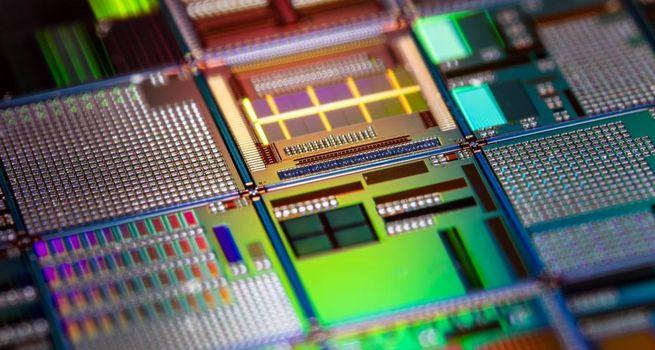
The rebound followed Intel Foundry’s confirmation that the 18A-P process node had entered risk production on schedule. The milestone matters because 18A-P is the first performance-enhanced version of Intel’s 18A manufacturing platform and forms a central part of the company’s effort to compete for advanced foundry customers.
Intel said the process delivers 9% higher performance at the same power level or 18% lower power at the same performance compared with Intel 18A. It also offers stronger thermal performance, lower interconnect resistance and greater design flexibility.
The pre-market move partly reversed the previous session’s sharp decline, when semiconductor stocks weakened broadly ahead of the Federal Reserve’s policy meeting.
Why 18A-P Matters for Intel Foundry
Intel’s foundry strategy depends on proving that its process technology can meet the performance, power and manufacturing requirements of external chip designers.
The 18A-P platform is fully design-rule compatible with Intel 18A, allowing customers to reuse intellectual property and existing design flows. This may reduce switching costs and shorten the path from design to production.
Intel also introduced a new Power Boost transistor option intended to improve drive current and frequency. Additional enhancements include 20% to 40% better thermal resistance and 10% to 30% lower via resistance.
These improvements could be relevant for artificial intelligence accelerators, data-centre processors and other high-performance chips where power efficiency and thermal management increasingly constrain system performance.
Company Background
Intel designs and manufactures processors, graphics chips, accelerators and other semiconductor products. It operates through Client Computing, Data Centre and AI, and Intel Foundry.
The company is pursuing a hybrid business model that combines internal chip design with external foundry manufacturing and packaging services.
Intel’s strategic challenge is to rebuild manufacturing credibility while competing with established foundries and maintaining product competitiveness across personal computers, servers and AI infrastructure.
Sector and Market Context
The semiconductor sector remains highly sensitive to capital spending, AI demand and interest-rate expectations.
Intel’s June 16 decline occurred during a broader rotation out of technology shares. The Philadelphia Semiconductor Index fell sharply as investors reduced exposure before the Federal Reserve’s first policy meeting under Chair Kevin Warsh.
The June 17 pre-market recovery suggests investors were willing to refocus on company-specific process milestones after the sector-wide selloff.
Bernstein also raised its Intel price target to USD 100 from USD 65, reinforcing expectations that sentiment around Intel’s foundry and AI infrastructure strategy is improving, though the revised target remains below the latest market price.
Valuation and Financial Risk
At the June 16 close, Intel had a market capitalisation of about USD 588.29 billion. The company reported EPS of approximately negative USD 0.60, leaving it without a meaningful trailing P/E ratio.
The stock’s valuation therefore depends heavily on future foundry revenue, process execution and a recovery in profitability.
The main risk is that risk production does not guarantee successful high-volume manufacturing. Yield performance, customer adoption, capital intensity and production costs will determine whether 18A-P creates sustainable economic value.
What Investors Are Watching Next
Investors will watch customer commitments for 18A-P, manufacturing yields and the timing of high-volume production.
Markets will also focus on Intel Foundry losses, capital spending, AI product demand and whether management can secure multiple external foundry customers during the second half of 2026.
Conclusion
Intel’s 2.68% pre-market rebound reflects renewed attention on the company’s process roadmap after a sharp sector-driven selloff.
The 18A-P risk-production milestone strengthens Intel’s technology narrative, but the investment case still depends on customer adoption, manufacturing yields and the ability to turn process progress into profitable foundry revenue.


 Nov 02, 2026





 Please wait processing your request...