
 AU
AU
 UK
UK
 CA
CA
 NZ
NZ
 IND
IND

 US
US

 Share
Share
 X (Formerly Twitter)
 Whatsapp
 Facebook
 LinkedIn
 Telegram
 Email This Article
 Copy Link
 Summarize with AI
 Chat GPT
 Perplexity
Key Highlights:
China's UN Envoy Fu Cong Signals Veto of US-Bahrain Strait of Hormuz Resolution
China's ambassador to the United Nations, Fu Cong, publicly criticized a proposed U.S.-Bahraini Security Council resolution on the Strait of Hormuz on May 15, 2026, signaling that Beijing intends to block the measure if it comes to a formal vote. The draft resolution demands that Iran halt its attacks and Mining operations in the strait — the narrow waterway through which roughly one-fifth of global oil and liquefied Natural Gas supplies normally pass. Fu Cong's remarks, captured in an impromptu interview posted by the UN-focused news portal Pass Blue, were unambiguous: both the content and timing of the resolution were wrong, and passing it at this stage would not be helpful. The statement puts China firmly alongside Russia in opposing the measure, effectively guaranteeing a double veto if the U.S. and Bahrain push it to a floor vote.

The current draft is not the first attempt by Washington to use the Security Council to pressure Tehran on the Hormuz crisis. Both Russia and China vetoed a similar U.S.-backed resolution just one month prior, in April 2026, with both countries arguing at the time that the measure was biased against Iran and failed to address the underlying causes of the conflict. The new U.S.-Bahraini draft appears to have made insufficient concessions to Beijing's and Moscow's objections to overcome that opposition. Fu Cong's stated alternative — that both sides be urged to engage in "serious and good-faith negotiations" — reflects China's consistent position that diplomacy, not Security Council pressure on Iran, is the appropriate path forward. This position aligns with China's economic interests in regional stability and its longstanding trade and energy relationships with Tehran.
Hormuz Blockade Threatens One-Fifth of Global Oil and LNG Supply
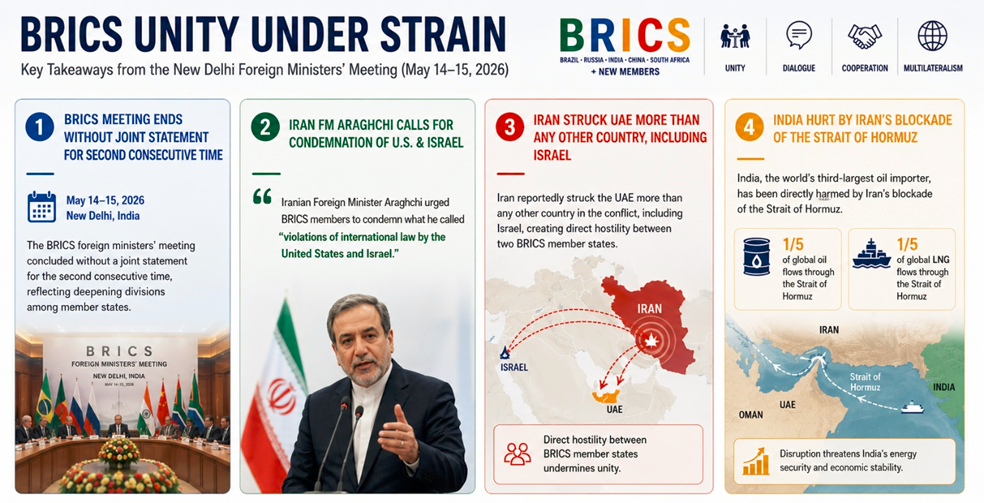
The strategic stakes of the Hormuz standoff are enormous. In normal times, approximately one-fifth of global oil supplies and a significant share of global LNG trade transits the strait daily. Iran's attacks and mining operations have disrupted that flow since the outbreak of the war on February 28, driving energy prices higher across Asia, Europe, and beyond. India — the world's third-largest oil importer — has been particularly exposed. JPMorgan analysts have separately stated they expect the Strait to open "one way or another" by June, suggesting the market anticipates either a diplomatic breakthrough or a military resolution within weeks. The cost of Data Center capacity in Europe's five largest markets — Frankfurt, London, Amsterdam, Paris, and Dublin — is already set to rise by 12% in 2026 partly due to surging energy costs linked to supply disruptions, according to CBRE research.
Security Council Deadlock Reflects Broader US-China-Russia Geopolitical Fracture
China's opposition to the Hormuz resolution is part of a broader pattern of Security Council paralysis on the Iran conflict. With Russia and China holding permanent vetoes, the U.S. and its Gulf partners face a structural ceiling on what multilateral pressure can achieve through the UN system. Fu Cong's framing — that negotiations between "both sides" are needed — implicitly treats the U.S. and Iran as moral equivalents in the dispute, a characterization Washington firmly rejects. The diplomatic deadlock mirrors the wider fragmentation visible at institutions like BRICS, where the same Iran-UAE-US tensions have prevented consensus. For energy markets, the implication is that a swift, internationally-brokered resolution to the Hormuz crisis through UN mechanisms is unlikely as long as both China and Russia remain committed to shielding Iran from Security Council action.
Energy and Aviation Markets Price In Extended Disruption
The knock-on effects of the Hormuz standoff extend well beyond oil markets. Global data center operators are contending with rising electricity costs as European energy prices climb. Airlines across Asia, Europe, and North America have suspended routes to Gulf destinations well into the autumn of 2026 — with some suspensions running through October 24 or even beyond — reflecting market expectations that the conflict will remain unresolved for months. Data centers now consume 2% of the world's electricity globally, up from 1.7% in 2024, according to the International Data Center Authority, and any sustained energy price elevation directly erodes the Economics of the AI infrastructure build-out that has driven markets higher in 2026. Investors in utilities, energy infrastructure, and airline stocks are watching the Security Council dynamics closely as a leading indicator of when normalcy might return to global energy flows.
Key Highlights:
- China's UN ambassador Fu Cong publicly stated both the content and timing of the US-Bahraini Hormuz resolution are wrong and that passage would not be helpful
- Russia and China vetoed a near-identical US-backed resolution at the Security Council just one month earlier, in April 2026
- The Strait of Hormuz carries roughly one-fifth of global oil and LNG supplies in normal conditions
- Data center costs in Europe's five largest markets — Frankfurt, London, Amsterdam, Paris, and Dublin — are projected to rise 12% in 2026, partly due to energy disruption linked to the Hormuz blockade


 May 18, 2026




 Please wait processing your request...