
 CA
 NZ
 UK
 AU
 IND

 US

 Share
 X (Formerly Twitter)
 Whatsapp
 Facebook
 LinkedIn
 Telegram
 Email This Article
 Copy Link
 Summarize with AI
 Chat GPT
 Perplexity

Keywords: October Fed hike odds, CME FedWatch, FOMC October 28 2026, 2-year Treasury yield, Kalshi Polymarket Fed, short-term Treasury ETF
Key Highlights
- CME FedWatch put the probability of a 25 basis point hike at the October 28 FOMC meeting at 72.5 percent as of September 28, and odds of at least one more hike by December 9 at 94.5 percent.
- Prediction markets Kalshi and Polymarket priced an October move near 69 percent on September 29, up 19 points in a week.
- The 2-year Treasury Yield swung from 4.71 percent on September 22 to 4.87 percent on September 24, a shift that directly shapes the iShares 1-3 Year Treasury Bond ETF (NASDAQ:SHY).
- August PCE on September 30 and September payrolls on October 2 are the swing factors.
How the Odds Climbed So Fast
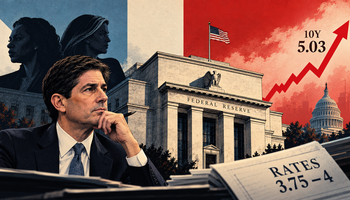
The repricing since the September 16 hike to 3.75 percent to 4.00 percent has been rapid, and traders now treat a second straight increase as the base case. With December odds at 94.5 percent, the debate is about timing rather than direction. Front-end Treasuries moved in step: the 2-year yield rose 16 basis points in two sessions before closing at 4.81 percent on September 25. That repricing feeds directly into short duration instruments such as the iShares 1-3 Year Treasury Bond ETF (NASDAQ:SHY), whose holdings track the part of the curve most tied to the policy rate. The US Dollar Index also firmed to around 101.20 on September 29 as rate differentials widened.
The Hawkish Chorus Behind the Repricing
Fed communication has done much of the work. New York Fed President John Williams said on September 24 that another hike before year end was reasonable. Cleveland Fed President Beth Hammack said the biggest risk she sees is that an inflationary mindset could start to set in. Governor Lisa Cook said she expects continued pressure on Inflation from the AI buildout and from pass-through of higher oil prices, and Governor Michael Barr said further policy adjustments are likely needed. Data have reinforced the message, with the flash Composite PMI at 58.4, initial jobless claims at 197,000 and Brent at USD 108.59 a barrel on September 28. Not everyone expects October: PNC economists forecast no change on October 28 and a hike in mid-December, while Bank of America expects increases at both remaining meetings.
What Could Break the October Consensus
Pricing near 70 percent still leaves room for surprise. The Bureau of Economic Analysis publishes August PCE on September 30, with forecasts for headline prices up 0.4 percent and core up 0.3 percent, after July core ran at 3.3 percent year over year. The Bureau of Labor Statistics follows on October 2, with forecasts for about 100,000 jobs and Unemployment rising to 4.2 percent, after August's 162,000 gain. A soft core print or weak payrolls could pull odds toward December, while hot readings would push October toward certainty. September CPI on October 14 is a final input. For the iShares 1-3 Year Treasury Bond ETF (NASDAQ:SHY), the practical risk is Volatility in front-end yields around each release. The S&P 500 fell 0.77 percent to 7,683.69 on September 28 as yields climbed.
Where Things Stand
It depends on the data, but the bet starts from a strong position. With 94.5 percent odds of at least one hike by December, a single soft report is more likely to shift timing than to remove tightening from the outlook. A core PCE print at or above 0.3 percent and payrolls near 100,000 or better would keep October as the base case, while a clear miss on both could revive the December view held by PNC. The November 3 midterm elections fall between the two meetings. Front-end instruments such as the iShares 1-3 Year Treasury Bond ETF (NASDAQ:SHY) are likely to register any shift first.

 Oct 28, 2026




 Please wait processing your request...