
 CA
 NZ
 UK
 AU
 IND

 US

 Share
 X (Formerly Twitter)
 Whatsapp
 Facebook
 LinkedIn
 Telegram
 Email This Article
 Copy Link
 Summarize with AI
 Chat GPT
 Perplexity

Index Update
US equities closed lower on Monday, with the S&P 500 falling 0.8%, the Nasdaq 100 declining 1.9%, and the Dow losing 138 points, as semiconductor stocks came under heavy pressure amid concerns that AI hyperscalers may reduce infrastructure spending. Losses were led by SK Hynix, Nvidia, Broadcom, AMD, Intel, Sandisk and Micron, while escalating tensions in the Strait of Hormuz raised fears of energy-driven inflation and pushed Treasury yields higher. Major bank stocks also weakened ahead of earnings.
Market Movers
Among the top-performing stocks of the session Twin Vee PowerCats Co. surged 415.77%, while Q32 Bio Inc. rallied 90.72%. On the losing side, Dawson Geophysical Company. fell 41.61%, while Factorial Energy Inc. declined 35.62%, making them the weakest performers during the trading day.
Commodities Update
WTI crude surged over 3% to nearly USD 81 per barrel, while Brent rose more than 4% to around USD 87, extending the previous session’s sharp gains after the collapse of the US-Iran truce renewed fears of supply disruptions. Attacks on tankers in the Strait of Hormuz, the resumption of US measures against Iranian oil exports, further regional military escalation and the prospect of tighter sanctions on Russian energy exports increased concerns over prolonged supply constraints and pushed geopolitical risk premiums higher.
Gold rose above USD 4,000 per ounce and silver climbed above USD 58, although both retained most of the previous session’s losses as renewed US-Iran tensions pushed oil prices higher and revived concerns over inflation and interest rates. Investors remained cautious ahead of key US inflation data and Federal Reserve Chair Kevin Warsh’s congressional testimony, while markets assigned roughly a 51% probability of a September rate hike.
Macro Updates
US Small-Business Confidence Rebounds, but Inflation Remains a Key Concern
The NFIB Small Business Optimism Index rose to 97.4 in June 2026, its highest level in four months and above market expectations, supported by improved sales expectations and a stronger outlook for business conditions. However, inflation remained the leading concern, cited by 21% of owners, while high interest rates and modest economic growth continued to restrain hiring and capital-spending plans.
US Inflation Expected to Ease as Energy Prices Decline
US annual inflation is expected to slow to 3.8% in June 2026 from 4.2% in May, while monthly CPI is forecast to decline 0.1%, mainly due to a sharp drop in gasoline prices following the US-Iran ceasefire. However, higher costs for travel-related services, rents and motor vehicle insurance may limit the moderation, with core inflation projected to remain steady at 2.9%.
Dollar Holds Firm on Safe-Haven Demand and Rate-Hike Expectations
The US dollar index held near 101.2 after a sharp rise, supported by safe-haven demand amid renewed Middle East tensions and higher oil prices. Concerns that stronger energy costs could sustain inflation and prompt further monetary tightening also supported the currency, while investors awaited US inflation data and Federal Reserve Chair Kevin Warsh’s testimony. The dollar strengthened against most major peers but weakened against the New Zealand dollar following hawkish signals from the RBNZ.
Bonds Commentary
The US 10-year Treasury yield held near a two-month high of 4.62% as escalating Middle East tensions and rising oil prices intensified concerns over inflation and further monetary tightening. Investors awaited US inflation data and Federal Reserve Chair Kevin Warsh’s testimony, while markets assigned around a 51% probability of a September rate hike.
Futures Update
US stock futures declined for a second session as rising bond yields and concerns over tighter monetary policy weighed on sentiment ahead of fresh inflation data. S&P 500 and Dow futures fell, while the Nasdaq 100 stabilized as chip stocks paused their selloff. Higher energy prices, renewed tensions in the Strait of Hormuz and hawkish comments from Fed Governor Waller added to inflation concerns, while major technology and financial stocks traded lower despite generally strong bank earnings.
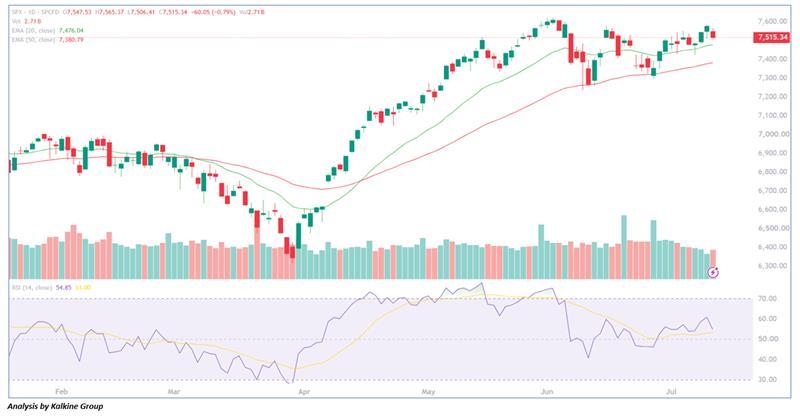
Stocks moved sharply lower on Monday, giving back gains from the previous two sessions as weakness in technology stocks weighed on the major indices. Despite the decline, the S&P 500 remains above its 20-day EMA (7,476) and 50-day EMA (7,381), keeping the broader uptrend intact. The pullback appears to be profit-taking, while the RSI near 55 suggests momentum remains neutral to positive. Resistance is seen at 7,540–7,560, with support at 7,475–7,460 and stronger support near 7,380. The near-term outlook remains cautiously bullish as long as key support levels hold.

 Nov 19, 2026



 Please wait processing your request...